A regional custom needed a national champion
In the 19th century, Thanksgiving was familiar but not uniform. Some states observed days of thanks, often on different dates; there was no single annual observance for the whole country. Sarah Josepha Hale saw a shared holiday as a way to give Americans a common tradition, and she used the platform she controlled as editor of Godey’s Lady’s Book to make the case repeatedly.
The magazine let her reach readers far beyond her own state. Its pages could present Thanksgiving not just as a local custom but as a national occasion—with a familiar home-centered meal and a day set aside for gratitude. That vision gave her campaign a practical shape: a holiday people could recognize and celebrate together.
From advocacy to a presidential proclamation
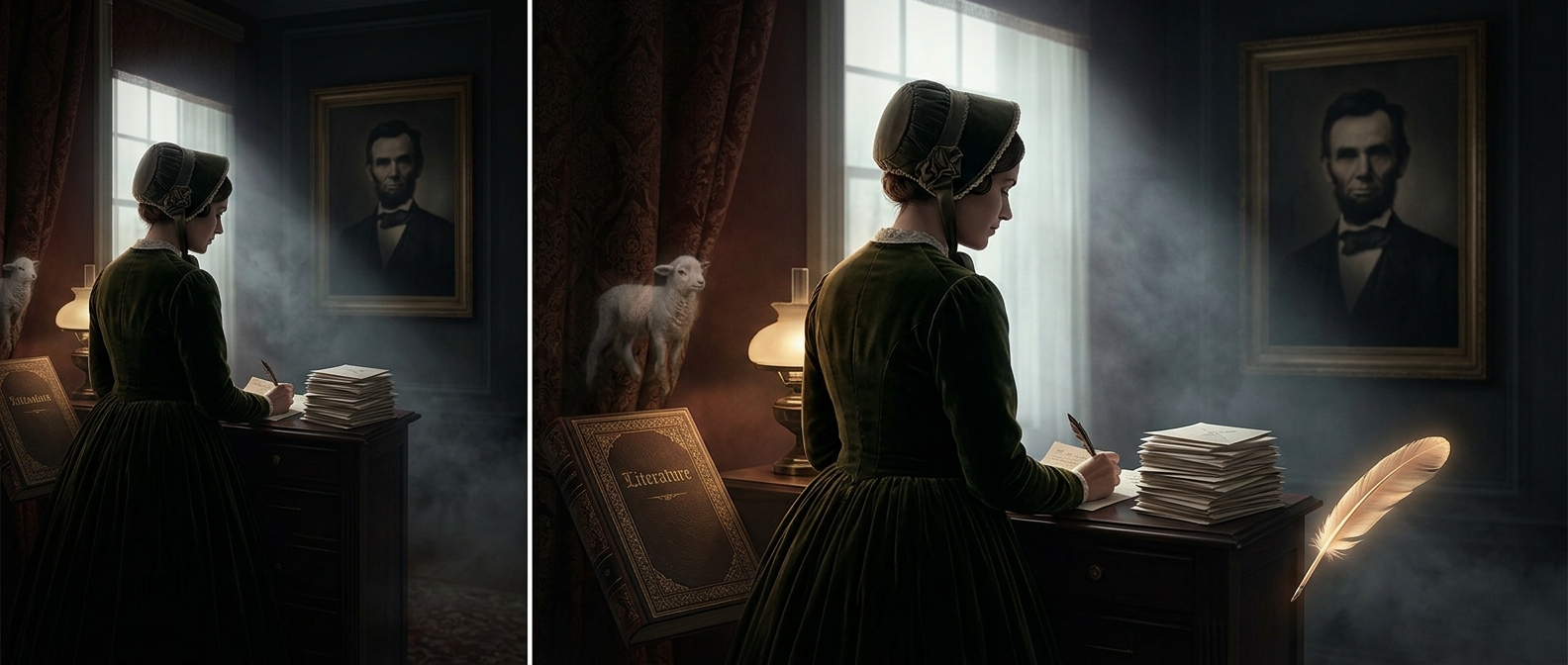
Hale’s effort was sustained rather than sudden. She pressed successive presidents to issue a national Thanksgiving proclamation, while continuing to promote the observance in print. In 1863, during the Civil War, she wrote to Abraham Lincoln. That October, Lincoln proclaimed a national day of Thanksgiving for the last Thursday in November.
The timing made the idea especially resonant: a shared day of gratitude offered a public ritual amid a country divided by war. Lincoln’s proclamation did not instantly create every modern feature of the holiday, but it established a national observance that later generations could continue.
Hale’s influence lay in turning a scattered practice into a persuasive national proposal. A magazine editor helped make the idea of celebrating Thanksgiving together feel ordinary before the country’s president made it official.