A Feast at the End of Victor Hugo’s Life
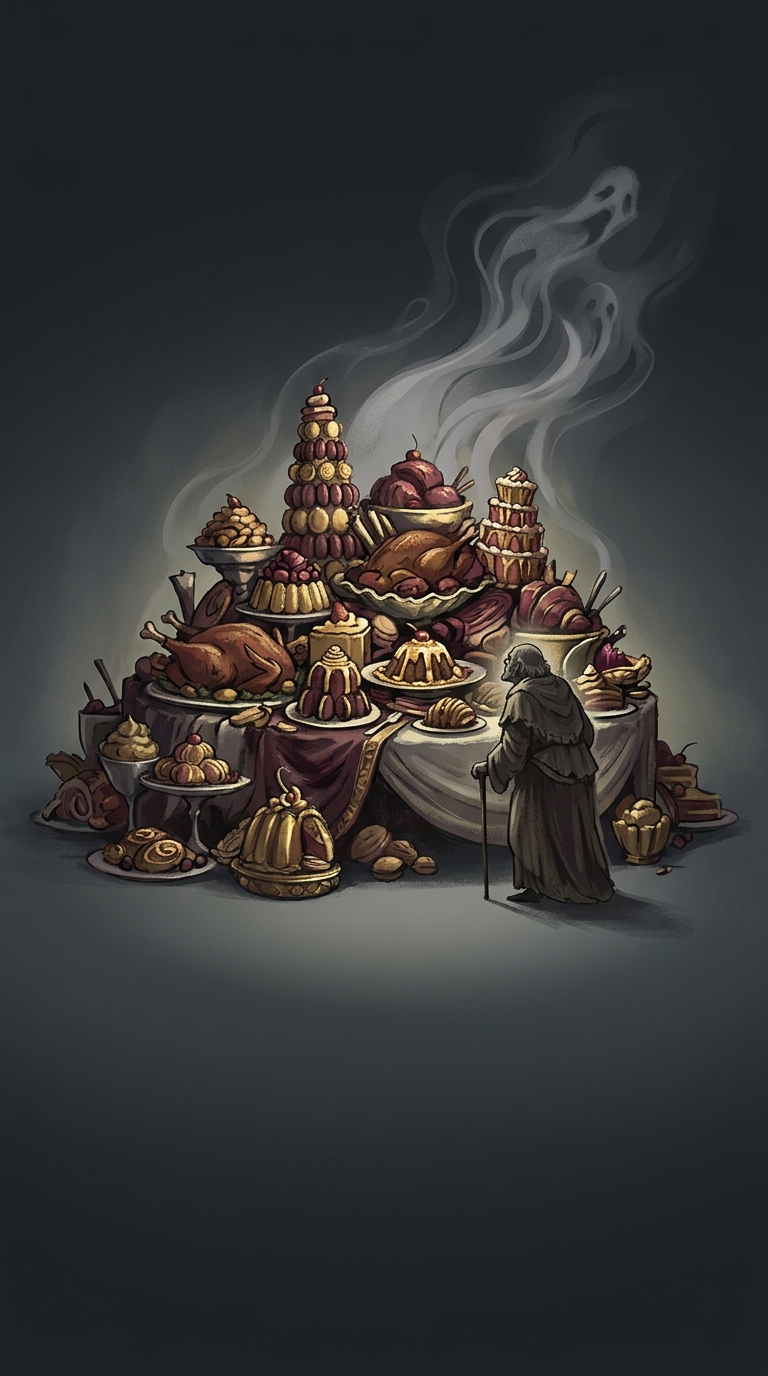
In 1885, Victor Hugo was 83 and nearing the end of a long public life. Accounts of a celebration for his recovery describe a lavish table of meat, wine, and desserts. The striking detail is the contrast: a gathering meant to mark renewed health became entangled in stories about his final days.
What the Meal Can—and Cannot—Explain
Eating heavily can leave someone uncomfortable or ill, especially in old age. But a rich meal, by itself, is not a sound explanation for a death. Hugo died in May 1885 after developing pneumonia, an infection that inflames the lungs and can make breathing difficult. The banquet may belong to the timeline of his last days, but the claim that overeating caused his death goes beyond what that sequence establishes.
That distinction matters because memorable anecdotes often compress events into a neat cause and effect: a feast, a sudden decline, a death. The more grounded account is still vivid. A celebration intended to honor a recovery took place against the backdrop of a frail older man’s final illness—and the meal became part of the story people told about it.