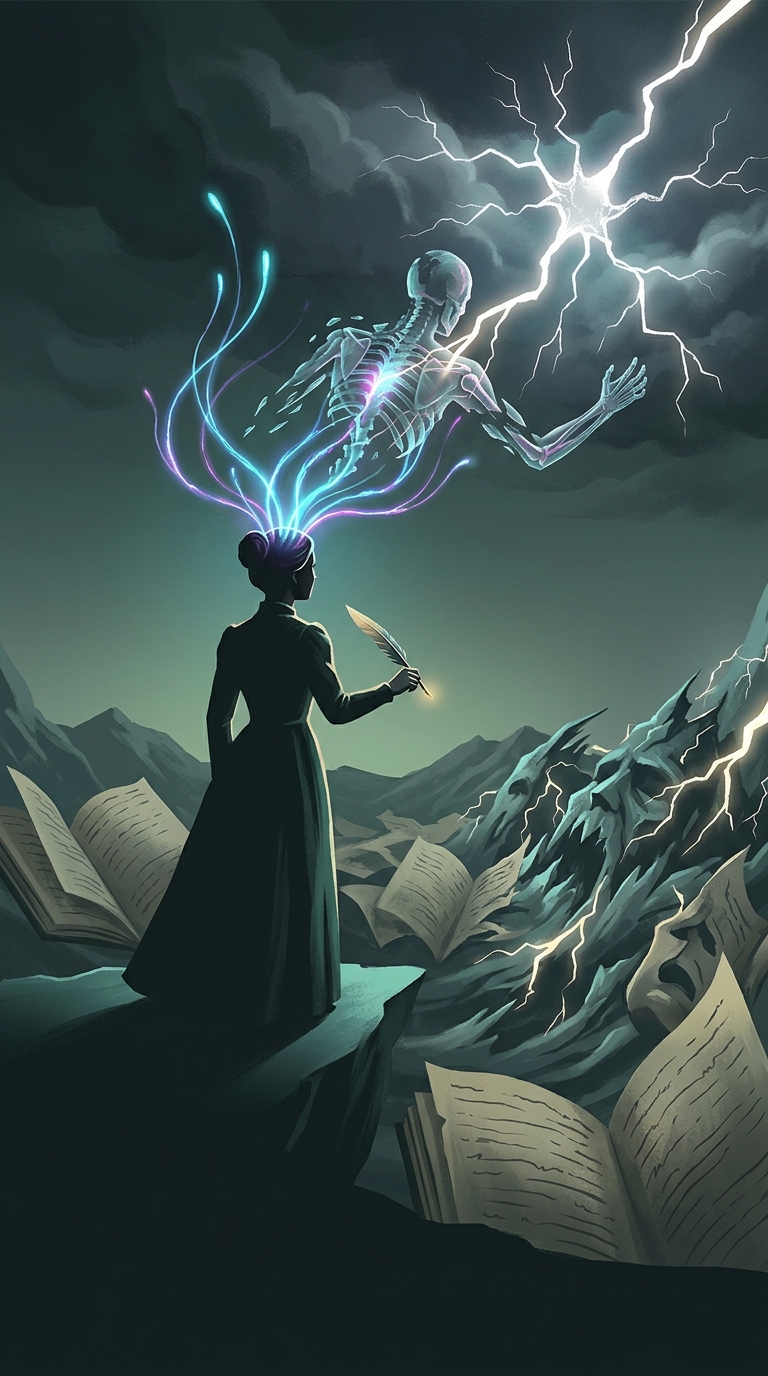
A Review Can Describe a Book Without Writing It
A conventional review depends on a book already being there: the reviewer summarizes its argument, judges its style, and helps readers decide whether to seek it out. In A Perfect Vacuum, Stanisław Lem reversed that sequence. He invented books, then wrote reviews of them as if they had just appeared. The reader encountered the imagined work through the supposedly secondary text, with no original to check against.
That reversal let Lem compress a whole literary possibility into a few pages. A review can sketch a premise, a method, and a verdict without staging every character or event. It can also jump between plot summary and criticism, so that an invented book’s ideas emerge alongside questions about whether those ideas could work at all.
The Review Becomes a Thinking Tool
The format’s familiar conventions gave the inventions a foothold. A made-up title and author could be treated as ordinary publishing facts; the reviewer could then discuss the book’s ambitions, structure, and shortcomings in a sober voice. That serious tone creates the comedy, but it also makes room for speculation. Instead of completing one fictional story, Lem could examine a range of possible books and the intellectual problems each one raised.
The constraint was productive: every imagined work had to be legible through the language of reviewing. That meant its central idea needed to be clear enough to summarize, while its gaps or contradictions could become part of the review’s judgment. The result is not simply a collection of fictional blurbs. It uses criticism as a frame for ideas that might otherwise require an entire novel—or might be more interesting as concepts than as conventional stories.
The Missing Book Is the Point
Because the books never appear, readers have to do some of the creative work themselves. They infer what the imagined text might contain from the review’s selective account, much as a real reader reconstructs an argument from a critic’s description. The absence is not a trick to be solved; it is what keeps each idea open, letting the review act as both a miniature literary world and a commentary on the limits of literature.