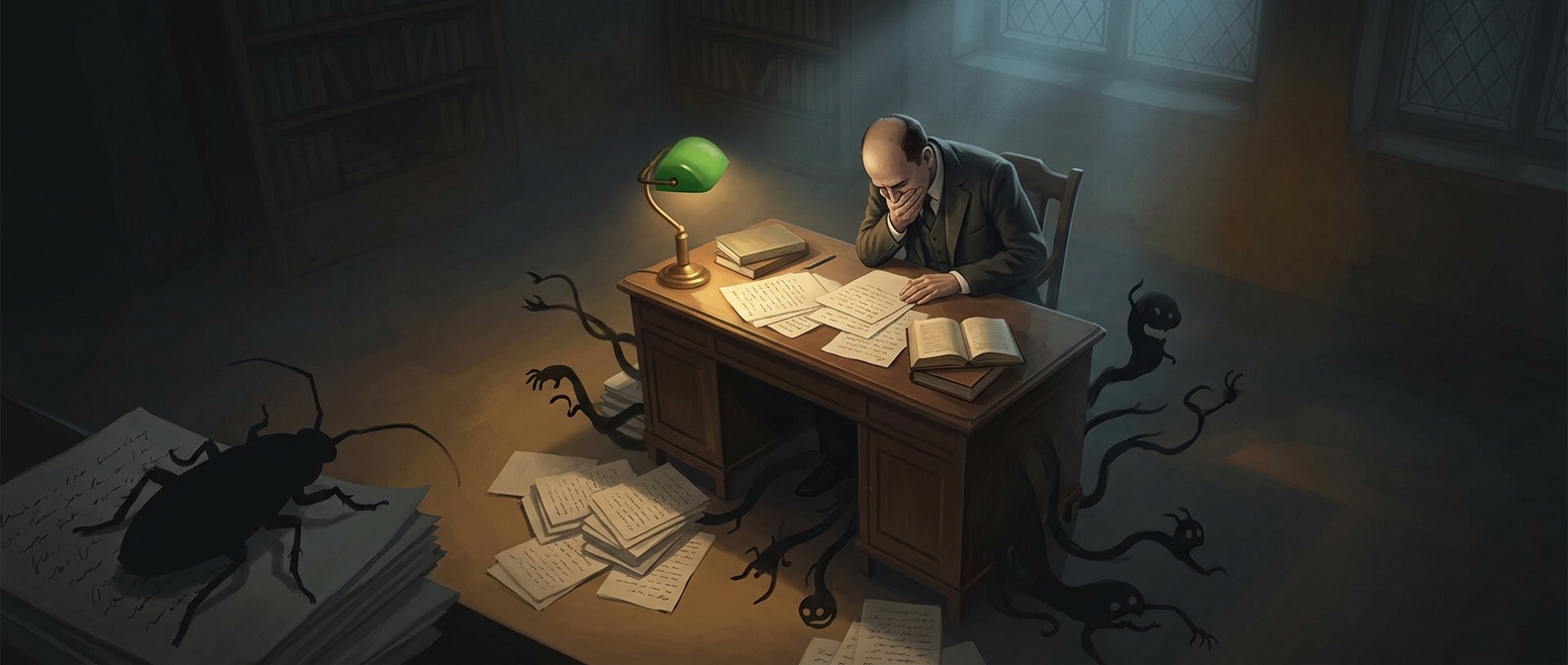
The comic timing inside Kafka’s bleakness
Kafka’s stories can be grim in what happens and funny in how it happens. A character may face an impossible situation, while the narration describes it with the calm, practical attention normally given to an ordinary inconvenience. That mismatch lets absurdity land as comedy even when the consequences are frightening.
Why reading aloud could change the effect
On the page, a reader can pause over a disturbing turn or absorb it in silence. Read aloud, the sentences arrive in sequence: a strange premise, a matter-of-fact response, then another escalation. The contrast can become comic before the listener has time to settle into dread. Kafka’s laughter while reading suggests he could hear that timing in the room, not just see the darkness of the plot.
The laughter does not make the stories cheerful. It points to a kind of humor that works alongside anxiety: the world is ridiculous, but the people trapped in it still have to deal with it. In Kafka, a laugh can be the sound of recognizing how absurd a nightmare has become.