The Unused Ticket and the Absurd
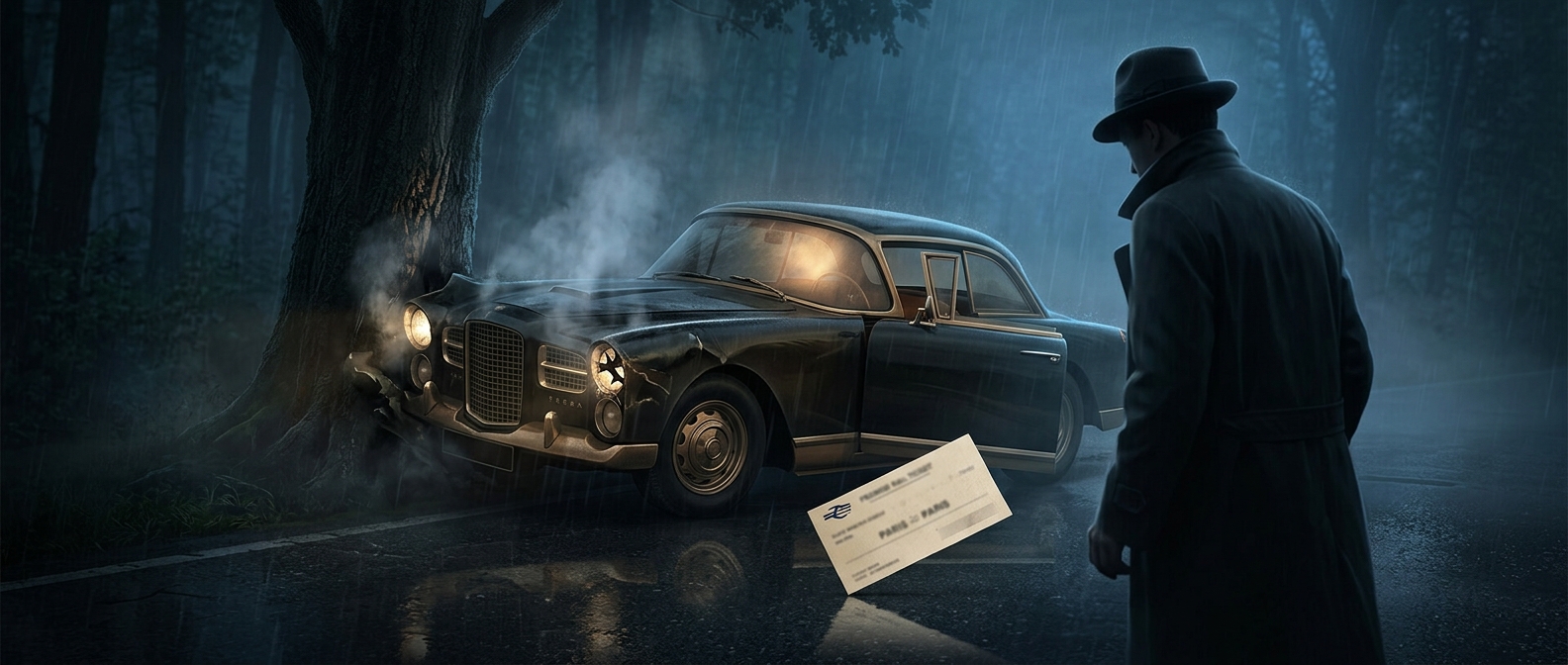
The train ticket in Albert Camus’s pocket gives his death the shape of one of his own themes: a small, ordinary choice suddenly looks charged with meaning. He had been expected to travel by train, but went by car after his publisher persuaded him to drive. The crash made that change of plan feel, in retrospect, like a cruel twist of fate.
Camus had reportedly joked that dying in a car crash would be an absurd way to go. The irony is striking, but it does not mean he predicted the accident. A remark made casually before a sudden death can acquire an eerie weight afterward, when survivors arrange the scattered details into a story.
What “Absurd” Meant to Camus
For Camus, the absurd was not simply the claim that life has no meaning. It was the clash between people’s hunger for order and explanation and a world that does not promise either. His work asks how to live honestly within that tension, rather than pretending that chance follows a plan.
The crash offered no satisfying explanation: a journey changed, a car hit a tree, and a ticket went unused. That is why the detail has endured. It turns a philosophical idea into something pocket-sized and concrete—not evidence that fate had written a script, but a reminder of how readily chance can look like a plot once the ending is known.