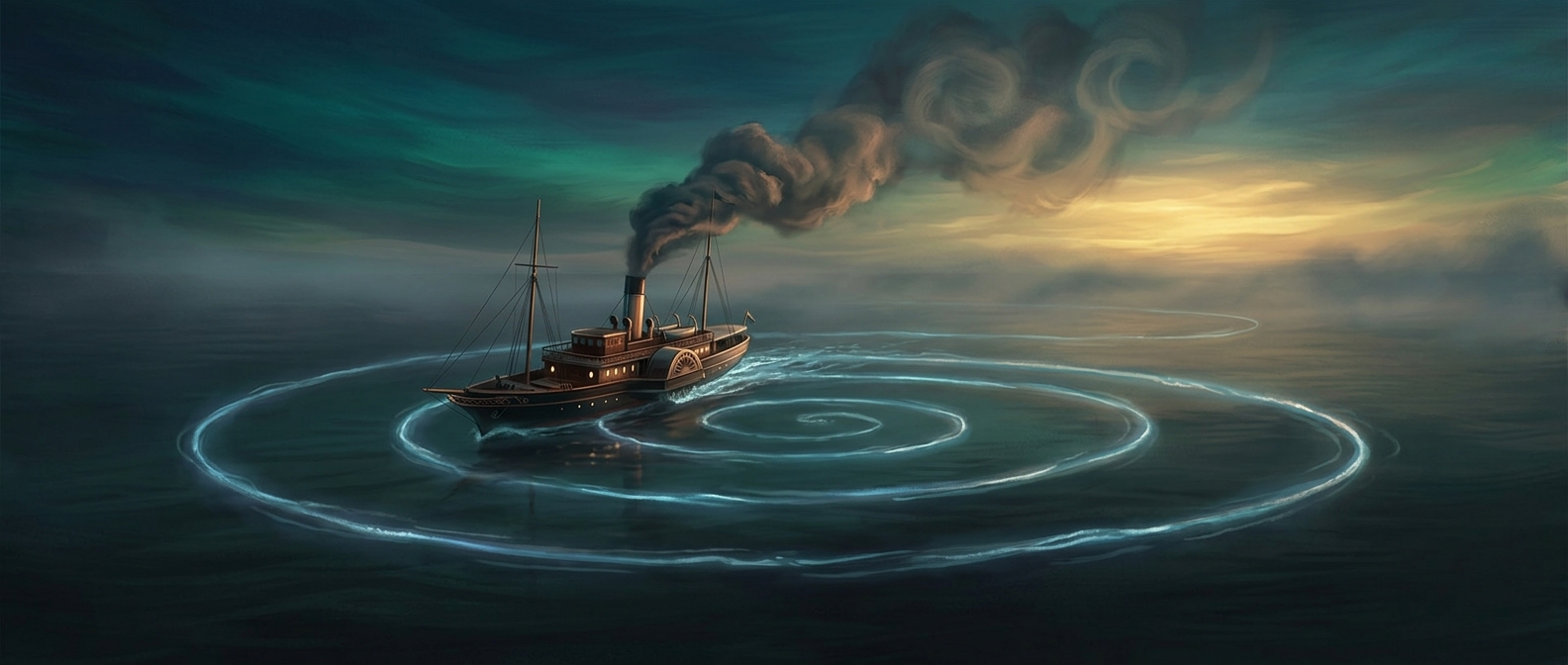
A novelist’s world was larger than his sailing route
Jules Verne’s adventures crossed oceans and continents, but the scale of a story did not have to match the scale of its author’s travels. In the 19th century, maps, books, newspapers, and travel accounts could bring distant places within reach of a writer who had never sailed to them. Verne could turn that gathered knowledge into a journey on the page; his own time aboard a yacht remained largely closer to home, along the French coast.
That contrast is useful because it separates geographical imagination from personal mileage. A fictional voyage could be planned, paced, and made vivid through research and invention without being a record of the writer’s own itinerary.
What the royalties changed
The success of Verne’s books did give him a way to spend more time sailing: their royalties bought three successive luxury yachts. Yet greater means did not automatically produce a more far-reaching route. His boats expanded his opportunities on the water, while the globe-spanning travel remained a feature of his fiction.
The detail makes the contrast concrete: Verne could command a yacht in real life, but the most expansive journeys he created were the ones readers took through his books.