A tale with no place in the manuscript
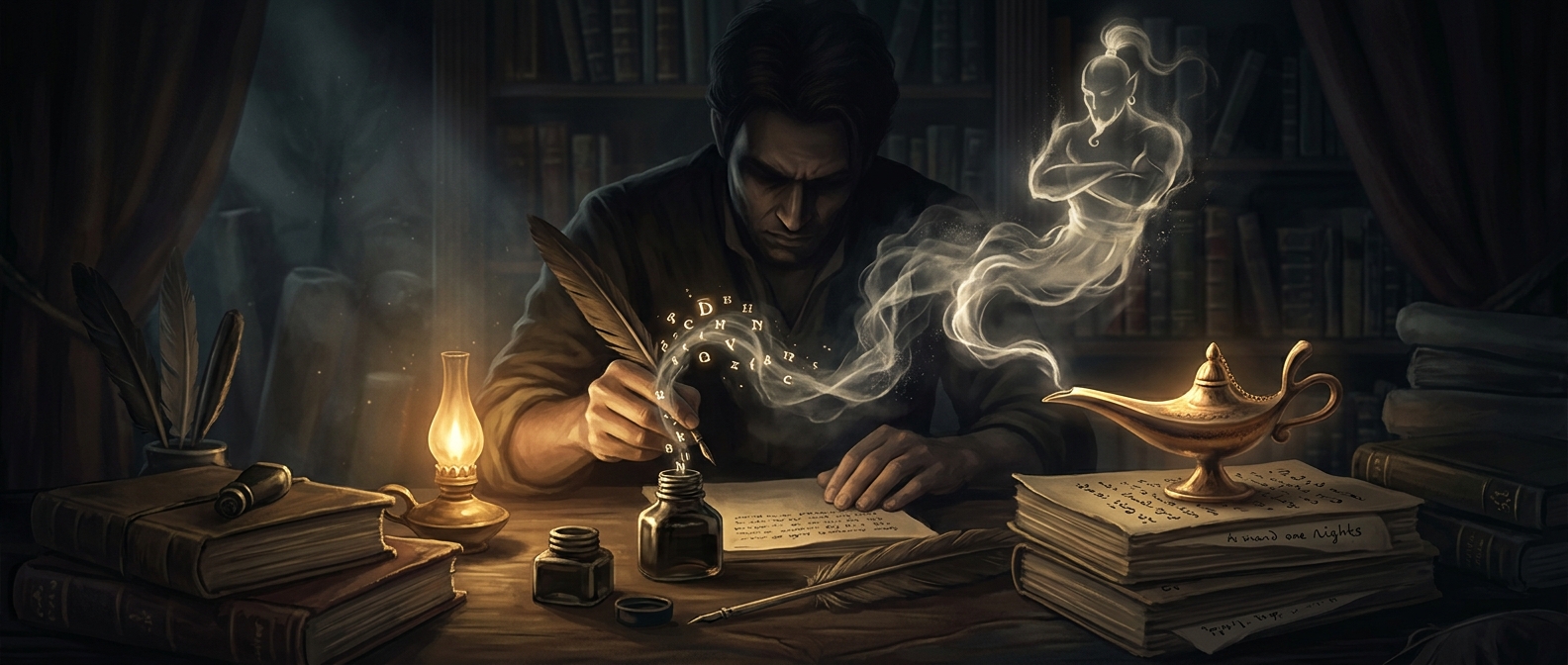
When Antoine Galland was adapting One Thousand and One Nights into French, he had a problem familiar to anyone assembling a collection of stories: the written copy in front of him did not contain every tale readers expected—or every tale he wanted to include. “Aladdin” was absent from the manuscript he was using. Its route into the book began in conversation instead.
From Hanna Diyab’s telling to Galland’s pages
Galland recorded that he heard the story from Hanna Diyab, a Syrian storyteller he met in Paris. Galland then rendered it in French and published it as part of his adaptation. The exact process was not simply a matter of copying a fixed text: an oral performance can change with its teller and audience, while a written adaptation gives that performance a lasting form and a place among other stories.
That distinction matters. Galland’s Nights was not a straightforward translation of one complete, authoritative Arabic book. The collection had a layered history, and Galland’s version combined manuscript material with stories supplied through oral storytelling. “Aladdin” became associated with the Nights through this French publication history, even though it was not in the source manuscript Galland had consulted.
How a conversation became part of a classic
Once printed, the tale could travel far beyond the room where it was told. Readers encountered “Aladdin” as part of the same imaginative world as the other Nights stories, and later versions helped make it one of the collection’s most familiar tales. Its history is a reminder that books can preserve more than written sources: sometimes a storyteller’s voice enters the literary record through another person’s notes, translation, and editorial choices.