A Race Between the Name on the Book and the Hand Behind It
Alexandre Dumas was famous for producing novels and plays at a remarkable pace, but he did not always work alone. He relied on collaborators, including Auguste Maquet, who helped develop and draft material for some of Dumas’s best-known books. Calling Maquet a “ghostwriter” captures the hidden nature of that labor, though their partnership involved collaboration rather than a simple, anonymous writing service.
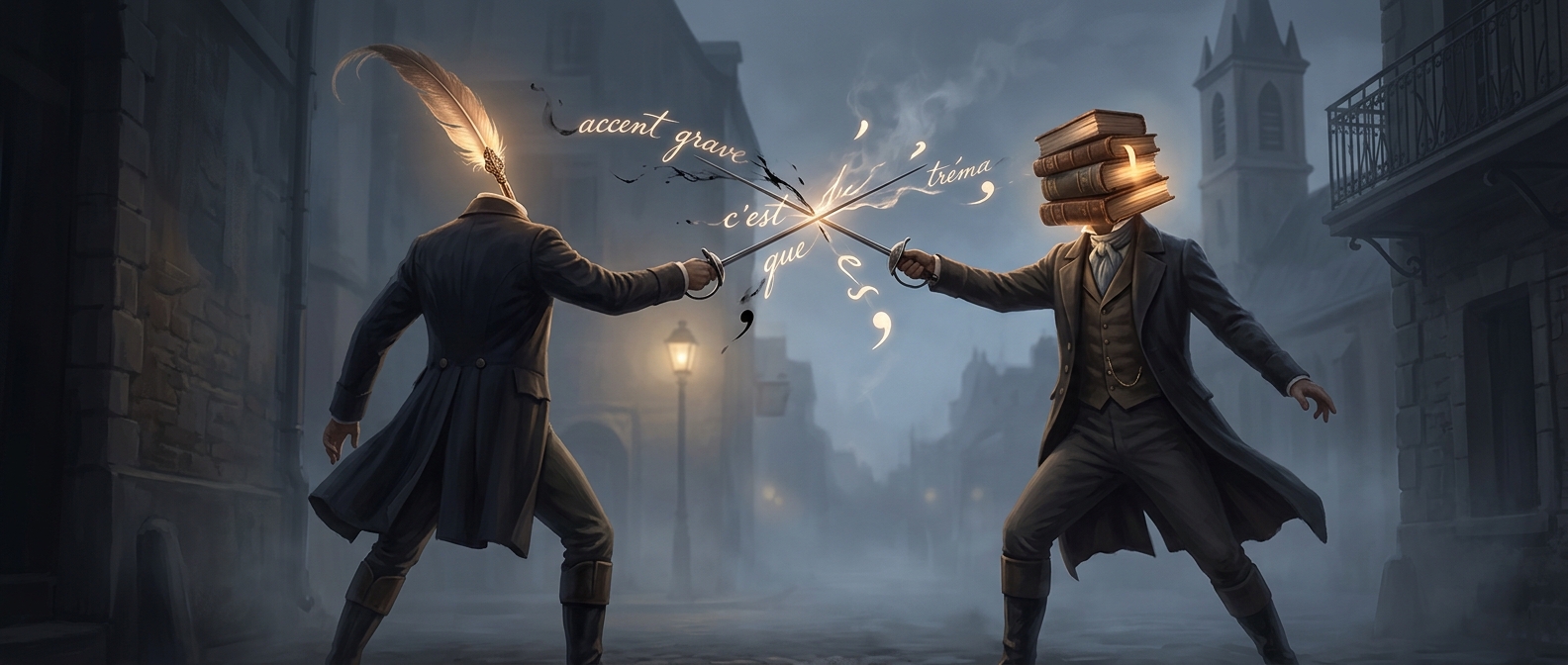
The manuscript race puts that arrangement into sharp relief: Dumas challenged his hired collaborator to produce a complete, readable draft faster. The test was not merely who could fill pages quickest. A usable manuscript had to hold together as a story, with scenes and ideas shaped into something another writer could revise and bring to readers.
Speed Was a Shared Production Problem
In collaborative writing, a fast first draft is only one stage. A partner can supply plot structure and prose; the credited author can reshape, expand, and give the work its final voice. That division makes it hard to draw a clean line between “writer” and “ghostwriter”—and helps explain how Dumas’s publishing output could be so large.
The race’s memorable twist is that it turned this quiet division of labor into a contest. Dumas was not simply racing an outside rival: he was measuring himself against someone whose work helped make his own literary production possible. The story leaves a pointed question behind: when two people can produce a book together, whose speed—and whose authorship—are readers really seeing?