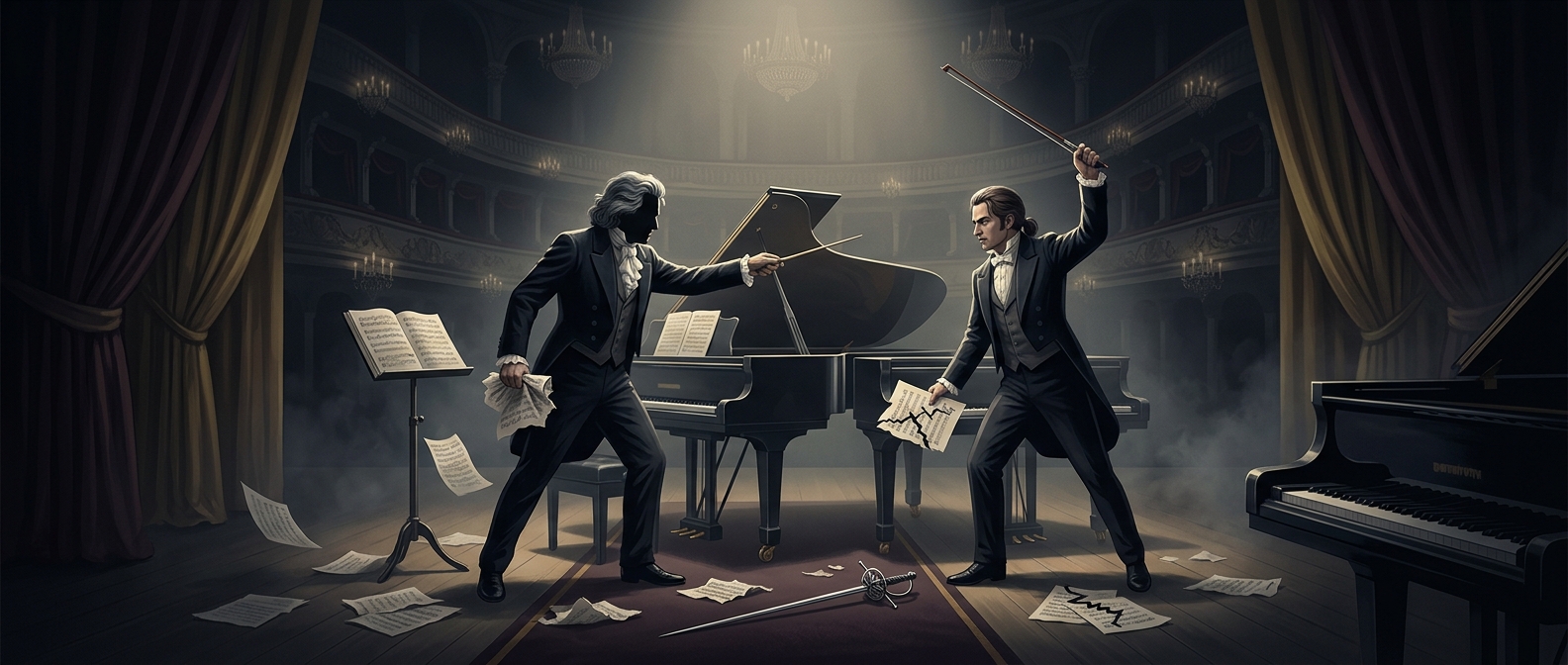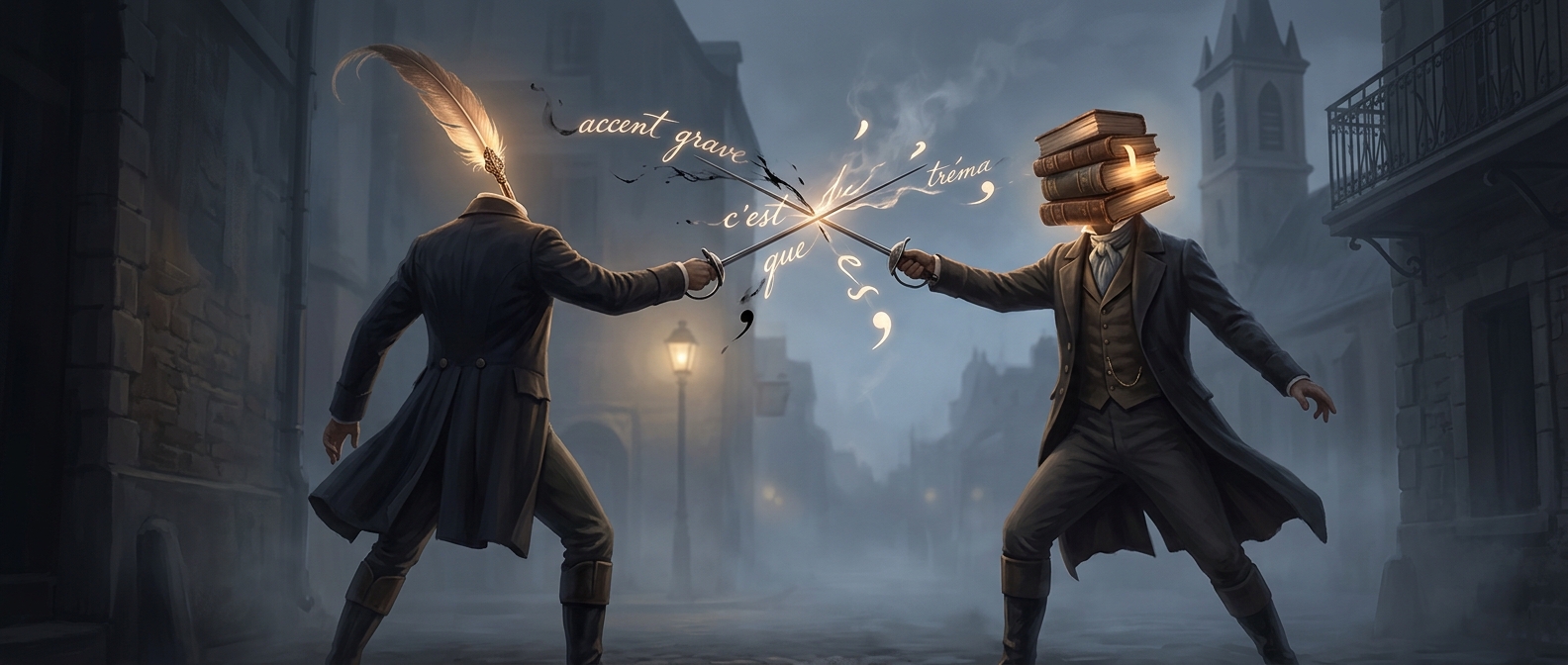
When a grammatical dispute became physical
Syntax is the arrangement of words that shows how they fit together: who acts, what happens, and how one idea relates to another. In a poem, that arrangement can be especially open to debate. Poets may move words out of ordinary order to fit a rhythm or rhyme, and a disputed construction can affect not just whether a line sounds elegant, but what it seems to mean.
That is the kind of small, technical question that set Charles-Claude Genest against another French writer in the 17th century. The precise point of syntax is not preserved in the account, so it is impossible to say which reading either man defended. What is striking is the leap from judging a line to drawing swords—and the fact that one writer was badly wounded.
From words to weapons
The episode belongs to a period when a personal quarrel could be treated as something to settle face-to-face, rather than simply abandon. But the surviving detail does not tell us exactly why these writers chose to fight, or whether either saw the dispute as an insult. It does show how literary criticism could become entangled with personal conflict: an argument about the order of words ended with a bodily cost, not a better-edited poem.