Why an insult could become a matter of honor
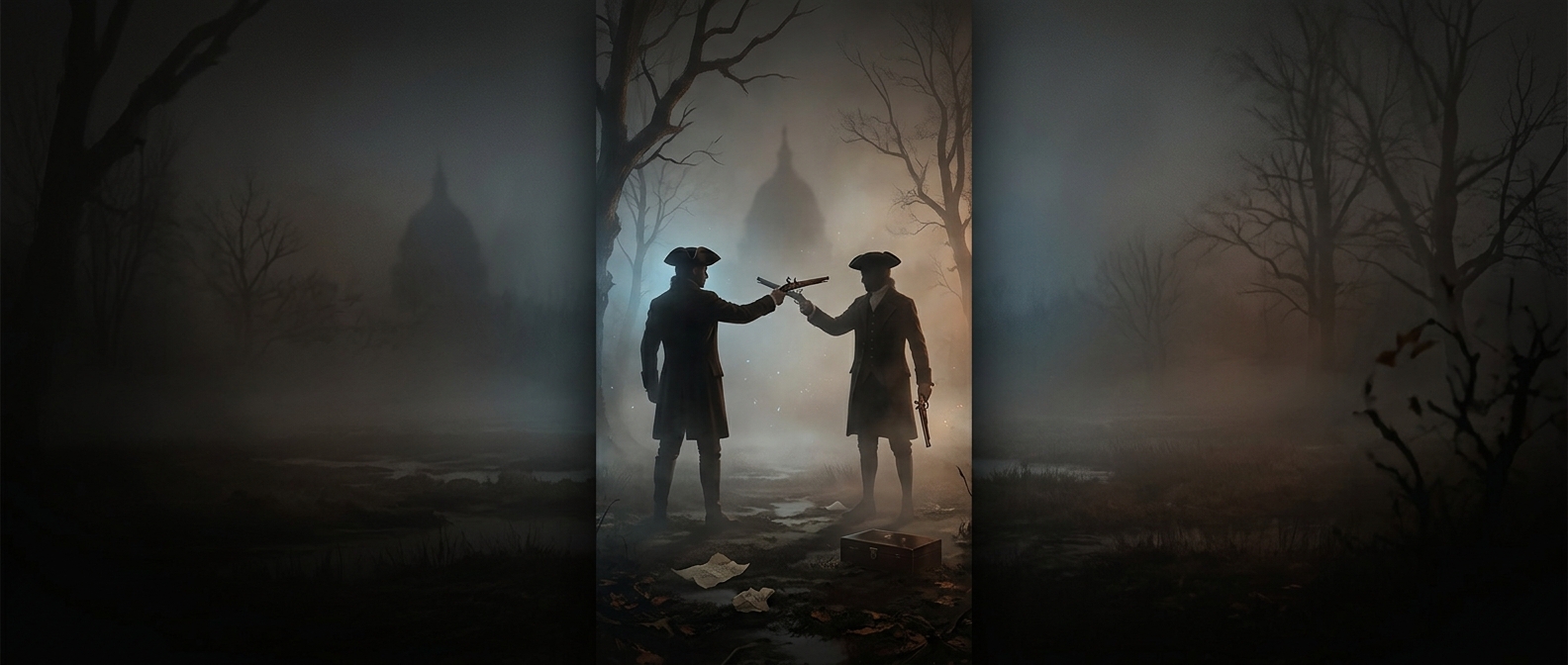
For an aristocrat, a public slight could threaten more than personal pride. In societies where reputation helped determine whom others trusted, invited, or did business with, leaving an insult unanswered might look like an admission of weakness. A duel offered a recognized way to answer the challenge without letting the quarrel become an open-ended feud.
That did not mean the fighters simply met and fired. Each man typically had a second—a representative who helped arrange the encounter, agree on its terms, and sometimes try to reconcile the opponents first. The ritual gave a dispute boundaries: there would be a meeting, agreed conditions, and a moment when each side could claim the matter had been answered.
Why the ritual could not control the result
The rules could regulate an encounter, but they could not make its weapons dependable. Early pistols were difficult to aim, and a single shot left no second chance to correct a miss. Nerves, distance, stance, and chance could matter as much as marksmanship. A duel intended to defend reputation could therefore end in a wound or death without either participant having deliberately chosen that outcome.
Dawn and the formality surrounding the meeting helped make the encounter a private, scheduled event rather than a public brawl. But ceremony was no safeguard: it could restrain the argument while still exposing both men to lethal danger. The same ritual that promised a controlled answer to an insult made the final result—and its cost—hard to control.