Why early tractors needed tracks
A wheeled tractor can push hard against the ground, but on soft soil its tires concentrate the machine’s weight in small contact patches. The pressure can make the soil give way: the tires sink, lose grip, and spin instead of moving the tractor forward. This is especially troublesome in wet fields, where water weakens the ground.
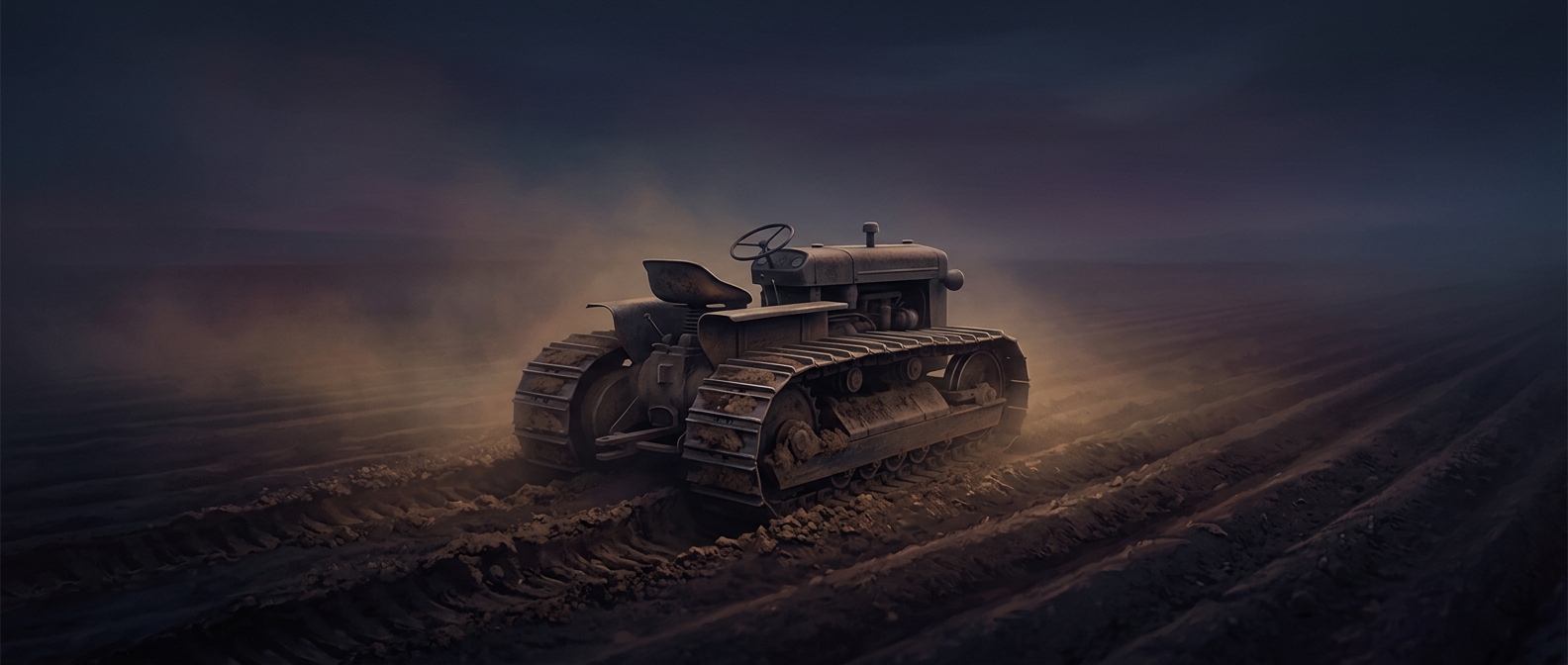
A track changes how that force reaches the earth. Linked plates form a continuous belt around wheels, so a much longer section of track rests on the ground at once. The tractor’s weight is spread across that area, lowering pressure at each point. The track also grips and rolls forward, giving the machine traction without relying on a pair of tires to find firm ground.
A farm solution with military consequences
The idea mattered beyond agriculture because both tractors and armored vehicles faced the same basic obstacle: heavy machines had to move over terrain that could not reliably support wheels. Tracks offered a way to keep moving across mud and other soft ground, making them a natural fit for tanks as armies sought vehicles that could cross difficult terrain.
The tradeoff is that tracks are more complicated than ordinary wheels. Their linked parts must stay aligned and under tension as they travel around the vehicle, and the system adds mechanical demands. But where sinking or wheelspin would stop a heavy machine, spreading its weight over a rolling strip can make the difference between being stuck and advancing.