Why the engine follows the rear wheel
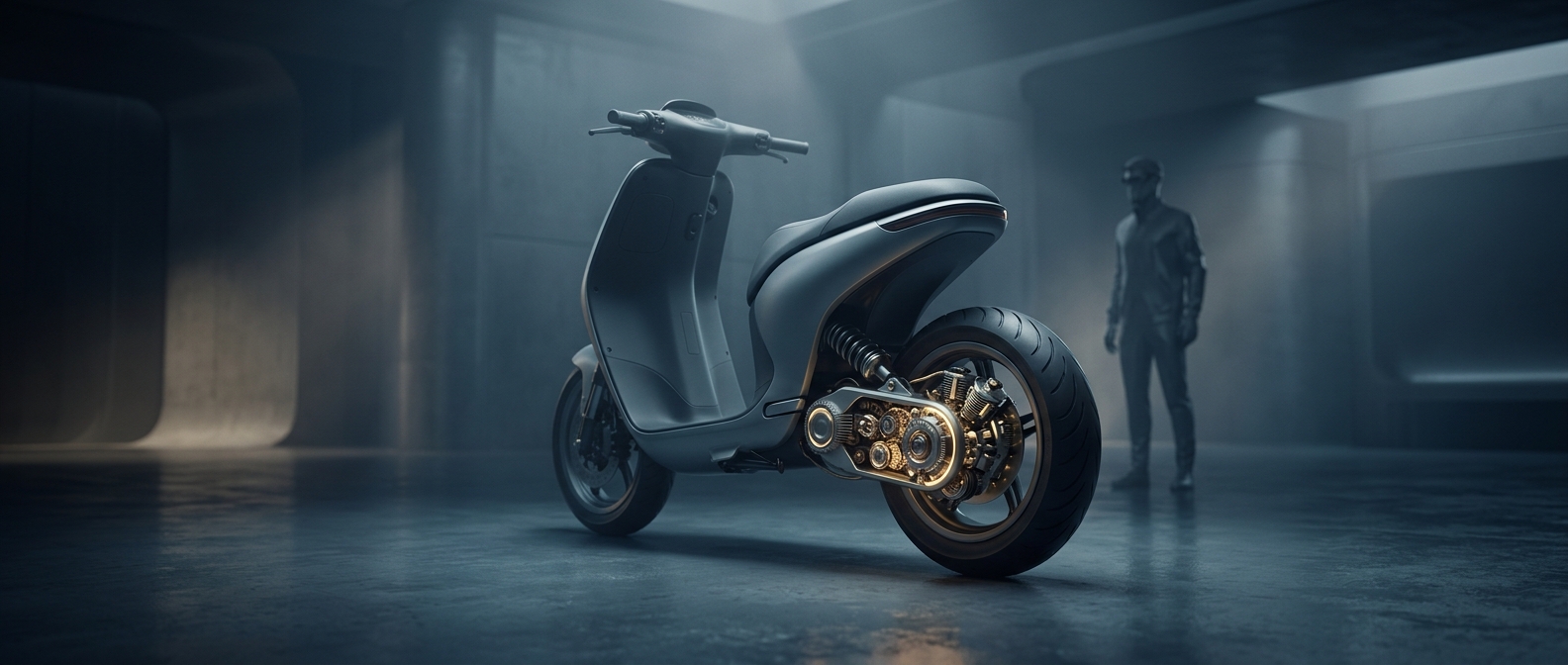
On many scooters, the engine and transmission are mounted together on a long pivoting arm that also carries the rear wheel. This arrangement is often called a unit-swing powertrain. The arm pivots at the frame, while a rear shock absorber lets the wheel rise over bumps and then settle back down.
Because the engine, transmission, and wheel move as one assembly, their relative positions stay fixed. That matters on a scooter with a continuously variable transmission, or CVT: a belt runs between pulleys inside the transmission, and the rear pulley ultimately drives the wheel. Keeping those parts together avoids asking the belt to bridge a changing gap as the suspension moves.
The tradeoff built into the layout
Putting the powertrain at the back makes for a compact package: the engine can sit close to the driven wheel, without a long chain or a separate drive shaft running from a frame-mounted motor. But the rear suspension must also move the engine’s mass, not just the wheel. That extra moving weight can make it harder for the tire to follow sharp bumps quickly, especially compared with a design that keeps more of the engine fixed to the frame.
So the bounce is more than a visual quirk. It is the visible result of a packaging choice: the scooter keeps its belt-drive components aligned by letting the whole rear powertrain travel with the wheel. When the back of the scooter rises over a pothole, the motor rises with it.