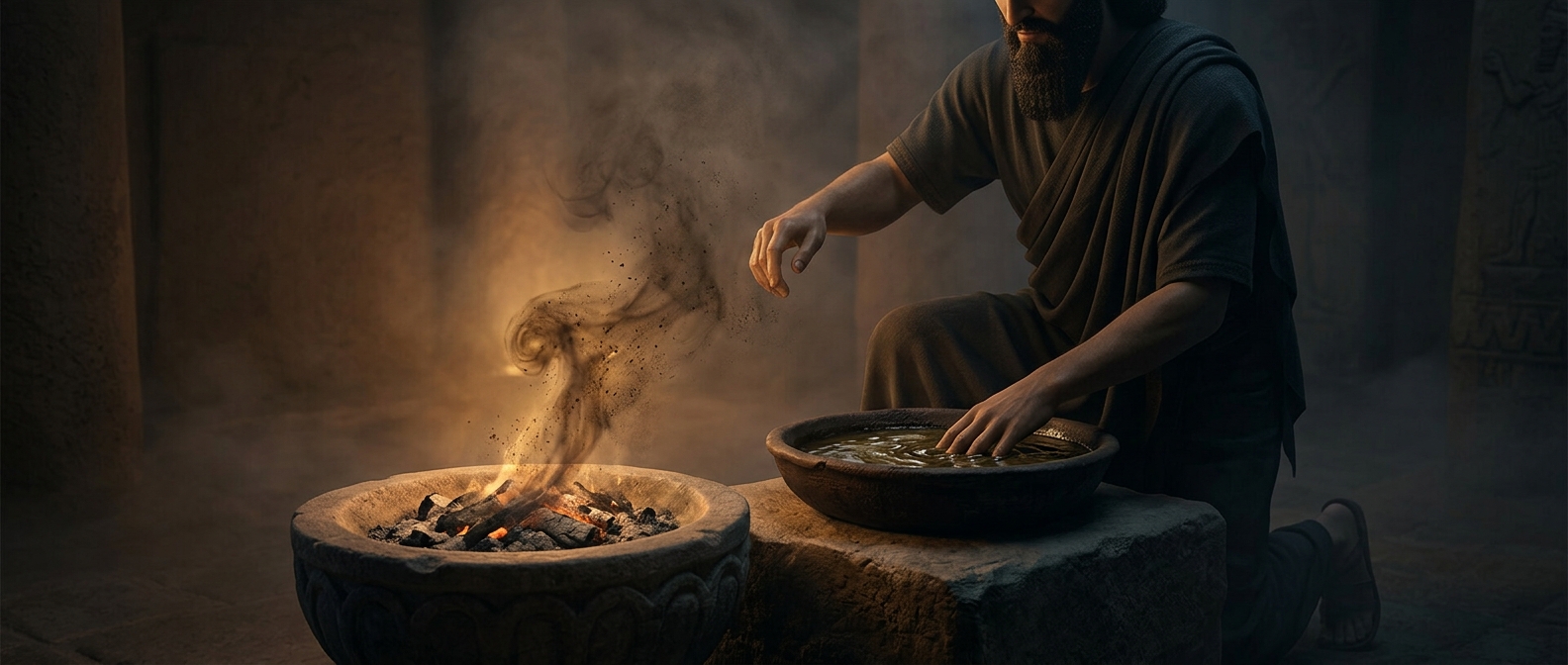
How ash helped turn grease into cleanser
The key ingredient was not the ash itself, but the alkaline liquid that could be drawn from it. Water passing through wood ash dissolves alkaline compounds, creating a caustic solution often called lye. When that solution is heated with animal fat, it breaks apart some of the fat’s molecules and forms fatty-acid salts—the substances that make soap work—along with glycerol.
The reaction is called saponification. Its results depended on the strength of the lye and the amount and type of fat, so a homemade batch could vary considerably. Potassium-rich alkali generally produced a soft, sometimes paste-like soap rather than the firm bar familiar today.
Why the paste could clean
Soap molecules have two contrasting ends: one mixes readily with water, while the other attaches to oily grime. As the paste is worked into dirt, soap molecules gather around greasy particles, helping suspend them in water so they can be rinsed away. That made the mixture useful against heavy grime, even if its texture and strength were unpredictable.
The process also had a practical limit: too much alkaline solution could leave a harsh, irritating cleanser, while too little could leave unreacted fat. Without standardized ingredients or precise measurement, making useful soap was a matter of managing a variable chemical reaction—not simply combining two household leftovers.