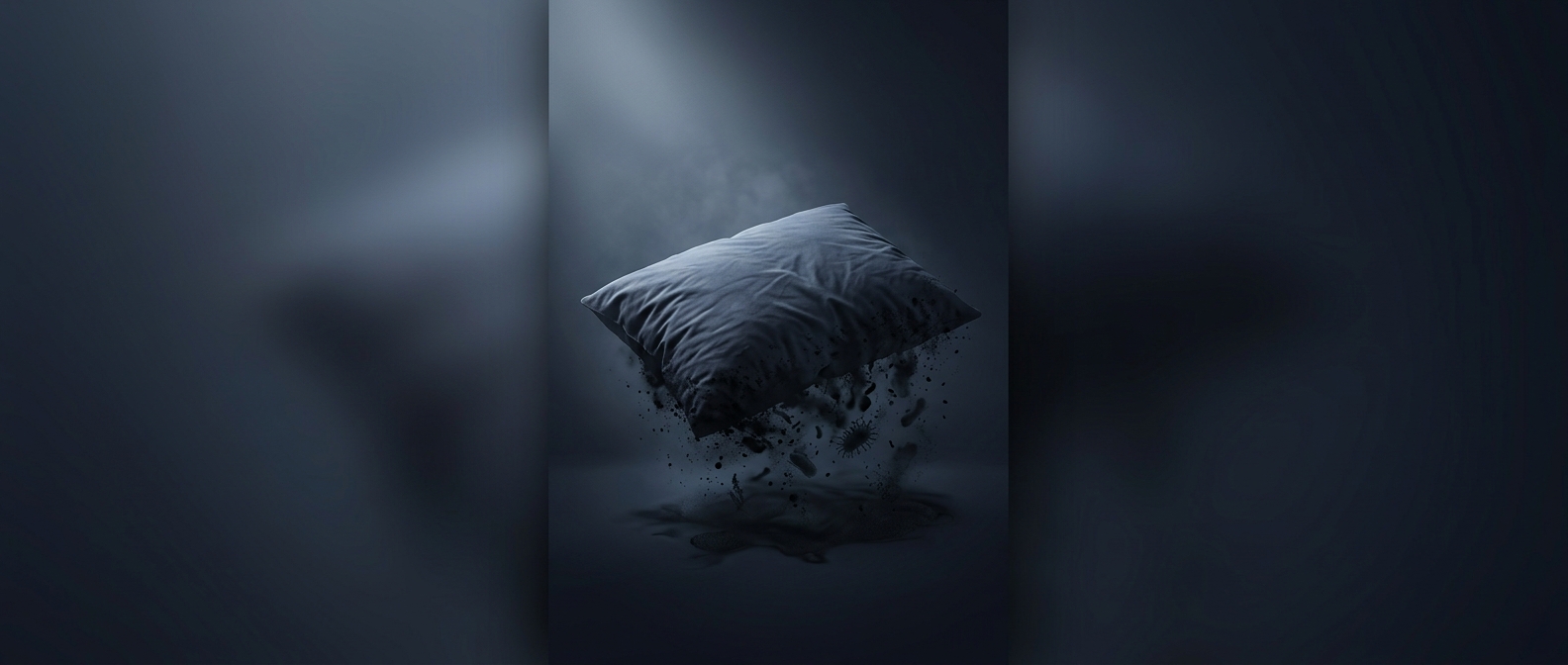
Why a Pillowcase Holds on to More Than Dust
A pillowcase is a collection surface for whatever comes off a person during sleep. Skin continually sheds tiny flakes, while the face and hair leave behind natural oils, sweat, and traces of hair or skin products. The cloth’s fibers catch some of this material, and ordinary room dust adds to the mix. Because the deposits are thin and spread through the weave, a case can look clean while still carrying residue.
What Dust Mites Add
Dust mites are microscopic relatives of spiders, not insects that bite. They feed on shed skin flakes, and their waste and body fragments can become part of household dust. In a bed, the supply of flakes and the warmth and moisture people create can make bedding a suitable habitat. The mites are not visible to the naked eye, so their presence does not make a pillowcase look noticeably dirty.
For people who are sensitive to dust-mite allergens, material from mites can contribute to allergy symptoms; many others have no noticeable reaction. That distinction matters: a used pillowcase is not automatically a health hazard, but its appearance alone cannot show what has accumulated in it.
Washing Resets the Surface
Changing and washing pillowcases removes much of the collected skin debris, oils, and dust rather than merely hiding them. The practical takeaway is simple: bedding is a surface in regular contact with the face, and “looks clean” is not the same as “has no buildup.”