A crop growing on the crab’s claws
At a methane seep, methane-rich fluid rises through the seafloor. Microbes living there can use methane and other seep chemicals as energy sources, building that energy into organic matter—the material that makes up living cells. Unlike plants, they do not need sunlight to make this food.
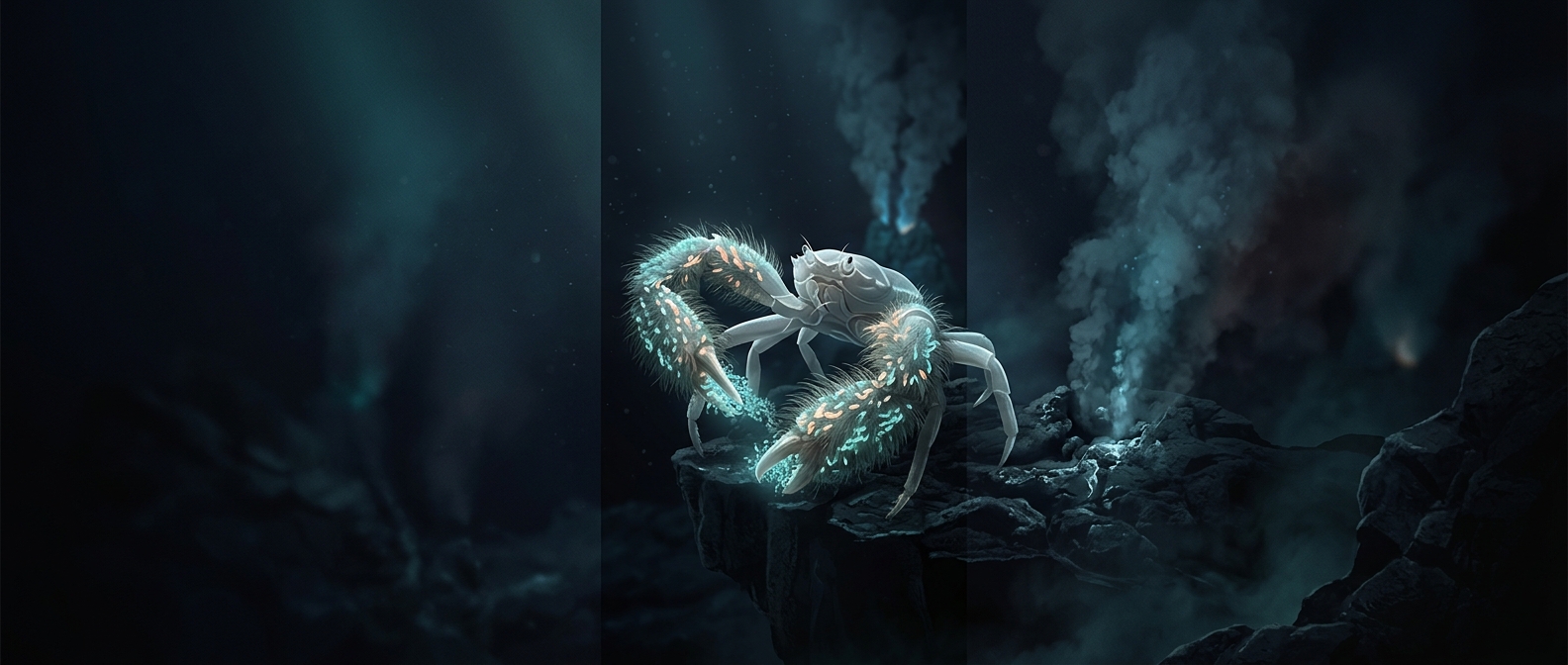
The crab’s claws and arms provide a surface where these bacteria can grow. As the microbial layer builds up, the crab scrapes it off and eats it. Its limbs are therefore both a place for the crop to grow and the tool used to harvest it.
Farming without sunlight
The key exchange is between the crab’s behavior and the microbes’ chemistry. The crab keeps the bacterial growth within reach; the bacteria turn chemicals from the seep into edible biomass. That makes an otherwise hard-to-reach chemical energy source available as food for an animal.
Calling this farming captures the harvest, but it does not mean the bacteria are crops in the human sense. The striking part is the arrangement: the crab carries its food-growing surface with it, and the seafloor’s chemistry does the work that sunlight does for a garden.