How a Wall Can Steer a Wireless Signal
A conventional Wi-Fi router sends radio waves into a room, where walls, furniture, and people scatter them. A device may end up in a weak spot—not because the router has stopped transmitting, but because little of its signal reaches that location in a useful way.
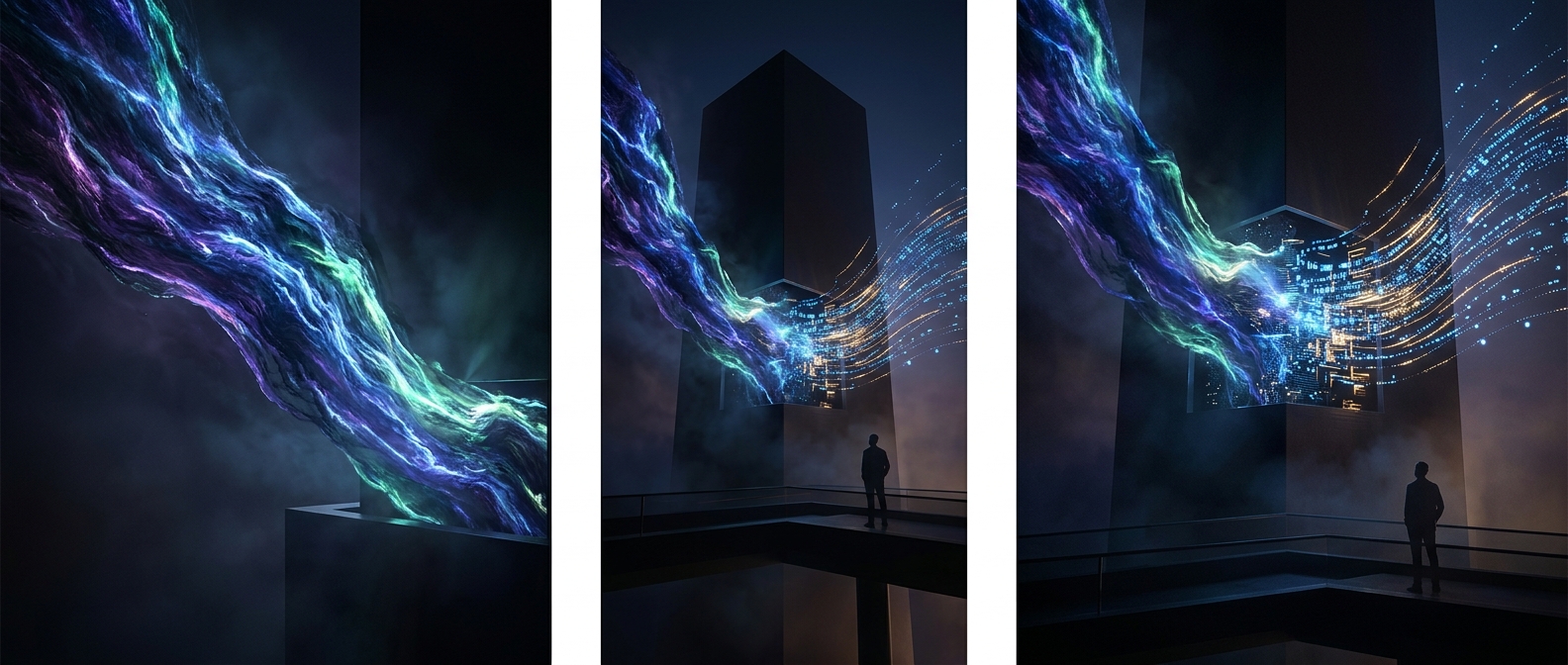
RFocus tackles that problem by making the wall surface itself adjustable. Its many small antenna elements can be switched into different states, changing how they interact with incoming radio waves. The surface does not generate a new Wi-Fi or cellular transmission; it redirects energy already in the air.
Turning Scattered Waves Into a Stronger Path
Radio waves can reinforce or cancel one another when they meet. By changing how the surface reflects them, RFocus can make more of the existing signal travel toward a device rather than scattering randomly around the room. The result is a stronger connection at the receiver, much as carefully angled mirrors can direct light—though radio waves are invisible and interact differently with materials.
This is not simply a larger router or a conventional repeater. A repeater receives and retransmits a signal, while RFocus works on the path of the existing waves. Its value is in shaping where those waves go, especially in places where ordinary access points leave dead zones.
The Tradeoff: A Smarter Environment
The idea shifts part of the work of wireless communication from the router into the surroundings. Instead of asking only how to make a transmitter more powerful, a network could use a controllable surface to improve the route between a transmitter and a device. That could help coverage without requiring the wall to act as another radio source—turning an everyday surface into part of the network’s signal path.