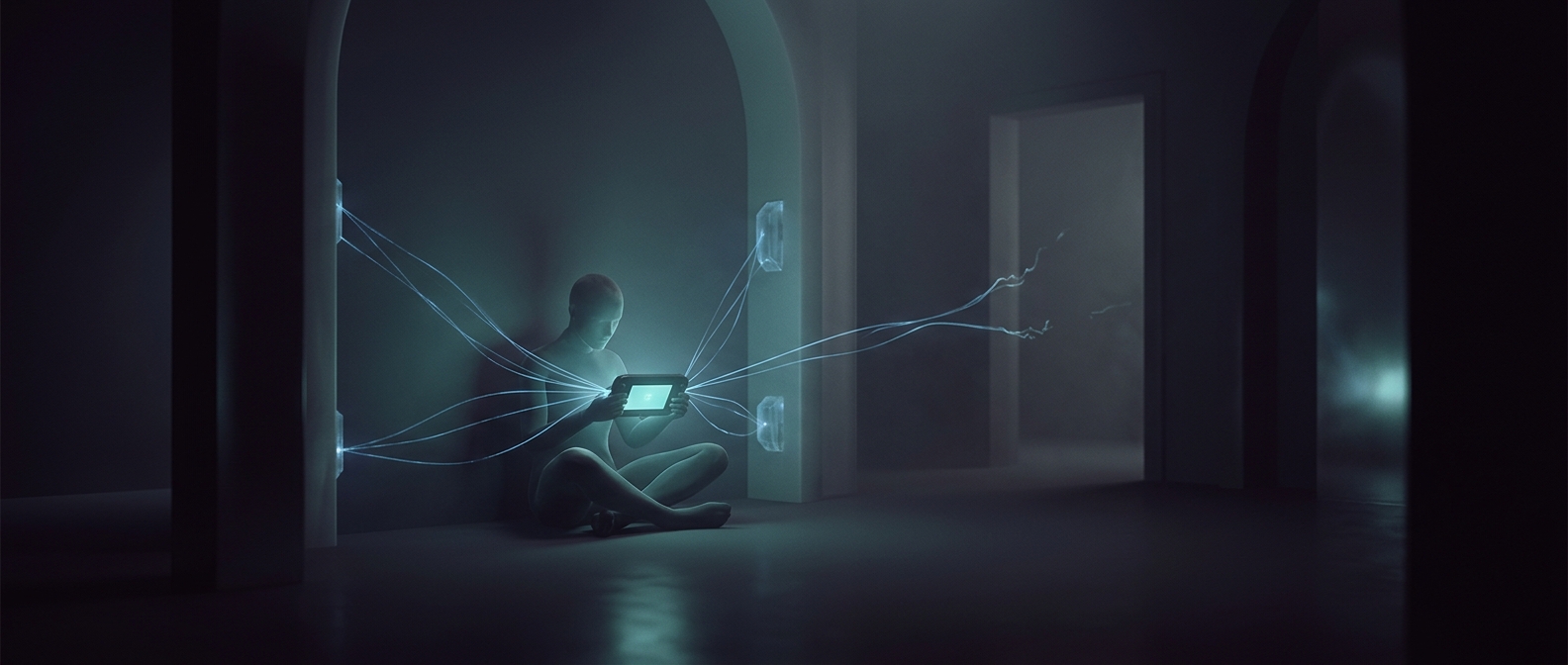
The GamePad Was a Screen, Not a Second Console
The Wii U GamePad looked like a handheld system, but it depended on the Wii U console to run the game. The console did the computing and sent a live picture and sound to the controller, while the GamePad sent button presses and other inputs back. That two-way exchange let players keep playing on the controller’s screen when the television was unavailable.
Why the Connection Had to Stay Close
Streaming a game is more demanding than sending occasional controller commands. The picture must arrive quickly and continuously; otherwise, what players see can lag behind their button presses. The Wii U’s dedicated local wireless link made that exchange possible, but it was designed for use near the console, not for a player to carry the GamePad around the house like an independent handheld.
Walls and interference could make the link less reliable, so the practical boundary depended on the home as well as distance. Once the GamePad lost the connection, it could no longer show the game being run by the console.
A Tradeoff Behind the Second Screen
Keeping the game on the console allowed developers to use the GamePad for more than a portable view: it could show a map, inventory, or information distinct from what appeared on the television. The tradeoff was dependence on a nearby console and a stable connection. The result was a controller that could move play away from the TV—but not away from the room that contained the system powering it.