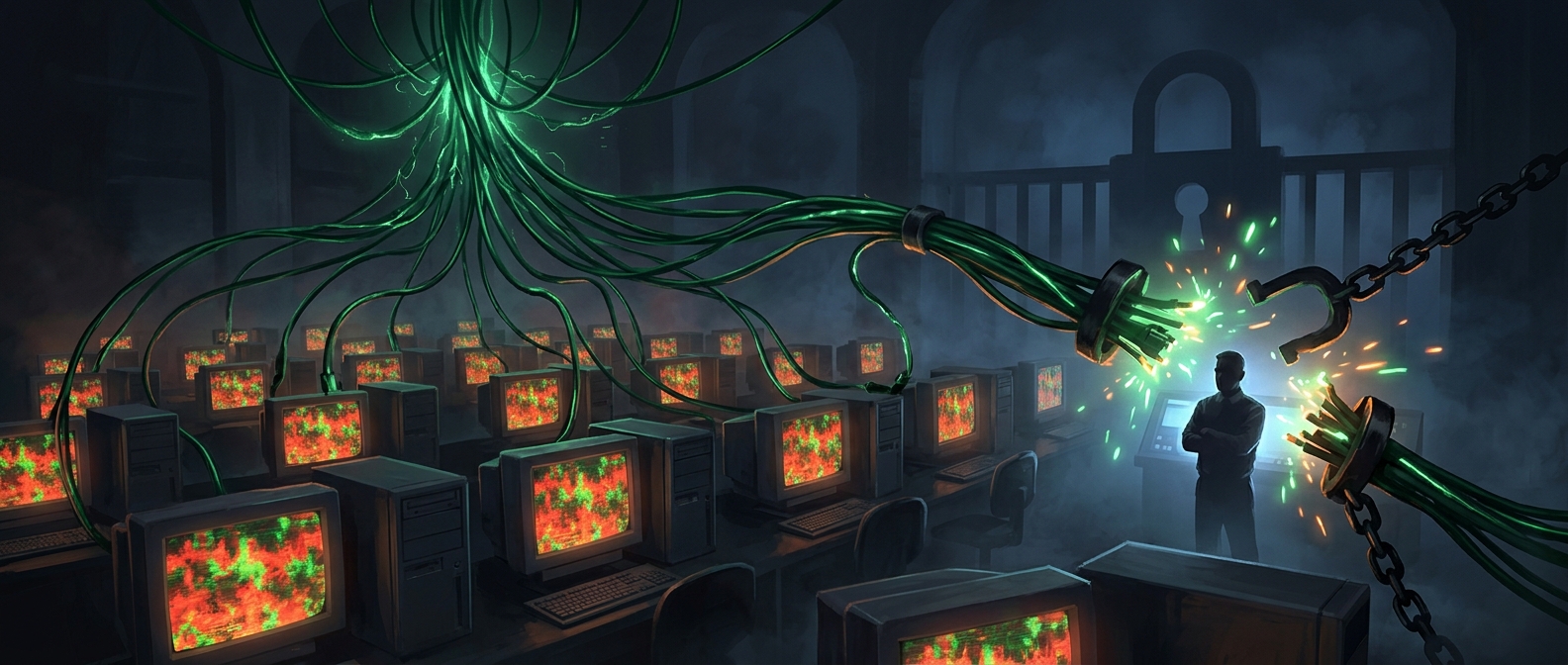
A fast game met a shared campus network
Doom’s deathmatch mode turned university computers into a place to play against one another, but the connection between them was often the same campus network carrying ordinary work. In 1993, many local networks used IPX, a protocol that let computers exchange small packets of game data—such as players’ movements and actions—so each machine could keep the match in sync.
A single match did not need to send enormous amounts of information. The trouble was that campus networks were shared infrastructure, and a sudden spread of games could compete with other traffic. Even when the game data itself was modest, unmanaged sessions could make a busy network less reliable for everyone using it.
How administrators fought back
IT staff needed more than a general rule against gaming: they needed a way to spot Doom traffic among the packets crossing the network. Network-monitoring tools could identify patterns associated with the game and interrupt them, effectively cutting off matches without shutting down the whole network.
That approach was a practical response to a new kind of campus demand. Doom made multiplayer gaming easy to start wherever compatible computers were connected, while university networks had been built to serve many users and purposes at once. The clash was not simply between students and administrators; it was between an exciting use of shared technology and the need to keep that technology available for everyone else.
The episode foreshadowed a familiar problem in network management: when a popular application spreads faster than the infrastructure or its rules can adapt, administrators may have to manage the traffic itself—not just ask users to stop.