A cooking mistake becomes a character reaction
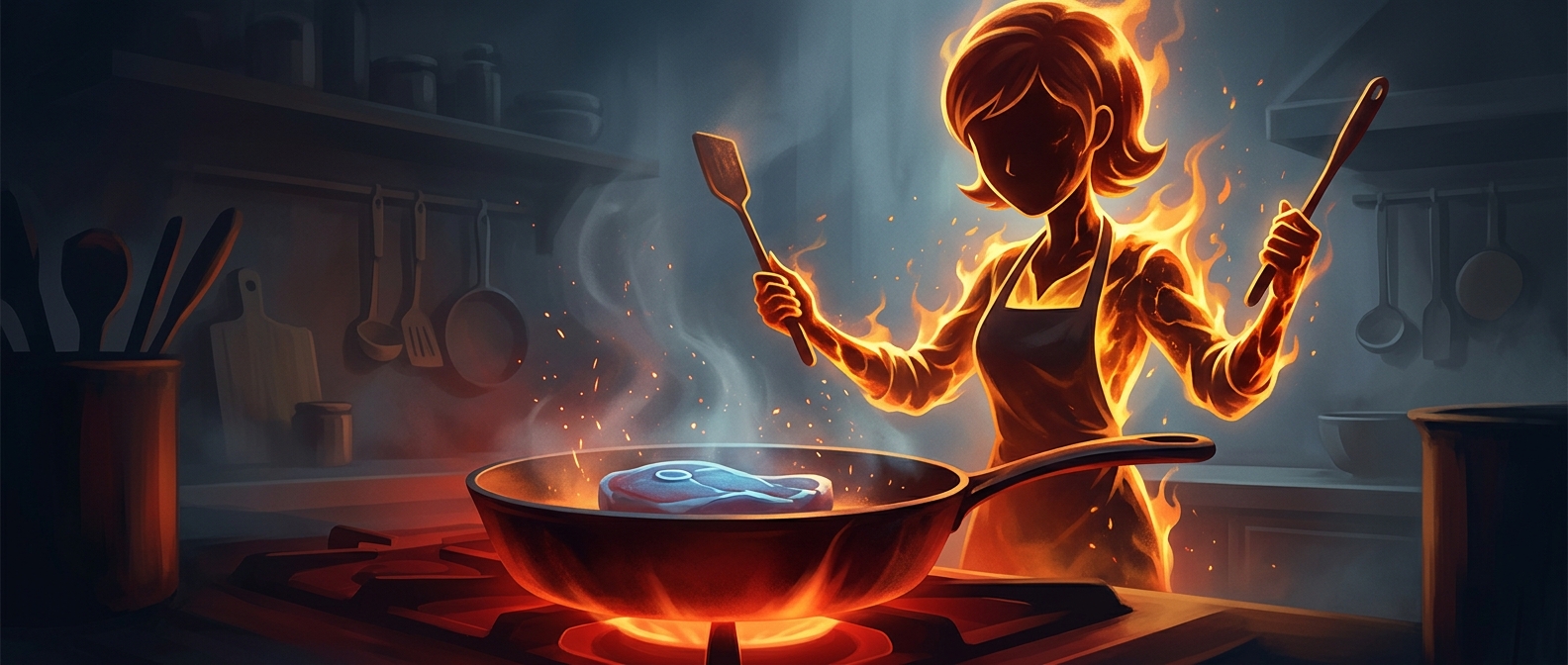
Cooking Mama turns small errors into something players can read at a glance. In a cooking minigame, the player may need to follow a gesture or timing cue; the result can feel abstract if the only feedback is a score. Mama’s exaggerated reaction gives that mistake a face—and, briefly, flames for eyes.
The joke works because the response is wildly out of proportion to the offense. A badly sliced onion is ordinary kitchen trouble, but Mama reacts as if the meal has become a crisis. That contrast makes correction entertaining rather than merely instructional: the player can see that something went wrong, while the cartoon overreaction keeps the moment light.
Feedback that keeps play moving
In a game built around repeating short cooking tasks, feedback has to arrive quickly. A dramatic animation communicates failure without pausing to explain the underlying input error. It also gives Mama a role beyond guiding the recipe: she becomes the expressive audience for the player’s performance.
That design turns precision into a comic exchange. The player tries to follow the task; Mama’s response makes the outcome instantly memorable. Instead of treating a mistake as a quiet loss of points, the game stages it as a tiny kitchen disaster—one that can make even a burned stew feel like a punchline.