Why a Mousepad Collects More Than Dust
Skin constantly sheds tiny flakes as its outer layer renews itself. A hand resting on a mousepad leaves some of those flakes behind, along with sweat and skin oils. The oils can make loose material cling to the pad rather than brush away.
Many mousepads have a woven cloth surface over a softer backing. Small gaps in the weave can catch debris, while repeated pressure and movement press it into the fabric. The spot where a wrist or palm rests gets the most contact, so buildup may be concentrated there. Over time, the mix can look darker or feel slicker than the surrounding surface.
What Scraping Actually Shows
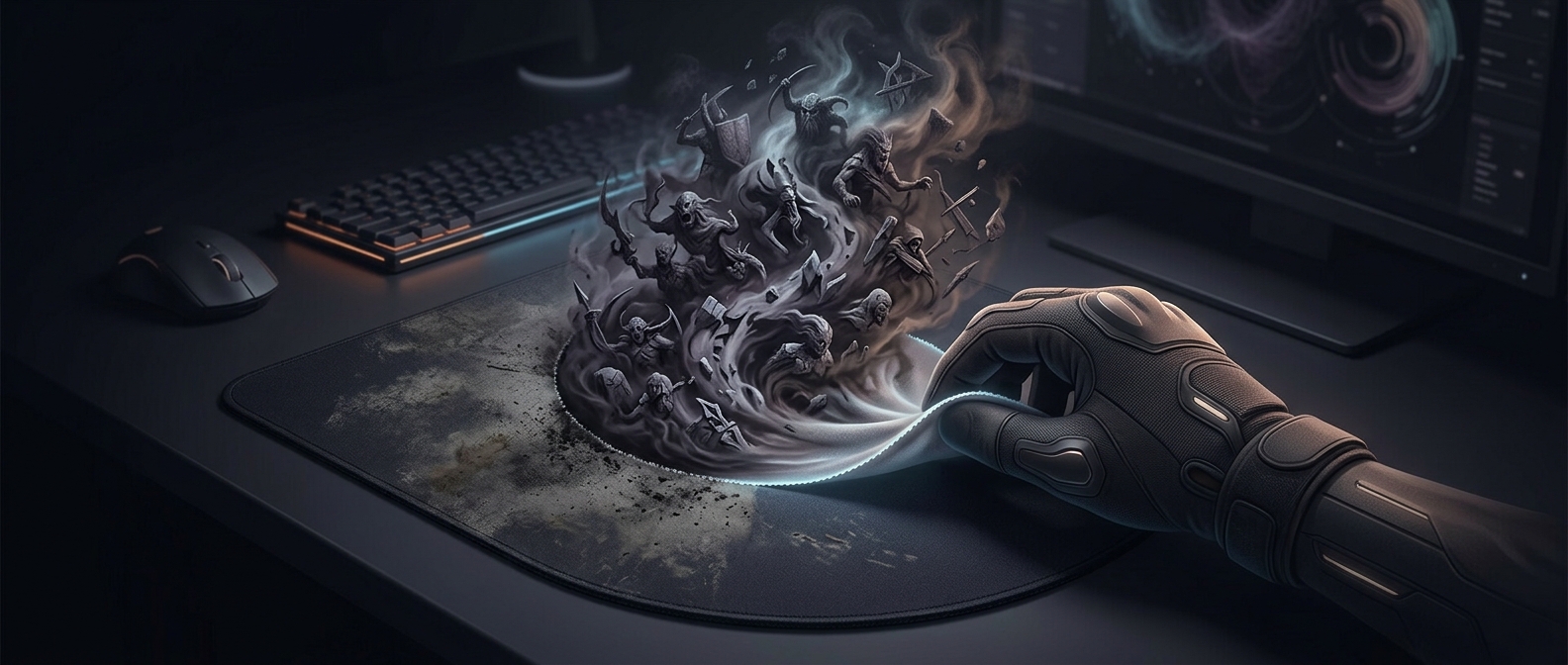
Dragging a fingernail or blunt edge across the fabric can gather material that was lodged between its fibers. That reveal may include shed skin, but it can also contain lint, dust, and residue from oils or other substances. A visible scrape is evidence of accumulated grime, not a precise test of what it is.
That matters because aggressive scraping can pull at the weave or damage a stitched edge without removing what is embedded below. Cleaning instructions vary by pad: some cloth surfaces can be gently washed, while others may be harmed by soaking or harsh cleaners. The hand-resting patch is a useful reminder that a mousepad is a frequently touched surface, not just a background for the mouse.