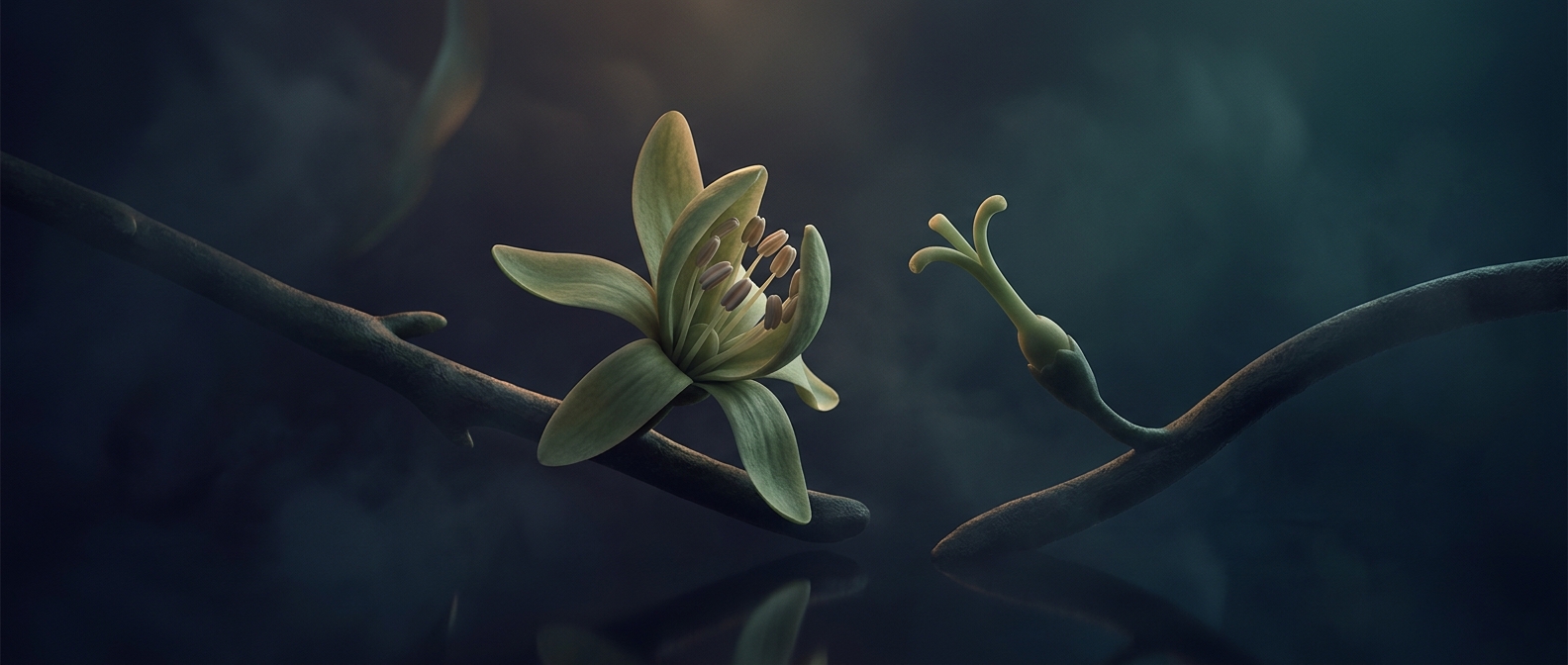
An avocado flower changes roles
An avocado flower is not simply “male” or “female” for its whole life. It opens in a female phase, when it can receive pollen, then closes and later reopens in a male phase, when it releases pollen. This sequence is called synchronous dichogamy: the flower’s reproductive roles happen at different times.
That timing creates a coordination problem. A flower can release pollen only after its own receptive period has passed, so successful pollination depends on pollen from one flower reaching another that is currently in its female phase.
Why a second tree can help
Avocado varieties generally follow one of two flowering schedules. In one schedule, flowers tend to be receptive in the morning and release pollen later in the day; in the other, those phases tend to occur in the opposite order. Planting varieties with complementary schedules can therefore put pollen-producing flowers and pollen-receiving flowers in action at the same time.
The match is not a rigid clock. Temperature and other conditions can shift flowering times, and individual flowers do not all open in perfect unison. A compatible neighboring tree increases the chances that the two phases overlap; it does not guarantee pollination.
The neighbor improves the odds, not the rules
A tree can sometimes pollinate itself because different flowers on that same tree may be in different phases at once. Insects such as bees can carry pollen between them. But when receptive flowers and pollen-producing flowers overlap only briefly—or are sparse—a second variety can make more pollen available at the right moment.
That is why “needs a neighbor” is useful gardening shorthand, not an absolute requirement. The practical point is to create more opportunities for pollen to meet a receptive flower, rather than to assume every avocado tree follows a perfectly separate schedule.