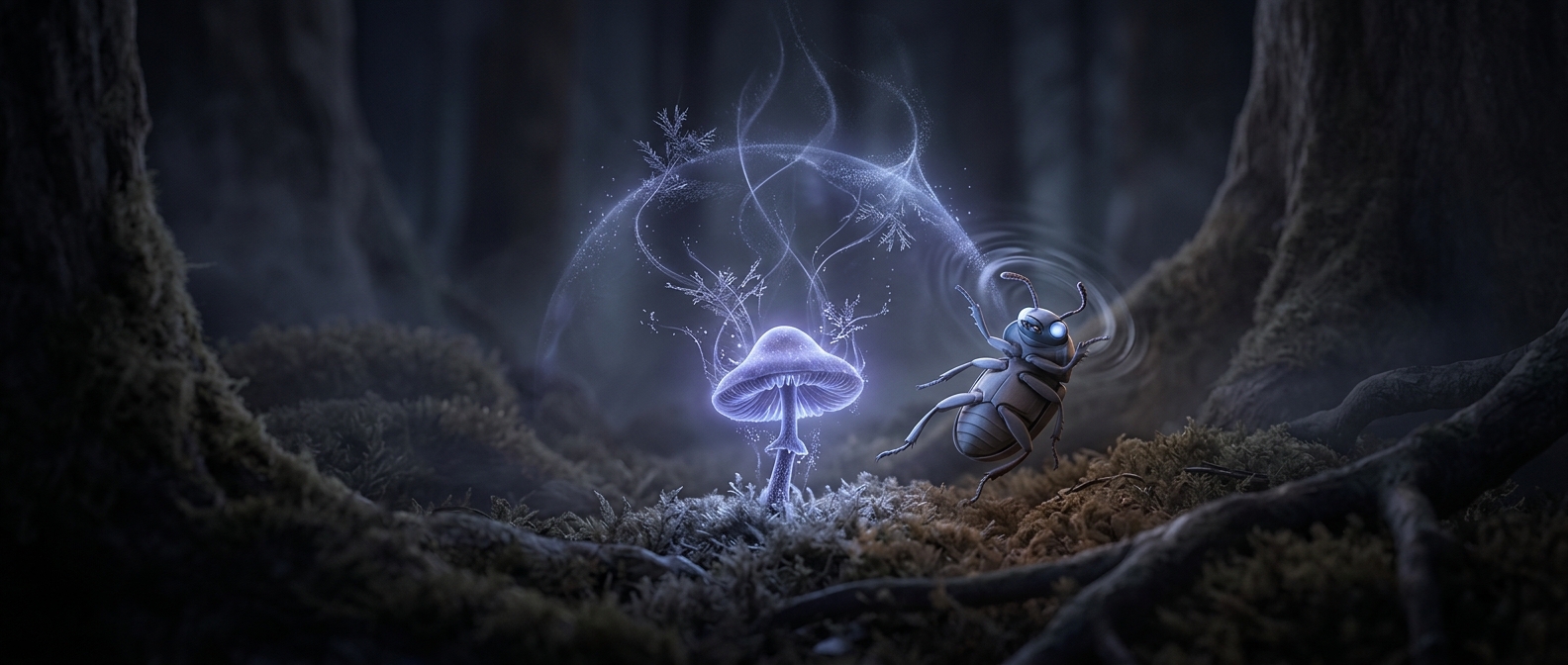
From mushroom compound to altered perception
After an animal eats a psilocybin-containing mushroom, its body converts psilocybin into psilocin, the compound that directly affects the brain. Psilocin interacts with serotonin receptors—proteins that help nerve cells respond to serotonin, a chemical involved in mood, perception, and other functions. Changing that signaling can alter how sensory information is processed, potentially producing behavior that looks disoriented or unusual.
That is different from making the mushroom physically difficult to eat. A grazing animal may be able to chew and swallow it normally while experiencing effects afterward. The exact response would depend on factors such as how much it ate and how its nervous system responds; “hallucination” is a human-centered word for an experience we cannot directly observe in a wild animal.
A possible defense, not a proven purpose
If an animal feels impaired after eating a mushroom, it might avoid that mushroom—or learn to avoid similar-looking ones. In principle, that could reduce grazing damage without the mushroom needing to taste bad or resist chewing. The potential defense would come from what happens after ingestion, rather than from a barrier the animal encounters at the meal.
But a plausible effect is not proof of an evolutionary function. To establish that psilocybin evolved to deter herbivores, researchers would need evidence that it actually reduces feeding or improves the mushroom’s reproductive success in nature. The chemistry provides a possible route to altered behavior; whether discouraging grazers is why the mushroom produces it remains unsettled.