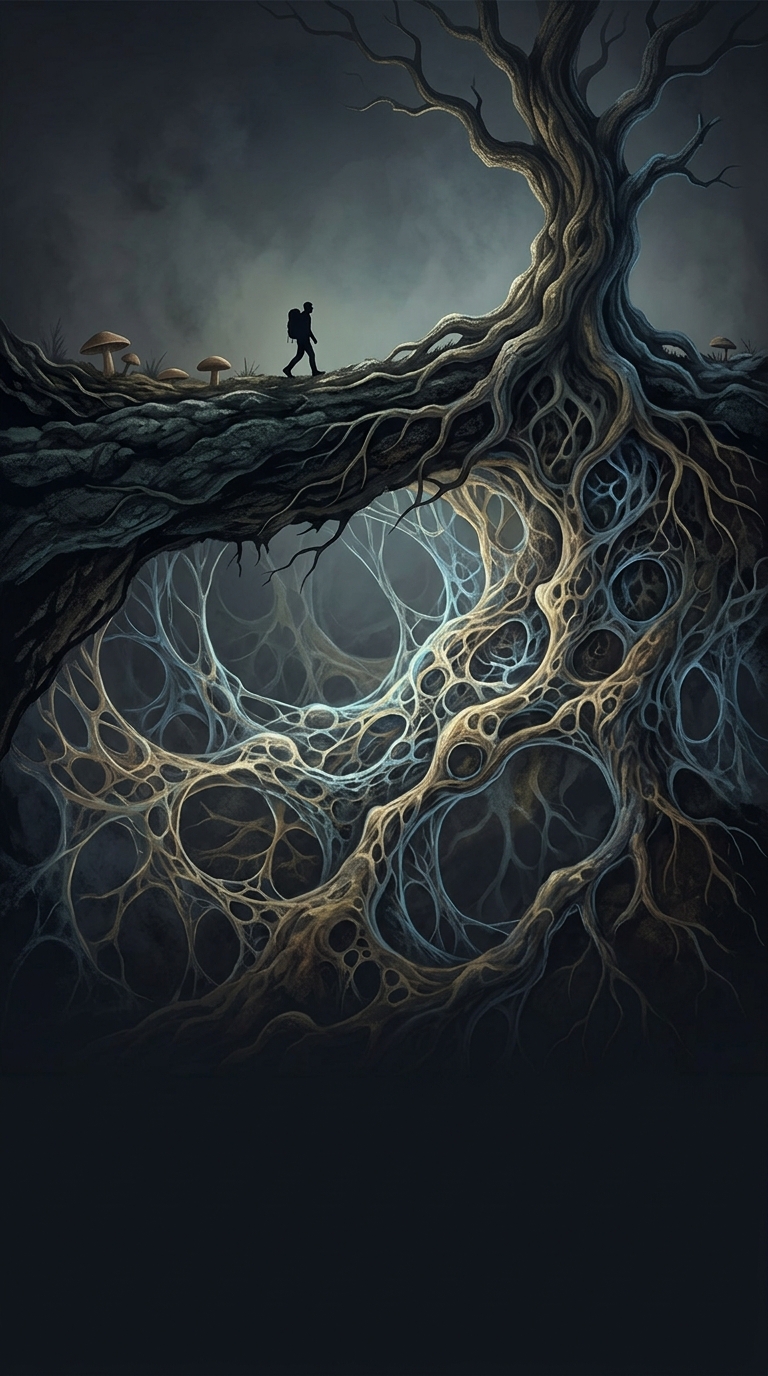
The organism is mostly hidden
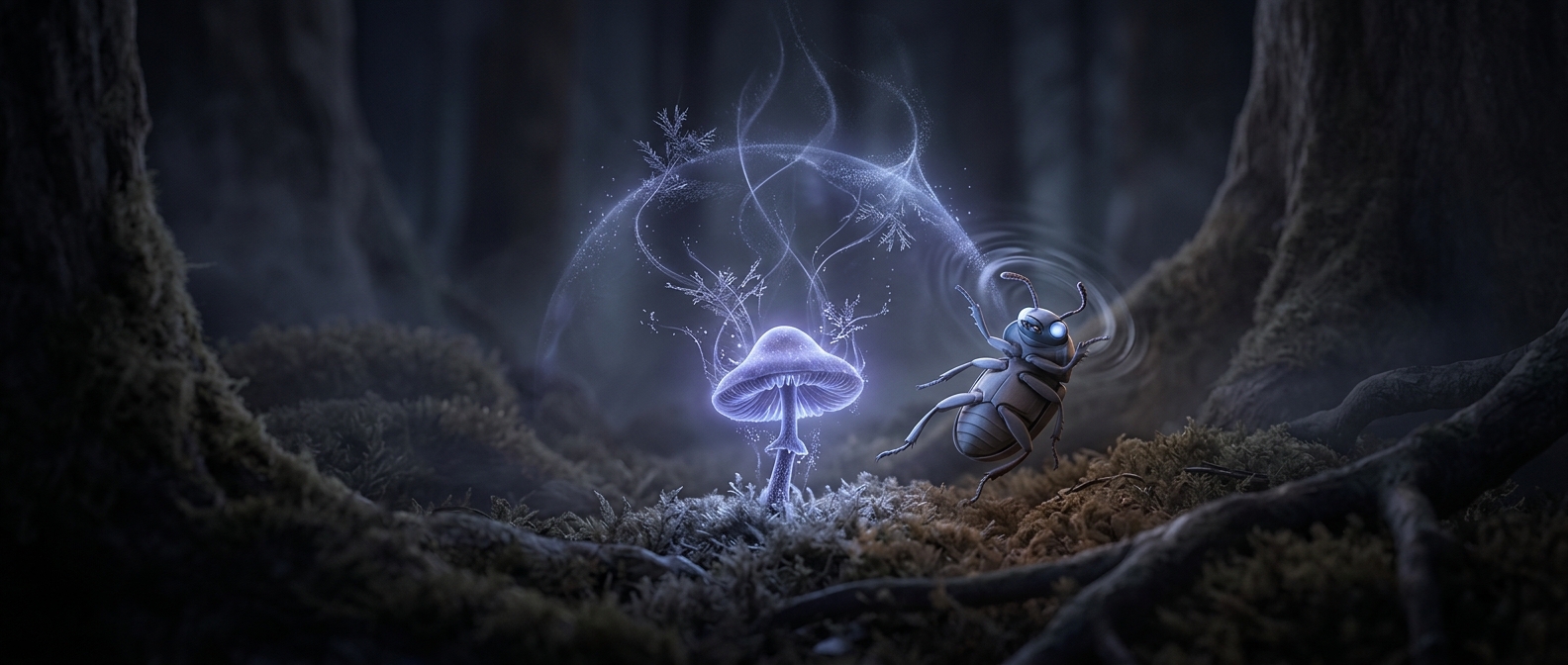
The honey mushrooms seen on the forest floor are only the brief, visible part of a much larger fungus. They are fruiting bodies: structures the fungus produces to release spores, much as a plant makes flowers or fruit. After they fade, the organism that produced them remains largely out of sight in the soil and in the wood of buried roots, stumps, and trees.
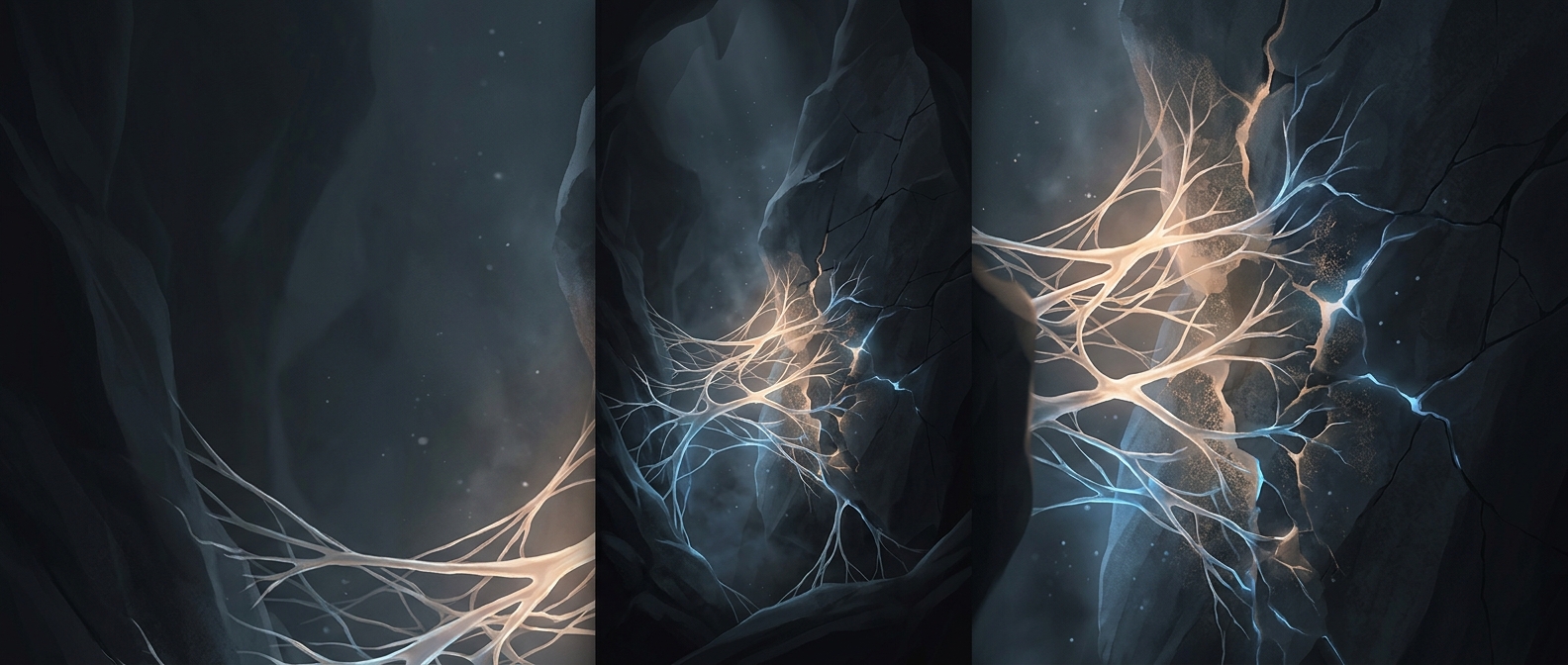
Its main body is made of mycelium, a branching web of fine fungal threads called hyphae. In Oregon, one honey-fungus network has spread across more than 2,200 acres. That figure describes the area it occupies—not a solid mass filling the ground.
How a fungus claims a forest
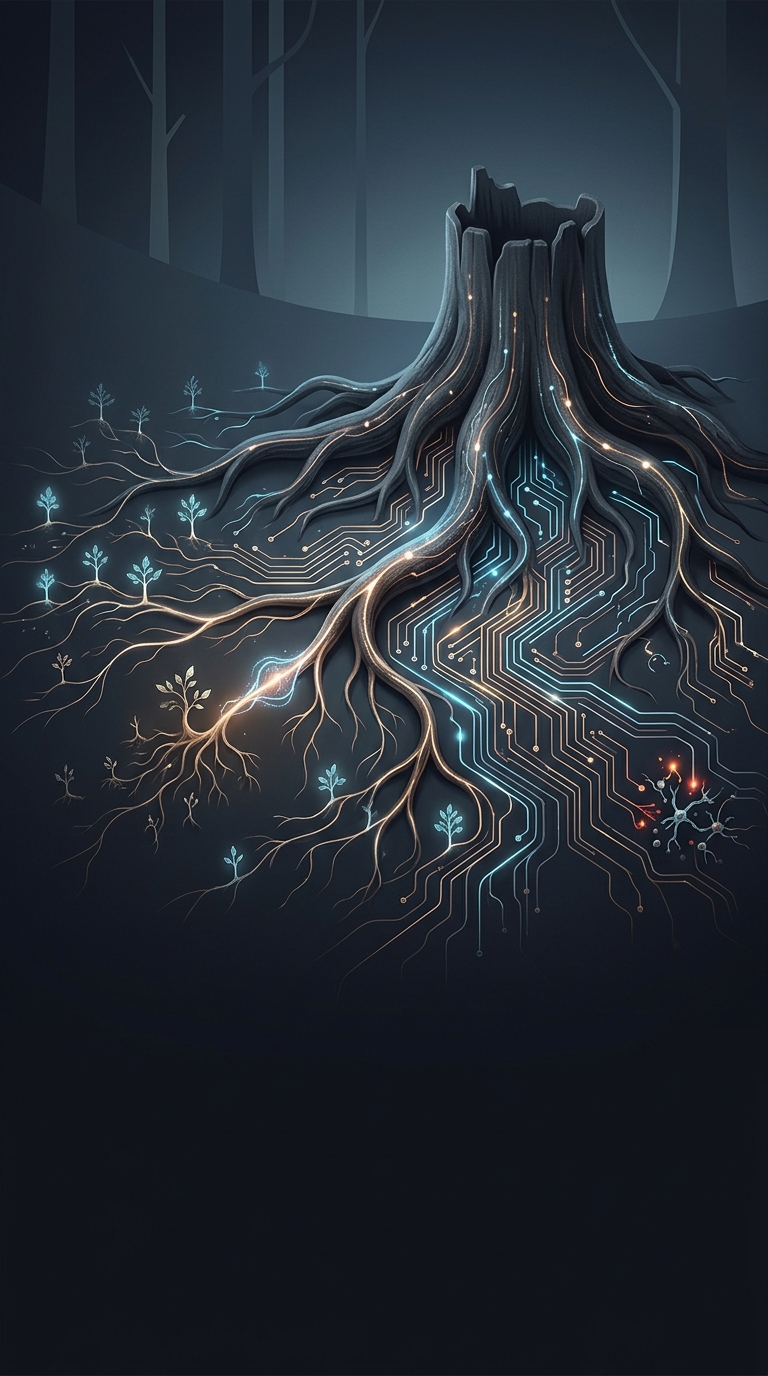
The threads grow through soil and into woody material, where the fungus digests substances in the wood and absorbs the released nutrients. As it advances, the mycelium can connect patches of food across a broad area. Some honey fungi also attack living trees, spreading through roots and beneath bark; others feed on wood that is already dead. The fungus’s growth is therefore both a way to find food and, in some cases, a cause of tree disease.
The network expands gradually as hyphae extend and branch. A single visible cluster of mushrooms does not reveal its full boundary: fruiting happens only under suitable conditions, and much of the mycelium may never produce mushrooms in a given spot or season.
Why its size is hard to picture
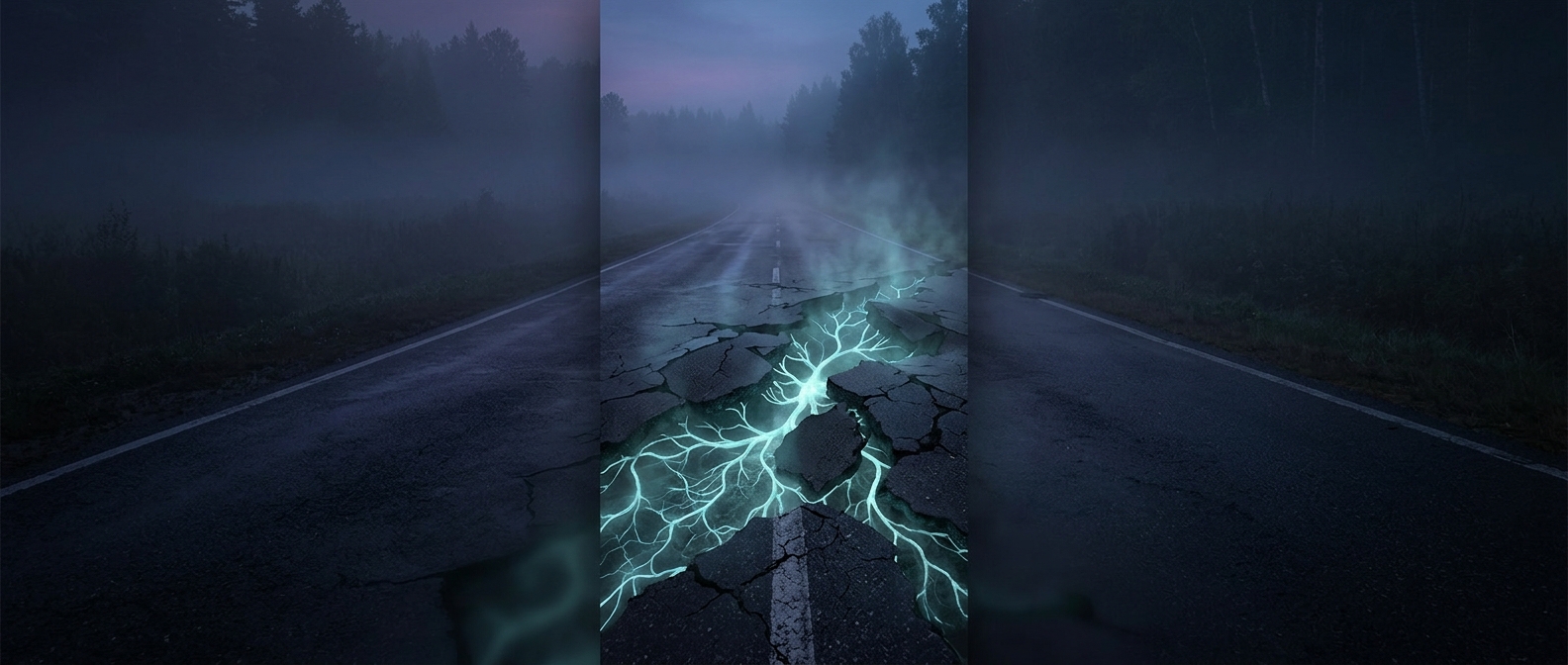
A forest contains many separate organisms, but a vast fungal network can remain genetically one individual as its mycelium spreads. That makes its scale easy to underestimate. The mushrooms are temporary signals from a body that persists underground and inside wood, where it can keep growing while the forest surface looks unchanged.
The striking scale is not a towering fungus but a thin, distributed one: a living network measured by the ground it reaches, not by the space it visibly fills.