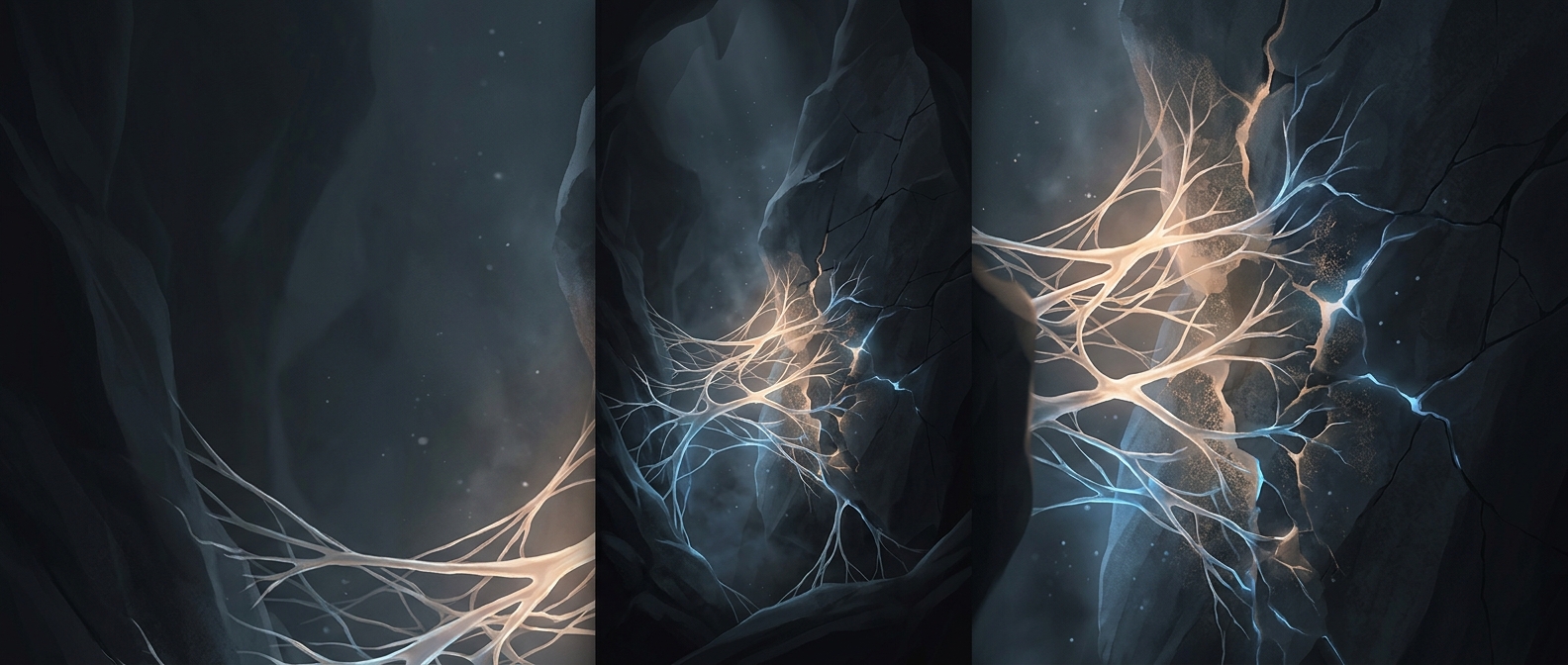
A fungal thread turns a hairline crack into a path
A fungal filament, called a hypha, is a narrow tube that grows from its tip. Concrete is strong under ordinary loads, but it is not perfectly sealed: tiny pores and cracks can admit water and provide a route for a hypha to advance. The fungus does not need to cut through an unbroken slab; it follows weaknesses already present in the material.
Pressure and chemistry work together
As water enters the growing hypha, pressure inside it helps press the tip forward. That gentle, sustained push can widen a microscopic opening. At the same time, fungal secretions can alter the surrounding mineral material, weakening it so the tip meets less resistance. The combination matters: pressure helps the filament advance, while chemical action can make the path easier to enter.
Concrete itself is a mixture of mineral aggregate held together by cement-based binder. A hypha moving through a crack may encounter and affect these materials differently, so the result depends on the concrete’s condition and the fungus’s surroundings. Moisture is especially important: without enough water, fungal growth and the pressure-driven advance slow or stop.
Slow growth, lasting effects
This is a gradual process, not a fungus rapidly drilling through a wall. But repeated growth and mineral weakening can contribute to deterioration, particularly where water keeps returning to an existing crack. The same fine-scale process that lets fungi colonize stone and other mineral surfaces can therefore matter in buildings: a tiny crack can become both the fungus’s route and a point of continuing damage.