How fungi unlock a fallen tree
A tree trunk is not simply a pile of plant food. Its cell walls are reinforced with lignin, a complex, durable material that helps wood stay rigid and resists many forms of decay. Cellulose, another major part of those walls, contains sugars that decomposers can use—but lignin can shield it.
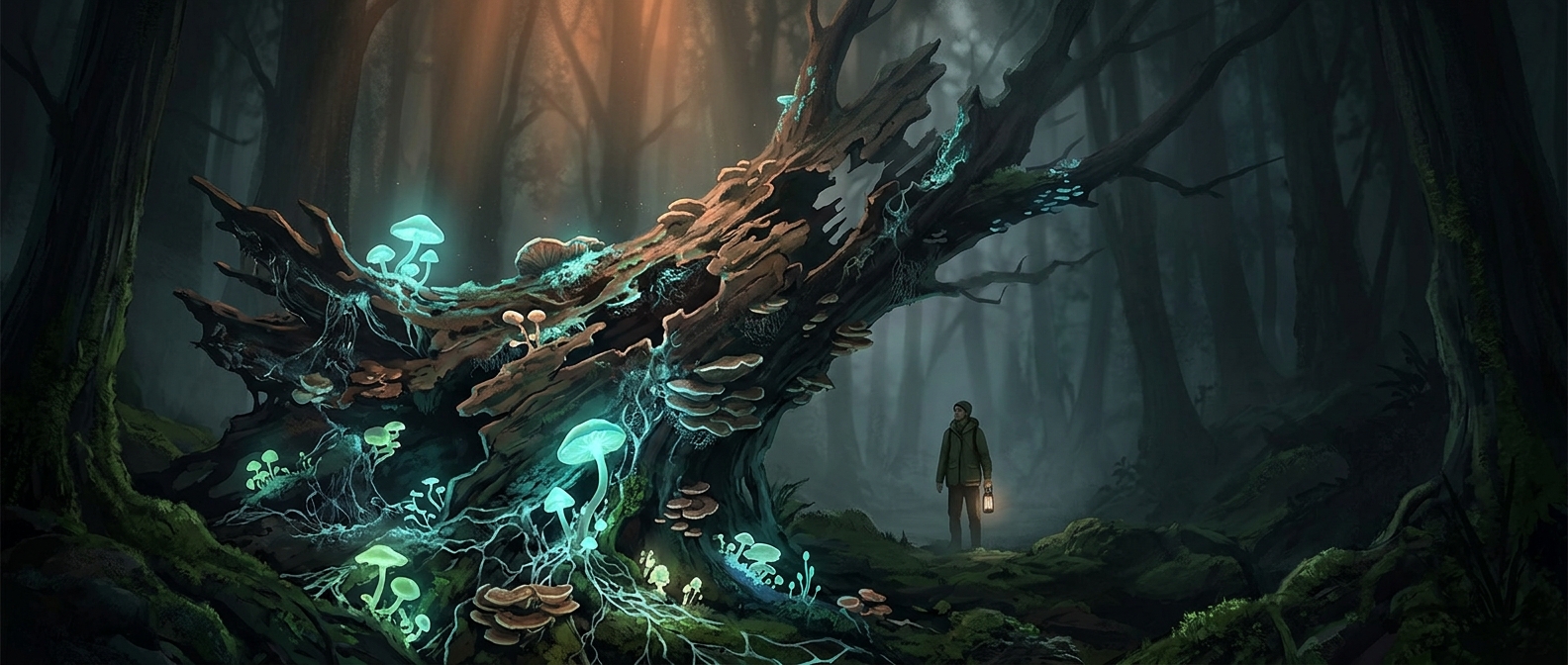
Some fungi send threadlike filaments called hyphae through cracks and pores in the wood. They release enzymes and other reactive chemicals that alter lignin’s structure. This is a demanding chemical job: lignin is irregular and difficult to break down, so fungi use a suite of tools rather than one simple digestive enzyme. As the protective structure weakens, fungi can also access cellulose and other compounds in the wood.
Decay becomes a team effort
Different fungi attack wood in different ways. Some remove much of the lignin, leaving pale, fibrous wood; others consume more of the cellulose and leave behind darker, crumbly material. These patterns reflect different chemical strategies, not merely different stages of the same process.
As fungi soften and fragment the trunk, bacteria, insects, and other organisms can reach its contents more easily. They feed, burrow, and further break the wood apart. The nutrients tied up in the tree gradually return to the soil and living food web, while some of its carbon remains in the soil or is released as gases during decomposition.
A fallen log may look like a single object slowly vanishing. In reality, it is a changing habitat: fungal chemistry makes the wood accessible, and a succession of organisms turns that tough structure into resources the forest can use again.