The family tree beneath the mushroom
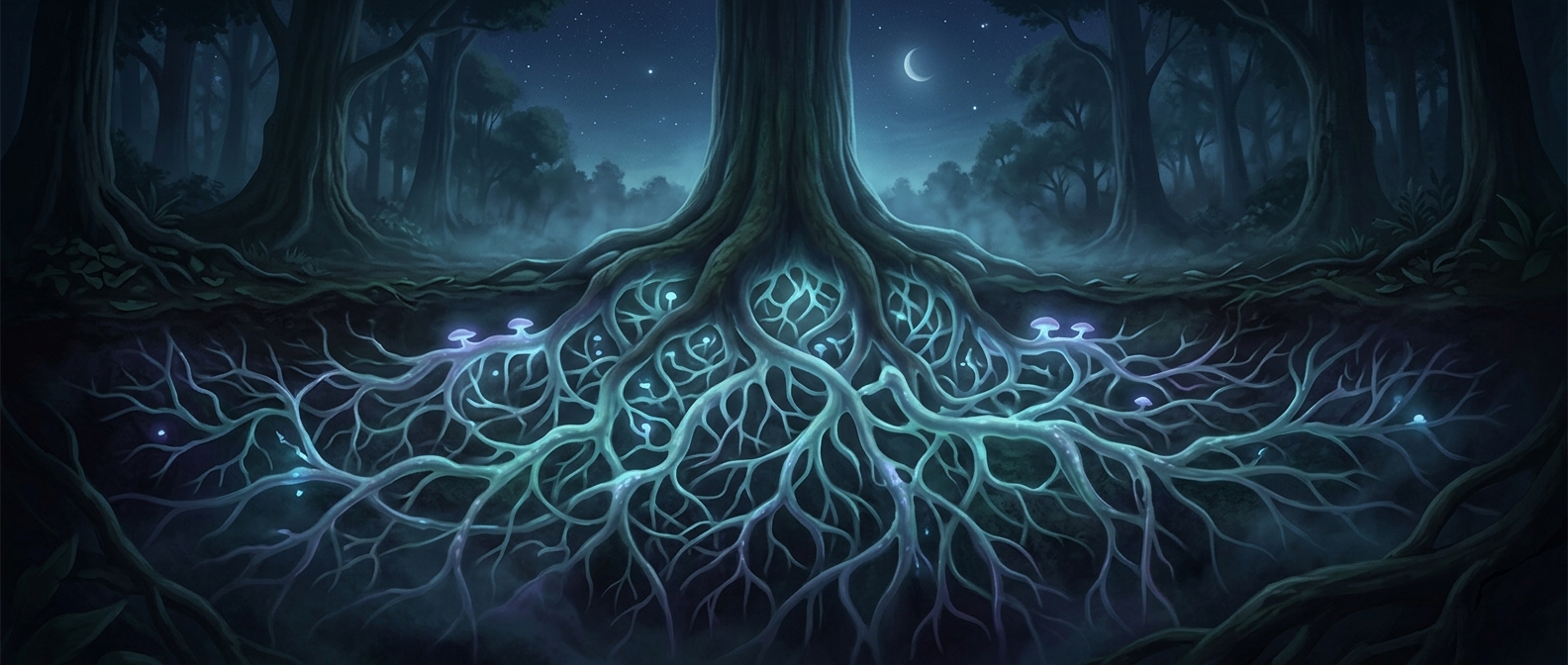
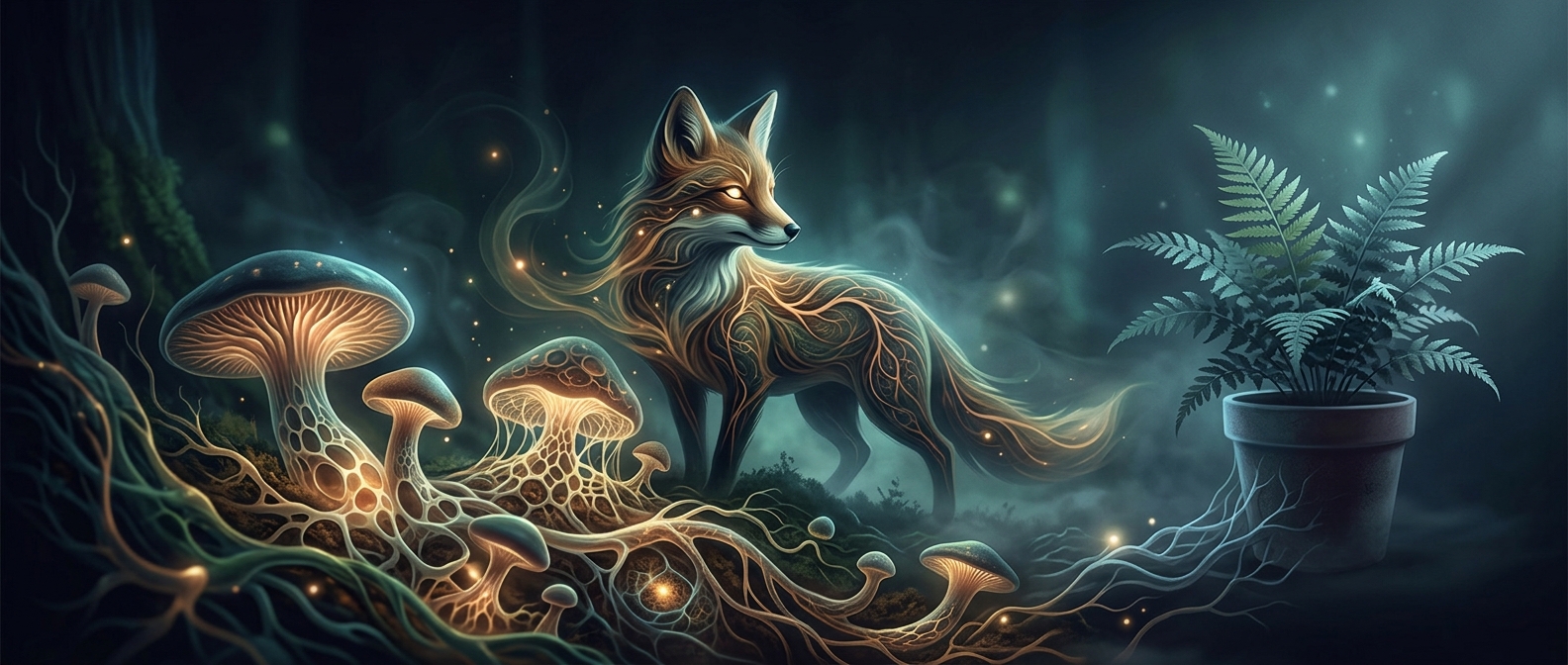
A mushroom is only the visible, spore-producing part of a fungus. Much of the organism may be a network of fine threads called mycelium, spreading through soil, wood, or another food source. That hidden growth is where the fungus does most of its feeding and expanding.
Fungi and animals belong to a broad evolutionary group that shares an ancient common ancestor. Plants branched off on a more distant limb of life’s family tree. This relationship does not mean fungi are animals; it means their lineages are more closely related to one another than either is to plants.
A different way to live
The resemblance between fungal and animal biology becomes clearer when food is involved. A fungus sends out microscopic threads and releases enzymes—molecules that break larger substances into smaller ones. It then absorbs the usable pieces. Animals, by contrast, generally take food into their bodies before digesting it. The methods differ, but both lineages depend on obtaining ready-made nutrients rather than building their food from sunlight.
Chitin, found in fungal cell walls and in the outer coverings of crabs and other arthropods, is another clue to this shared evolutionary neighborhood. It is not a family-tree label by itself, but it helps reveal why a mushroom’s biology has more in common with animals than its plantlike shape suggests. What looks like a little forest plant is often the fruit of a much larger organism quietly digesting its way through the ground.