How an echidna processes a mouthful without teeth
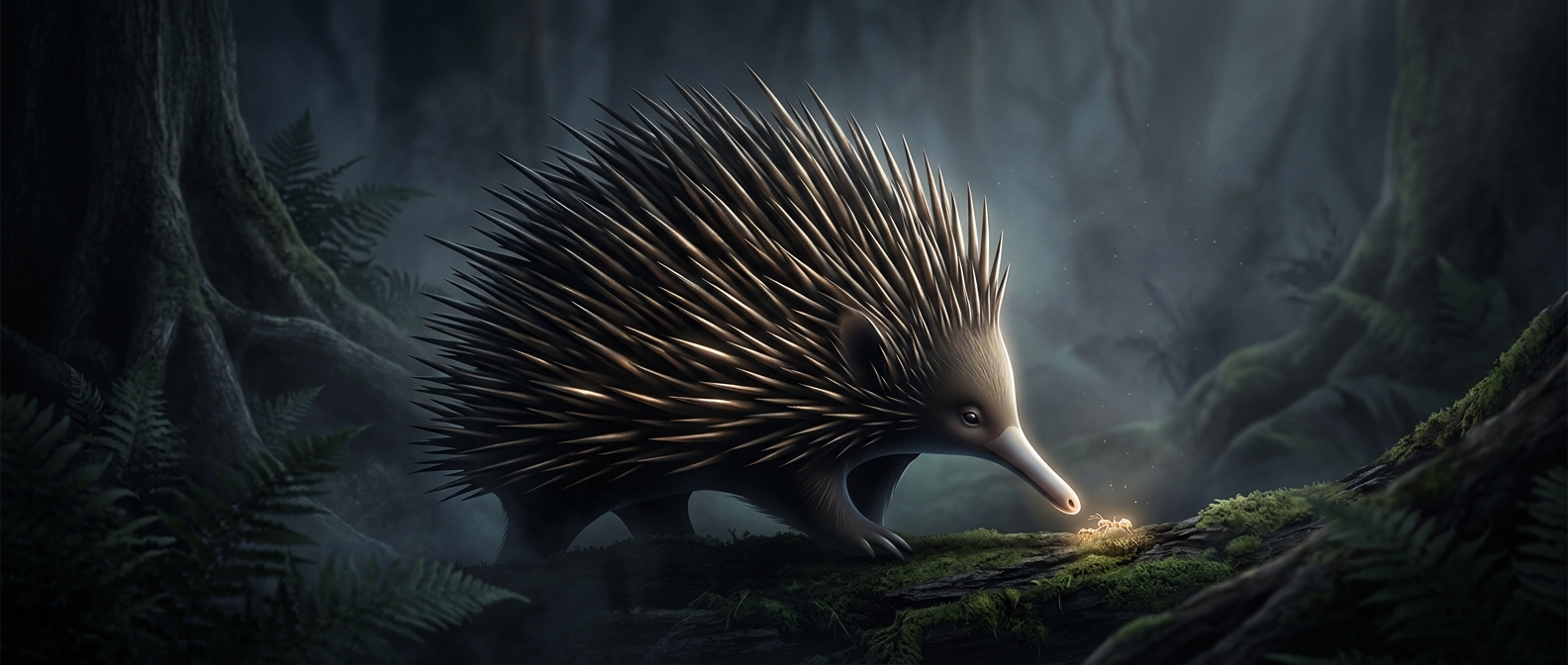
An echidna’s feeding system is built around repeated tongue movements, not chewing. After its long tongue gathers ants or termites, the animal presses the prey against tough, keratinized pads inside its mouth. Keratin is the same durable material found in hair and fingernails. The pads help crush the insects’ small bodies and exoskeletons into pieces the echidna can swallow.
The tongue does more than collect food: it shuttles prey back and forth against those surfaces. That makes the mouth work like a simple grinding apparatus, with the tongue supplying the movement that teeth provide in many other mammals.
A specialized tool for small prey
This arrangement suits a diet of tiny insects gathered from nests and soil. It is less suited to biting or chewing large, tough foods, so the echidna’s feeding method depends on finding prey it can collect in quantity and process with its tongue and mouth pads.
The tradeoff is striking: an animal covered in defensive spines has no teeth at all, yet can still break down its food. Its mouth is not toothless in function—its hardened pads take over part of the job, while the tongue does the work of moving each mouthful against them.