How a mushroom makes its own light
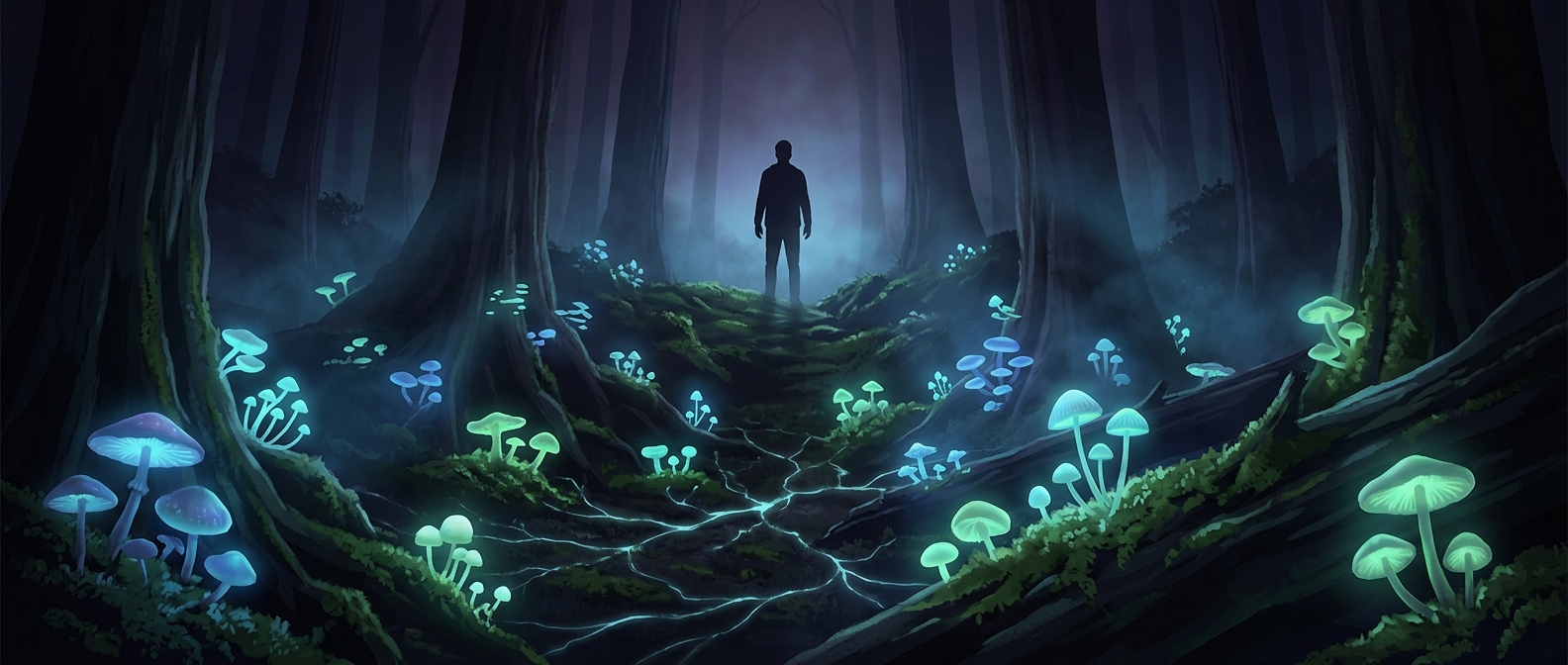
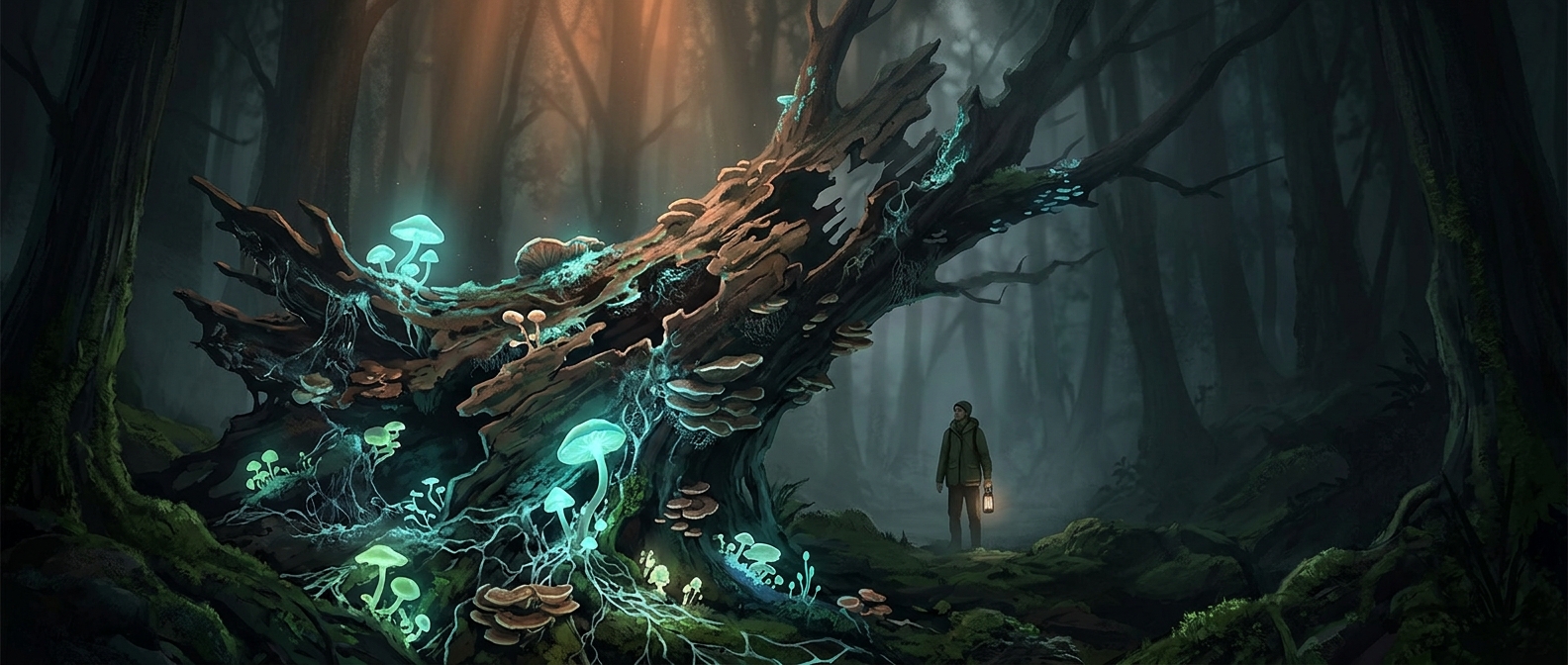
At the base of dead palms in Brazil, Neonothopanus gardneri produces a green glow through bioluminescence: a chemical reaction that releases light. The fungus makes a light-emitting molecule called luciferin. An enzyme called luciferase helps luciferin react with oxygen, producing light as the molecule changes. The glow is not a reflection of moonlight or a signal powered by fireflies; it comes from the fungus’s own chemistry.
Light can help spores find a ride
A mushroom releases microscopic spores from the gills beneath its cap. Air currents can carry them away, but insects that visit a glowing mushroom may provide another route: spores can hitch a ride on an insect’s body and be carried elsewhere. Experiments and observations involving luminous fungi support the idea that their light can attract insect visitors, including beetles. That makes the glow potentially useful for dispersal, though it does not mean every insect visit results in spores being transported.
The fungus does not need to lure insects by copying a particular insect’s glow, and the spores are not known to be deliberately smeared onto visitors. The simpler possibility is that a visible patch of light draws curious animals into contact with the mushroom.
An advantage, not an intention
Calling the glow a lure is shorthand for an evolutionary effect, not a plan by the fungus. If brighter or more noticeable mushrooms attract more visitors and those visitors help spread spores, the trait can be favored over generations. In the darkness beneath a forest canopy, a small patch of green light may turn a stationary mushroom into a more effective traveler.