How fungal threads connect trees
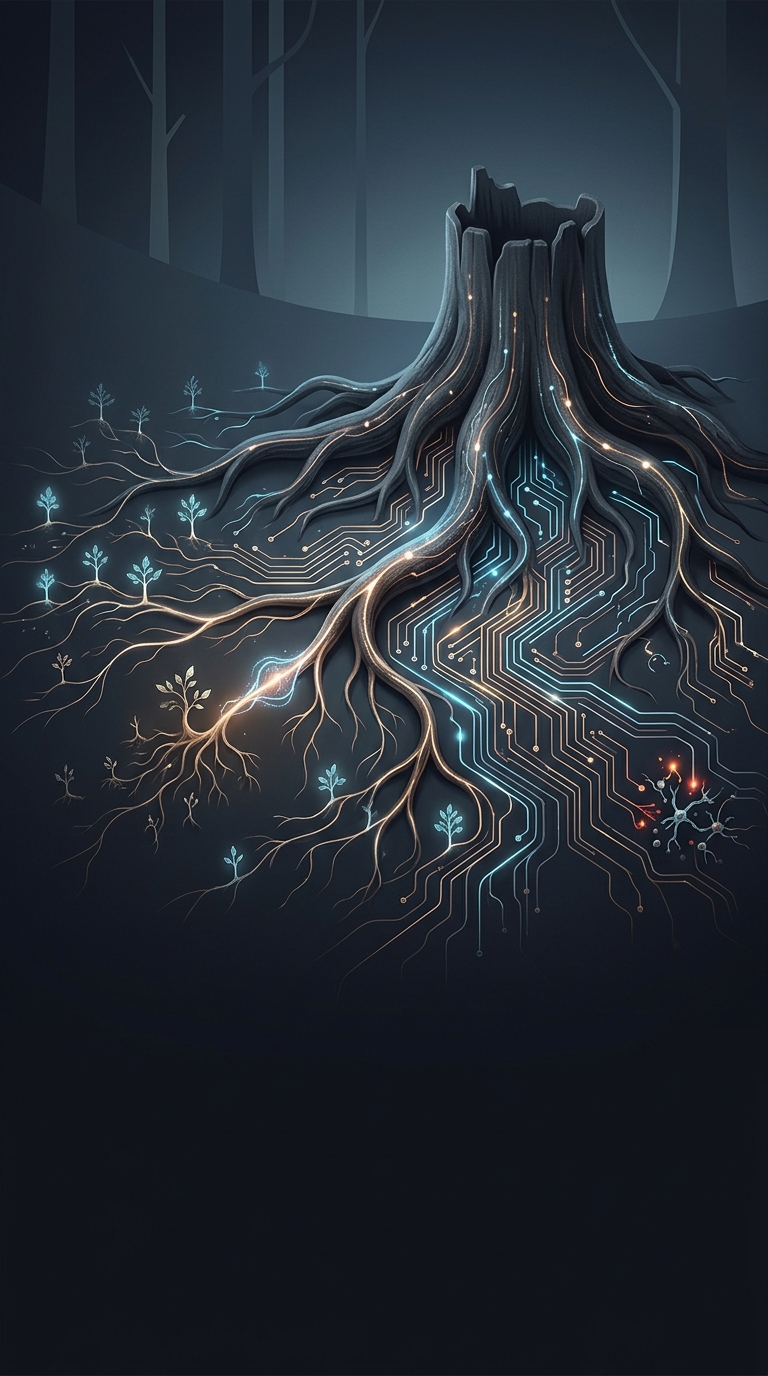
A forest’s underground “wood-wide web” begins with mycorrhizal fungi: fungi whose fine threads, called hyphae, grow through soil and attach to tree roots. At these junctions, the fungus supplies nutrients such as phosphorus and nitrogen that roots may have difficulty reaching. In return, the tree provides sugars made through photosynthesis.
Some fungal networks link the roots of multiple plants. That creates routes through which chemical cues—and, in some cases, carbon or other nutrients—can move between plants. The network is not a single, forest-wide cable system: its reach and effects depend on the fungi, trees, and soil involved.
What a warning can—and cannot—do
When insects damage a tree, the tree can release chemical signals. Nearby plants may detect those cues and activate defenses, such as producing compounds that make their leaves less appealing to herbivores. Underground fungal connections may also help carry signals between plants, but they are one possible pathway among several; airborne chemicals can carry warnings too.
This is not a deliberate message sent with a particular recipient in mind. It is a biological effect: a signal reaches another plant, and that plant’s chemistry changes. Whether the response helps depends on the species and circumstances.
Cooperation with limits
A connected tree may sometimes benefit from resources moving through a fungal network, including when it is young or under stress. But that does not make the forest a reliable communal pantry. Exchanges are uneven, and fungi themselves receive sugars from plants; the partners’ interests do not always align neatly.
The striking point is not that trees have built a perfect underground internet, but that roots and fungi can create a living exchange system with consequences aboveground. A caterpillar chewing one tree’s leaves may, through chemical cues and neighboring plants’ responses, change how another tree prepares for attack.