A reaction can make a joke feel shared
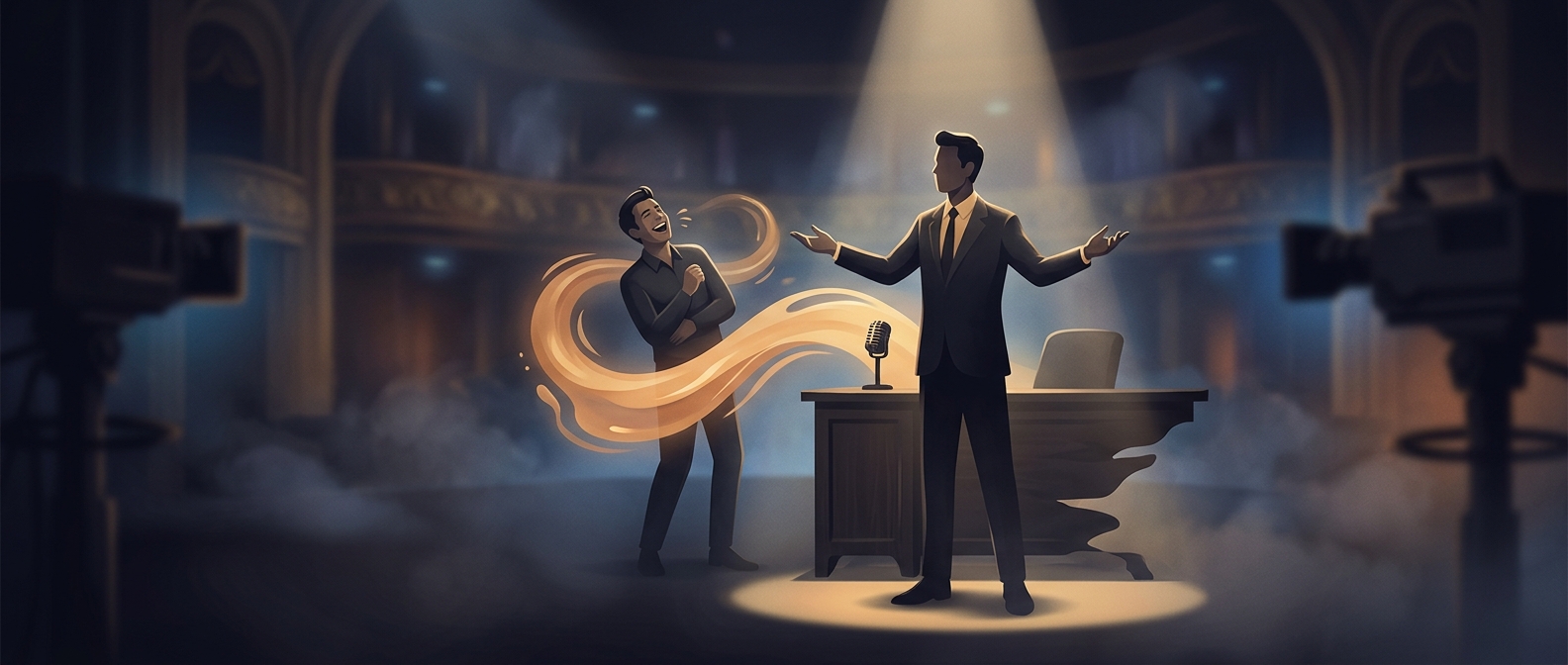
A late-night joke has to land in two places at once: in the studio and in viewers’ homes. A sidekick’s audible laugh gives the moment a human response beyond the crowd’s broader swell. It can make a punchline feel less like a line delivered into a camera and more like something that has just amused another person in the room.
That response also helps shape the beat after a joke. Laughter takes time; the host may pause, acknowledge it, or use the reaction as a bridge into the next line. A familiar voice laughing can make that pause feel intentional rather than empty, especially when the studio audience is slow to respond or its laughter is difficult to hear on a home speaker.
More than a laugh track
A sidekick is present in the scene, not simply added as prerecorded laughter. The person can react to the host, speak, or contribute in other ways, so the laugh belongs to an ongoing exchange. Viewers can read it as one participant’s response—not as a signal that they are supposed to find every line funny.
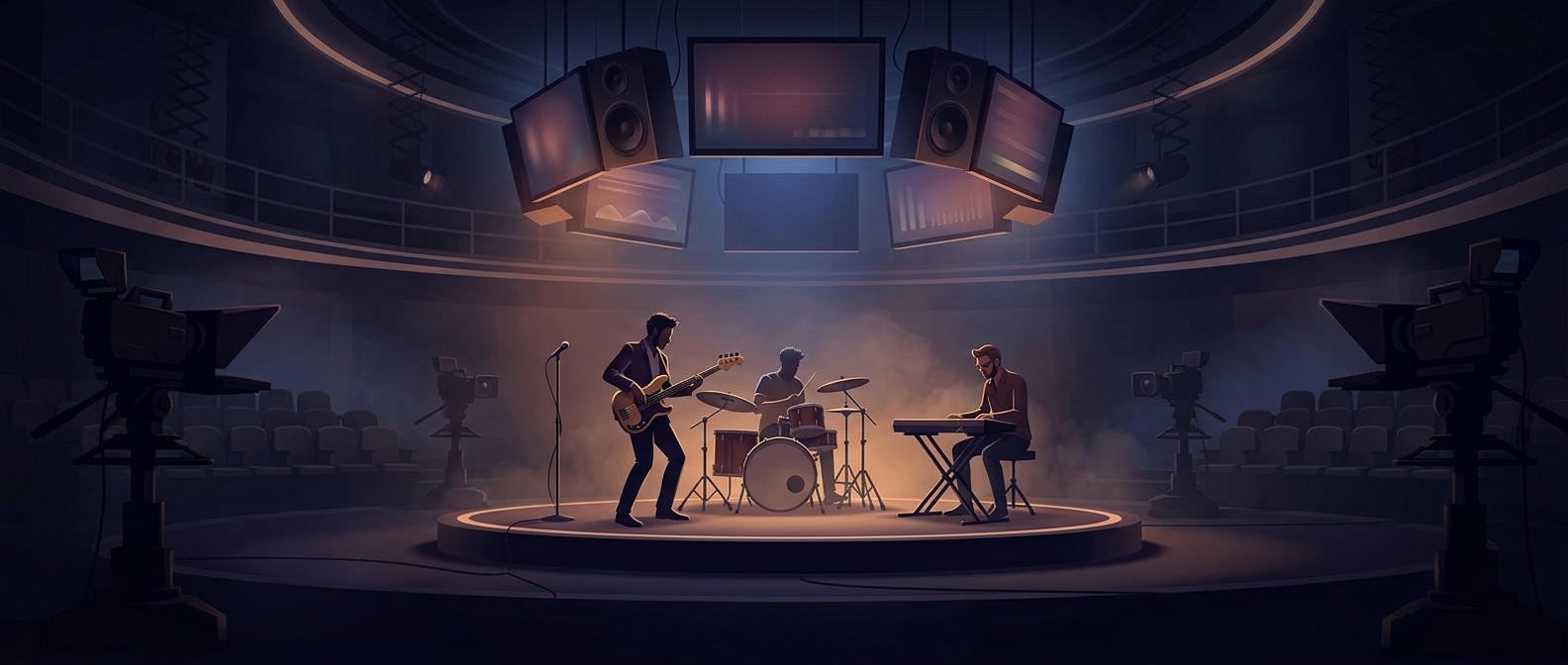
When the sidekick sits behind a keyboard, that visible position can also make the person part of the show’s musical setup. The arrangement gives the reaction a place in the room and on camera, helping the host’s monologue feel like a performance with a partner rather than a solitary routine. The effect is small but practical: one recognizable laugh can make the rhythm of a whole segment feel more conversational.