A suit turns casual conversation into a show
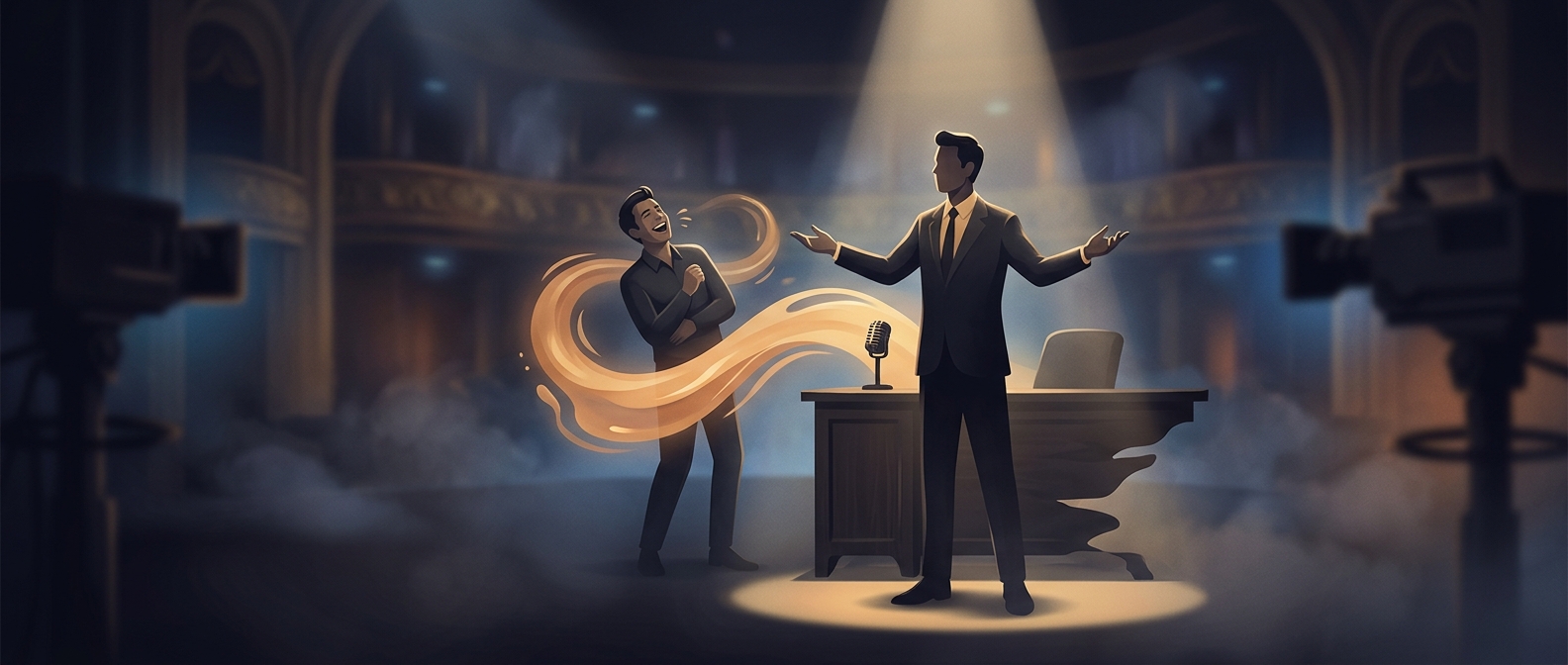
Late-night comedy depends on a useful contrast: the host may be joking with a guest as if they were chatting off camera, but the picture still needs to read as a produced program. A tailored suit supplies that visual structure. It gives the host a crisp, recognizable outline in the desk-centered shot, even when the conversation itself wanders.
Formal clothes set the frame
The suit does not make the exchange more formal; it makes the show’s presentation feel deliberate. Against a set, desk, and studio lighting, a jacket and tie help distinguish the host’s on-air role from an ordinary person having an informal conversation. That contrast lets the program be relaxed in tone without looking visually unplanned.
The choice also creates consistency from segment to segment. A guest may arrive in a very different style, and the subject may shift from a monologue to an interview, but the host remains a steady visual anchor. The suit is less a uniform demanded by the conversation than a piece of the show’s design: a small, repeatable cue that tells viewers they are watching a performance built around casualness.