A microscope shows a drying pattern, not an emotion
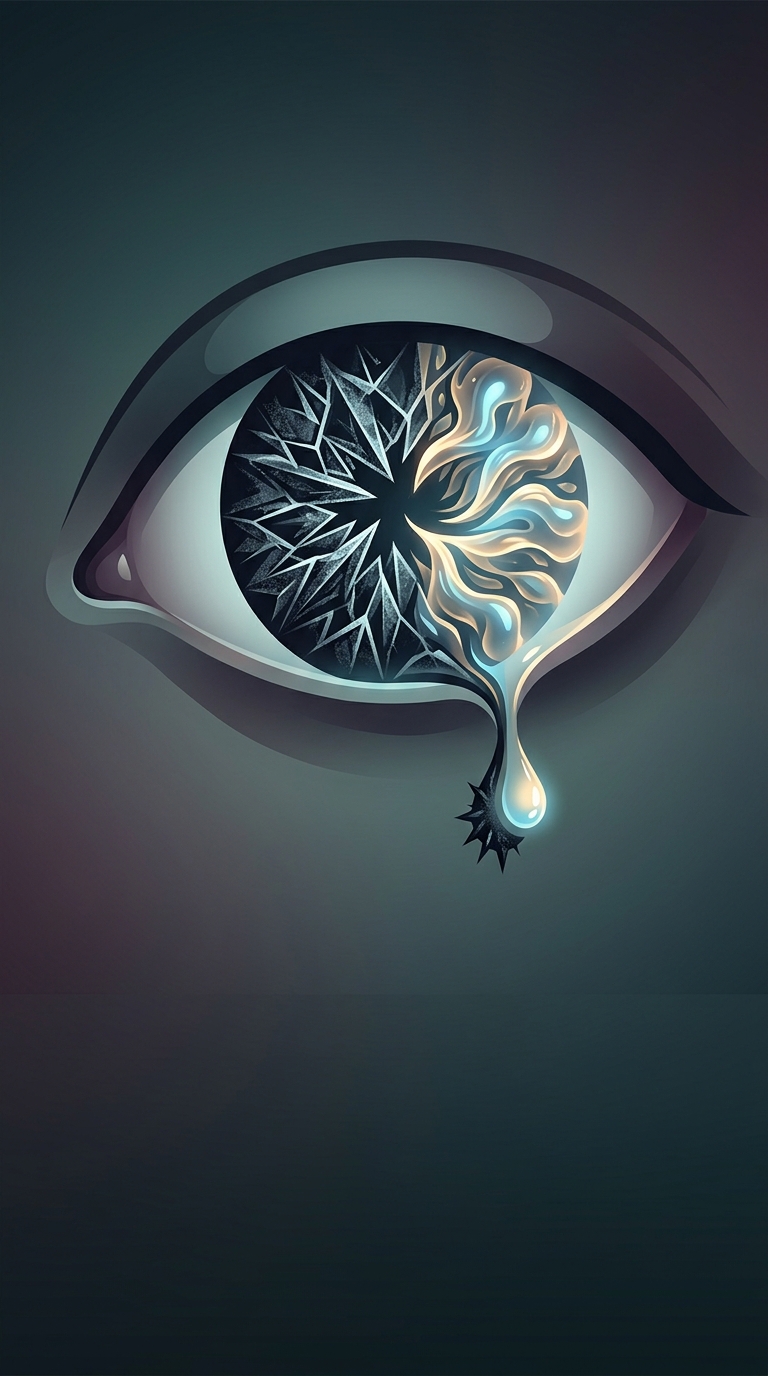
Tears do not hold a tiny picture of grief or joy. Images that make different tears look dramatically different usually show droplets after they have dried on a surface. As water evaporates, salts and proteins are left behind in patterns that can look like branches, shards, or other strange shapes.
Those patterns depend on more than what was in the tear: droplet size, the surface, temperature, humidity, and the pace of drying can all affect how the residue forms. A striking image may therefore reveal something about the sample and how it dried, but it cannot by itself identify the feeling that produced the tear.
Emotion can change tears—but not into separate kinds
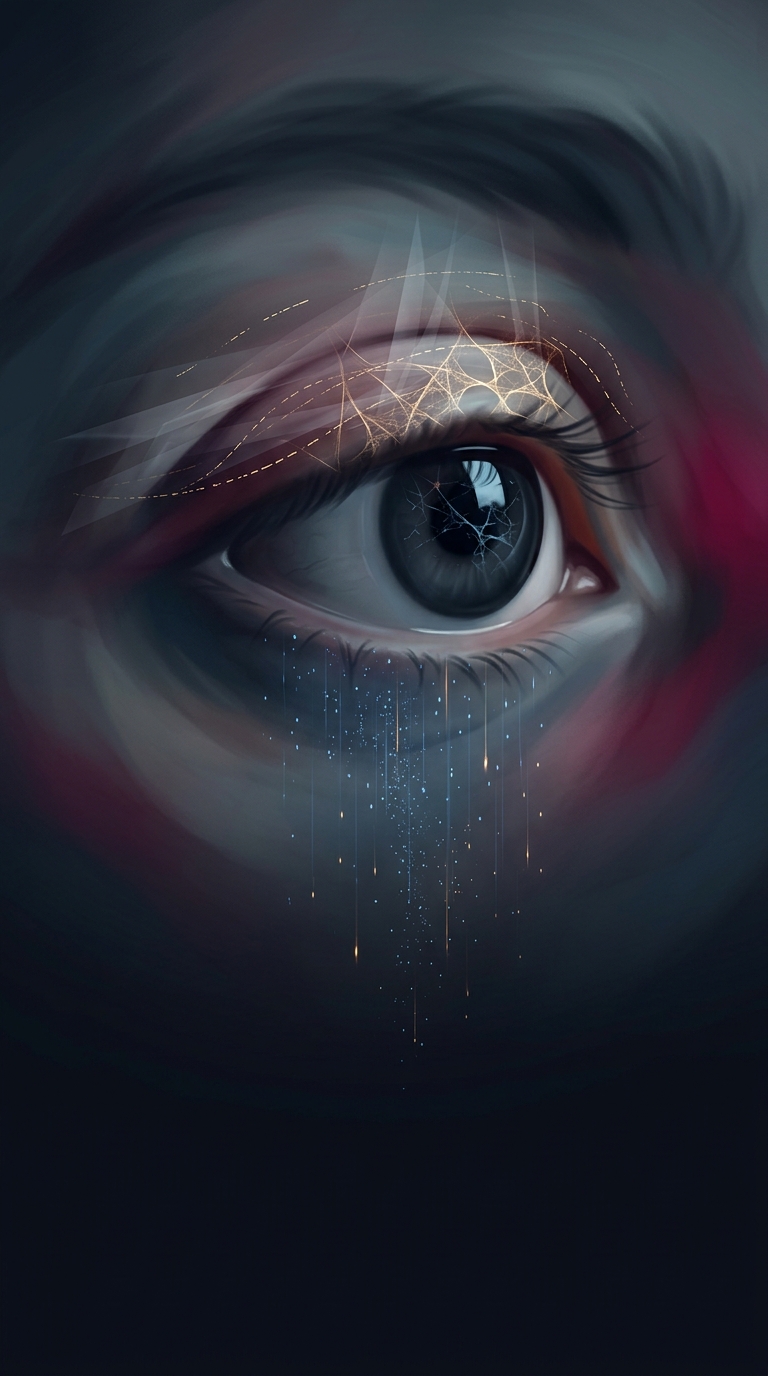
Emotional tears are produced by the same tear-making system that keeps the eye moist and responds to irritants. Their ingredients can vary, and emotional arousal can affect secretion. But there is no established microscopic signature that reliably separates grief tears from tears of joy.
The apparent contrast is best understood as a contrast between particular dried samples, not as proof that sorrow and happiness create fundamentally different substances. The microscope magnifies the residue; it does not read the emotion.