The hand-cranked drum that made stage wind
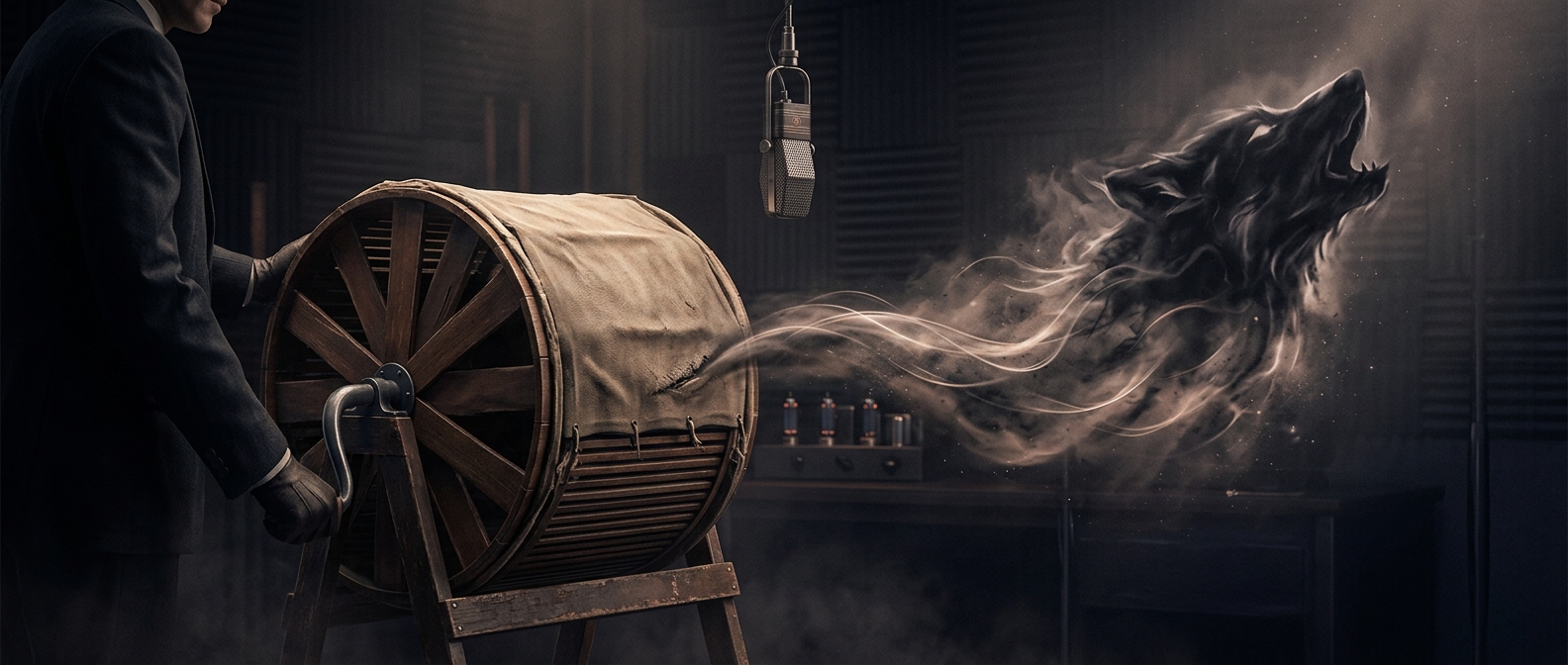
A wind machine turns a simple mechanical action into a sound too complex for a single whistle or note. As the drum rotates, its wooden slats drag against the heavy canvas wrapped around it. That repeated rubbing and catching creates a rough, irregular rush—the kind of noise audiences recognize as wind.
The canvas matters because it provides both friction and flexibility. It can press against the slats, then shift as the drum turns, making the sound fluctuate rather than repeat like a clean musical beat. The result is not air blasting across a room; it is noise produced by contact between moving surfaces.
Why the sound feels like a storm
Wind is difficult to imitate with a perfectly steady tone. A gust swells, wavers, and fades, with low rumbling beneath a hiss. Turning the crank changes how quickly the drum moves, while the performer’s handling can make the friction more or less forceful. Those variations give the sound a sense of motion and intensity.
In a theater or sound-effects setting, that control is useful: the operator can build a gust, sustain it, or let it die away in step with the scene. The machine does not reproduce a storm’s weather; it gives performers a way to shape the audible impression of one. A wooden drum and canvas can therefore suggest a blizzard without moving a single snowflake.