Why the Back of a Forklift Does the Turning
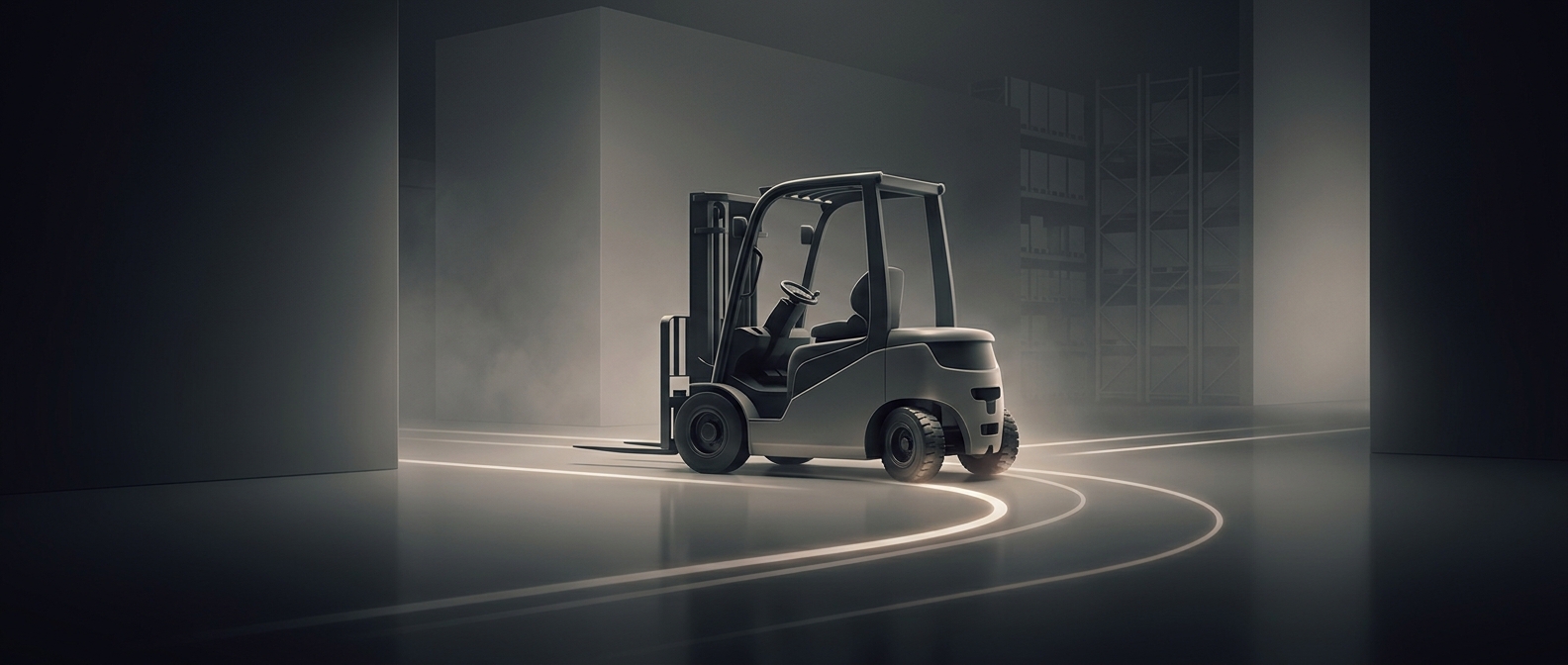
In a typical counterbalance forklift, the front axle carries the load and the rear axle steers. The rear wheels pivot left or right when the operator turns the steering wheel. Because the steering wheels are behind the load, they guide the truck’s back end around a turn while the front end follows a much tighter path than it would with front-wheel steering.
That layout suits warehouse work: the truck can turn within a limited aisle without needing the long turning radius common in vehicles steered from the front. The rear axle often pivots as a unit, helping the wheels angle sharply even at low speeds.
A Tight Turn Has a Hidden Sweep
The maneuver is not simply a smaller version of a car’s turn. As the rear wheels steer, the forklift’s back end swings outward. That movement—called tail swing—can bring the counterweight close to a rack, wall, or nearby worker even when the forks appear to clear the corner.
Operators therefore need to account for the whole truck’s path, not just the direction of the forks. The same geometry that lets a forklift pivot in a cramped aisle also creates a blind-sided sweep behind it, which is why slow, deliberate turns and clear space around the rear are essential.