The die gives cereal its outline
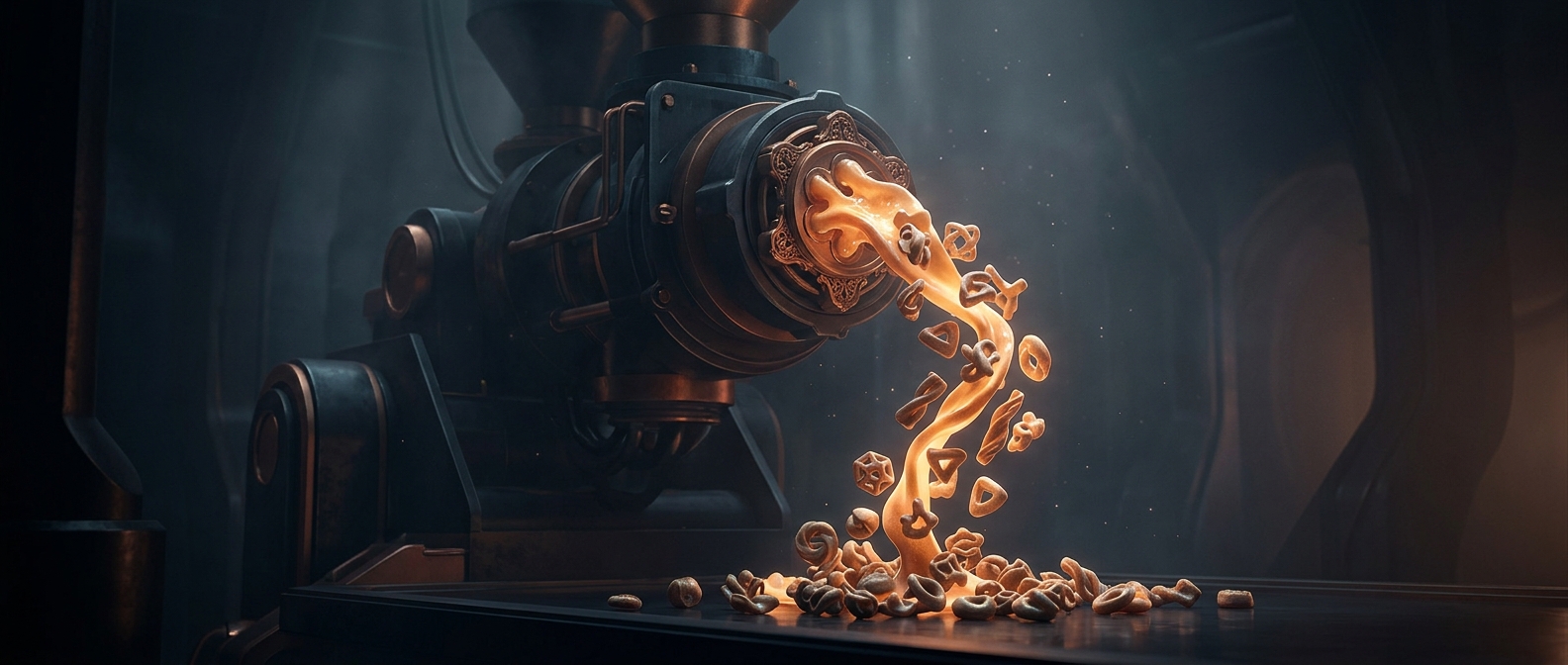
Before a puff becomes a star or ring, grain is ground and mixed with water into a pliable dough. Inside an extruder, a rotating screw pushes that dough through a heated barrel, where pressure and heat make it soft enough to flow. At the barrel’s end, a shaped opening—a die—determines the puff’s basic outline. A star-shaped die makes a star-like strand; a ring-shaped opening makes a tube that can be cut into rings.
A sudden pressure drop makes it puff
The dough leaves the die under pressure, and that pressure falls sharply as it enters open air. Water in the hot dough turns rapidly into vapor, expanding the material before it has time to escape. The dough swells into a light, porous structure, much like a tiny network of bubbles held in place by the softened grain starch.
The puff’s final texture depends on more than its outline. The recipe, moisture level, heat, and pressure all affect how much it expands and how sturdy or crisp it becomes. A shape that looks simple is the result of balancing those conditions: expand enough to make it airy, but not so much that it collapses or loses its form.
The shape has to survive the line
After extrusion, the pieces are cut to length and dried so they become crisp and stable for storage. That makes the die’s job practical as well as decorative: its opening must produce shapes that can be cut, dried, and handled without crumbling. The star or ring is therefore not merely stamped onto cereal; it is formed from the inside out, as escaping steam lifts the dough around the die’s outline.