The vacuum gives ice a different exit
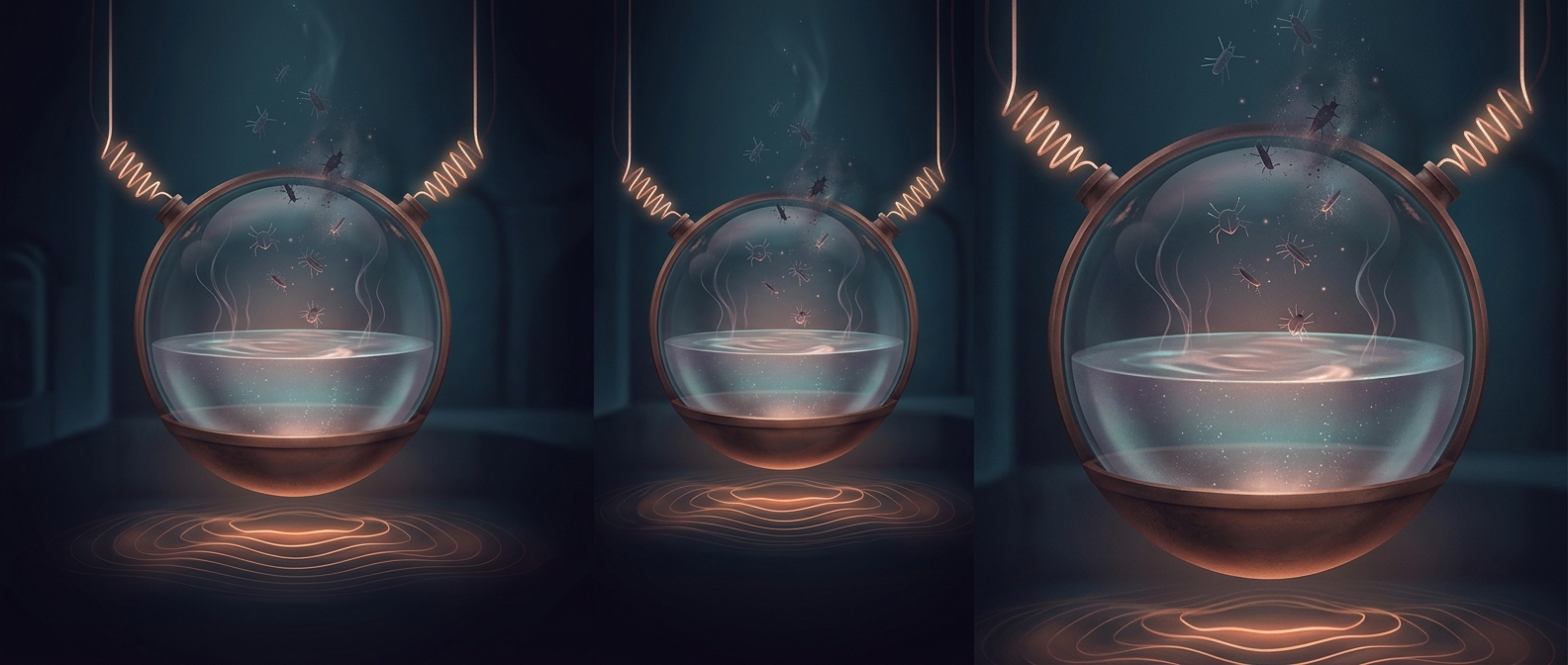
Freeze-drying starts by freezing the strawberry, then lowering the pressure around it. At ordinary air pressure, warming ice usually makes it melt first. In the low-pressure chamber, however, ice can change directly into water vapor—a process called sublimation. Carefully adding heat supplies the energy for that change without letting the fruit thaw.
The vapor is drawn away and collected on a colder surface inside the equipment, where it freezes again. Removing it keeps the chamber dry enough for more ice to leave the strawberry. The process is controlled rather than simply heated: too much heat can soften or damage the fruit before its water is gone.
The vanished ice leaves a framework
As ice crystals disappear, they leave tiny spaces in the fruit’s tissues. That is why freeze-dried strawberry is light and porous instead of shrunken into a dense piece. A later drying stage removes some remaining water that is held more tightly, helping the fruit keep for longer.
Those open spaces also explain why the texture changes so dramatically: the crisp fruit can absorb water quickly when rehydrated. Its shape may remain recognizable, but the ice that once filled its interior has been carried out as vapor and trapped elsewhere in the machine.