Why Esoteric Diagrams Crowd the Margins
In many esoteric diagrams, the page is not just a picture of one idea. It is a compact map of relationships: a central figure or symbol may be surrounded by names, marks, numbers, and smaller diagrams that readers are meant to consider alongside it. The margin becomes extra working space, letting a creator add layers without redrawing the central design.
Those marks can function like a visual vocabulary. A small symbol may identify a planet, element, spiritual force, or step in a ritual system, while its position near another mark suggests a connection. The intended meaning depends on the tradition and the particular diagram; there is no universal code shared by all esoteric imagery.
Reading at More Than One Scale
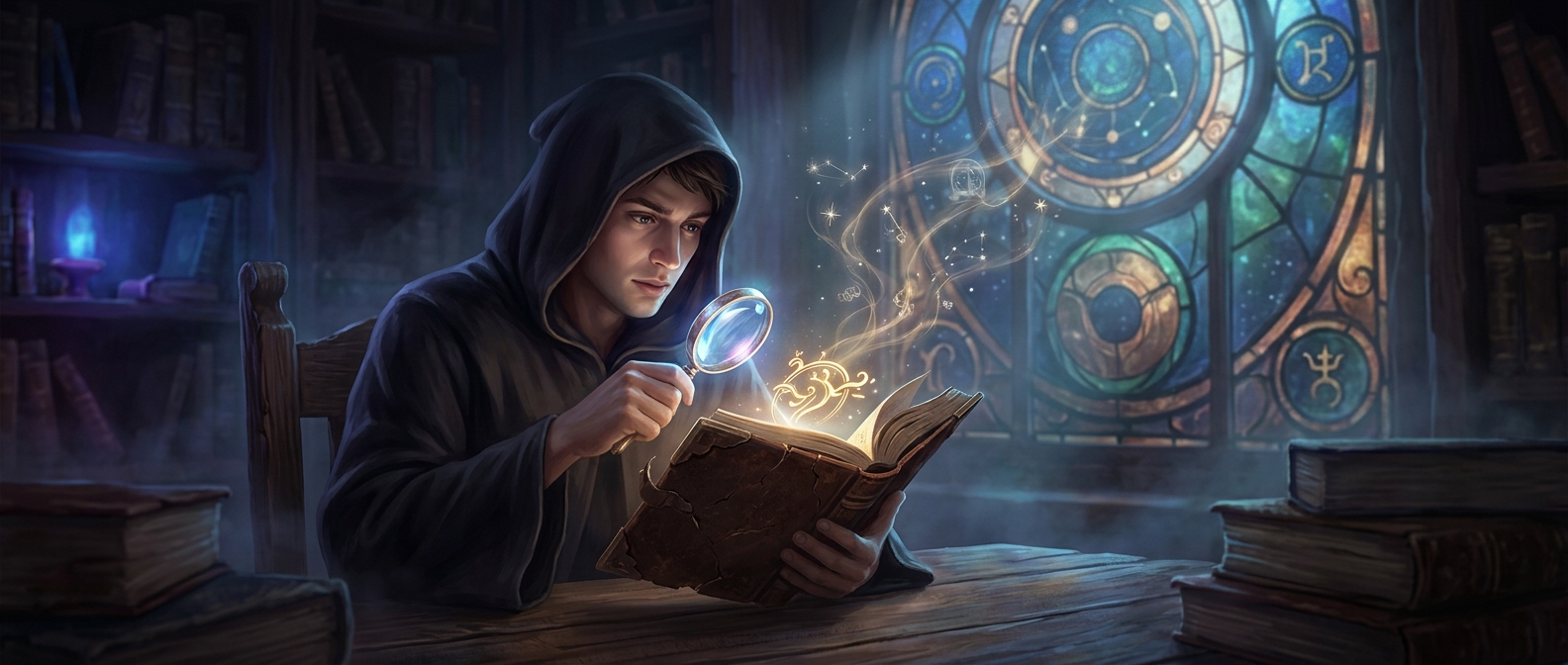
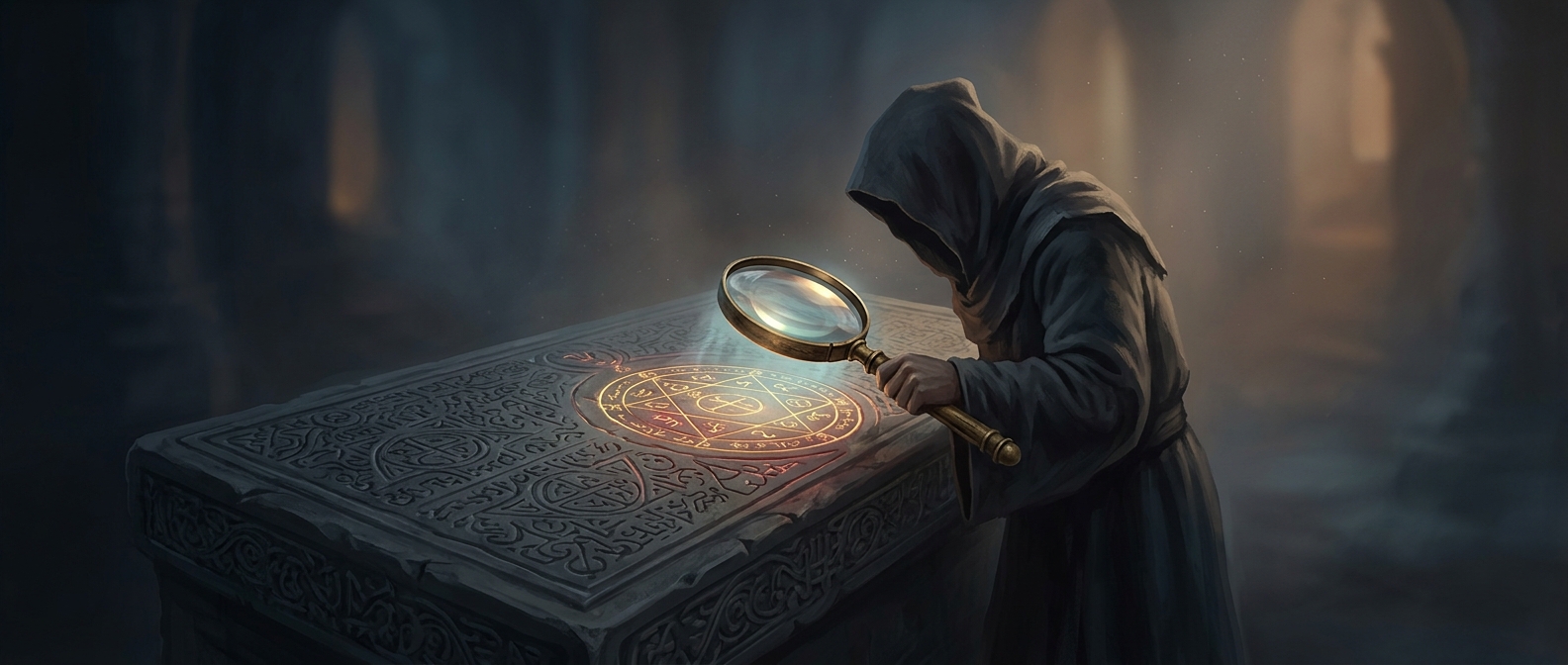
The crowded layout encourages two kinds of attention. At a glance, the arrangement presents an overall pattern. Up close, tiny labels and symbols supply details that may change how a reader interprets that pattern. This is why a magnifying glass can be more than a convenience: it helps reveal parts of the image that are easy to miss when viewed as a whole.
The result is a page that asks to be explored slowly. Its smallest marks may carry the key to how the larger design is meant to be read.