Why a Balloon Needed Hands Before It Could Fly
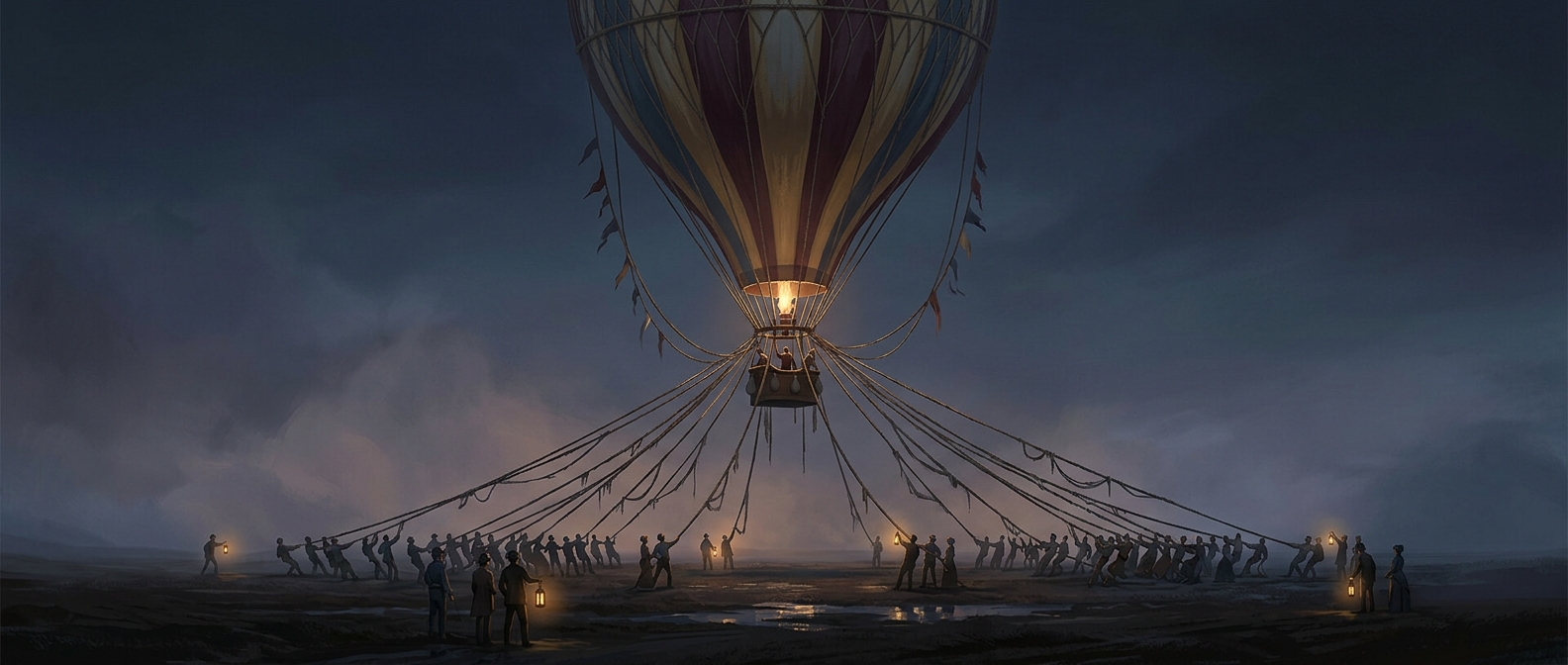
A hot-air balloon is not a rigid craft waiting to be untied. Before it can rise, its large fabric envelope must be spread out and filled with heated air. While it is still slack, the cloth can collapse, twist, or billow in a gust. Ground helpers kept its opening clear and controlled the ropes so the envelope could take shape instead of becoming a sail dragged across the field.
Inflation Turned Wind Into a Launch Hazard
Heating the air made it less dense than the cooler air outside, giving the balloon lift. But that lift developed gradually: the envelope first had to fill and begin to stand upright. During that vulnerable stage, a crosswind could push the balloon sideways, strain its fabric, or pull the assembly off course before it was ready to leave the ground.
Crew members therefore did more than hold the balloon still. By managing lines and keeping the fabric aligned with the breeze, they helped limit unwanted twisting and movement. Their work was a form of ground handling, much as a team steadies a large, awkward object before it can move under its own power.
The Flight Began as a Coordinated Release
The pilot could not simply climb aboard and take off. The balloon had to be inflated, oriented, and held under control until it developed enough lift; then the restraints could be released in a coordinated moment. A mistake on the ground could spoil the launch before the pilot had any control over the air beneath the balloon.
That made early ballooning a team operation even when only one person traveled aloft. The spectacle of a balloon rising depended first on a less visible achievement: several people keeping a huge, wind-sensitive envelope orderly until it was ready to fly.