A wire carried more than official business
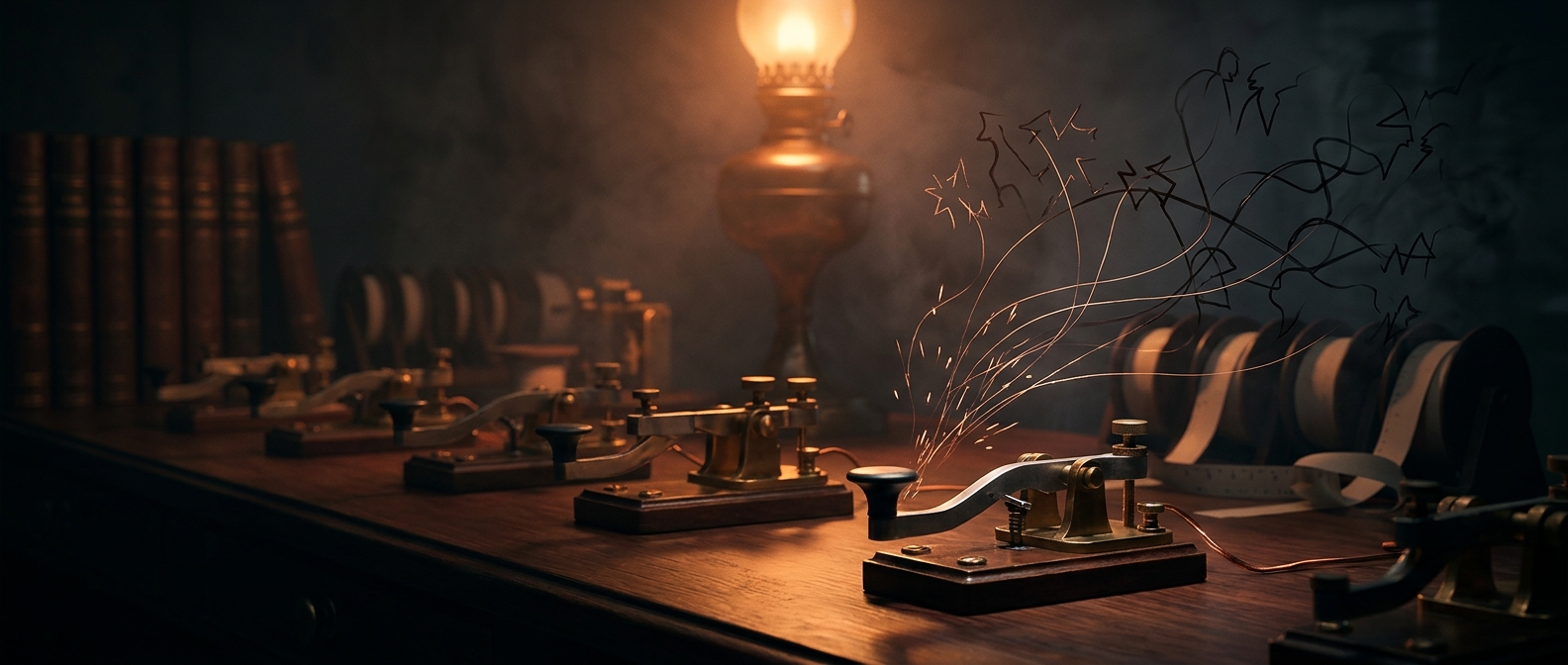
A telegraph line was a working connection between stations, not a private chat window. Operators tapped messages as short and long electrical signals—Morse code—and other trained operators could hear the clicks at the receiving end. Because messages often passed through human hands at multiple stations, the people operating the network were part of its everyday traffic, not invisible machinery.
That made room for exchanges that had nothing to do with commerce or government. Operators who knew the code could use the same key and line to address one another, sometimes with insults elaborate enough to become a kind of performance. The skill required to send and read Morse quickly gave the teasing its medium: a message could be sharp in meaning while remaining, to an outsider, only a run of clicks.
The interruption was part of the point
Telegraphy depended on orderly transmission, so cutting into an official message could disrupt real work. But operators were also people sharing a demanding, often repetitive job across distance. A jab at another station turned technical access into social contact—and made the professional network feel personal.
The episode captures an enduring feature of communication technology: people adapt systems built for serious business to talk to one another. On the telegraph, even an insult had to travel as carefully timed dots and dashes.