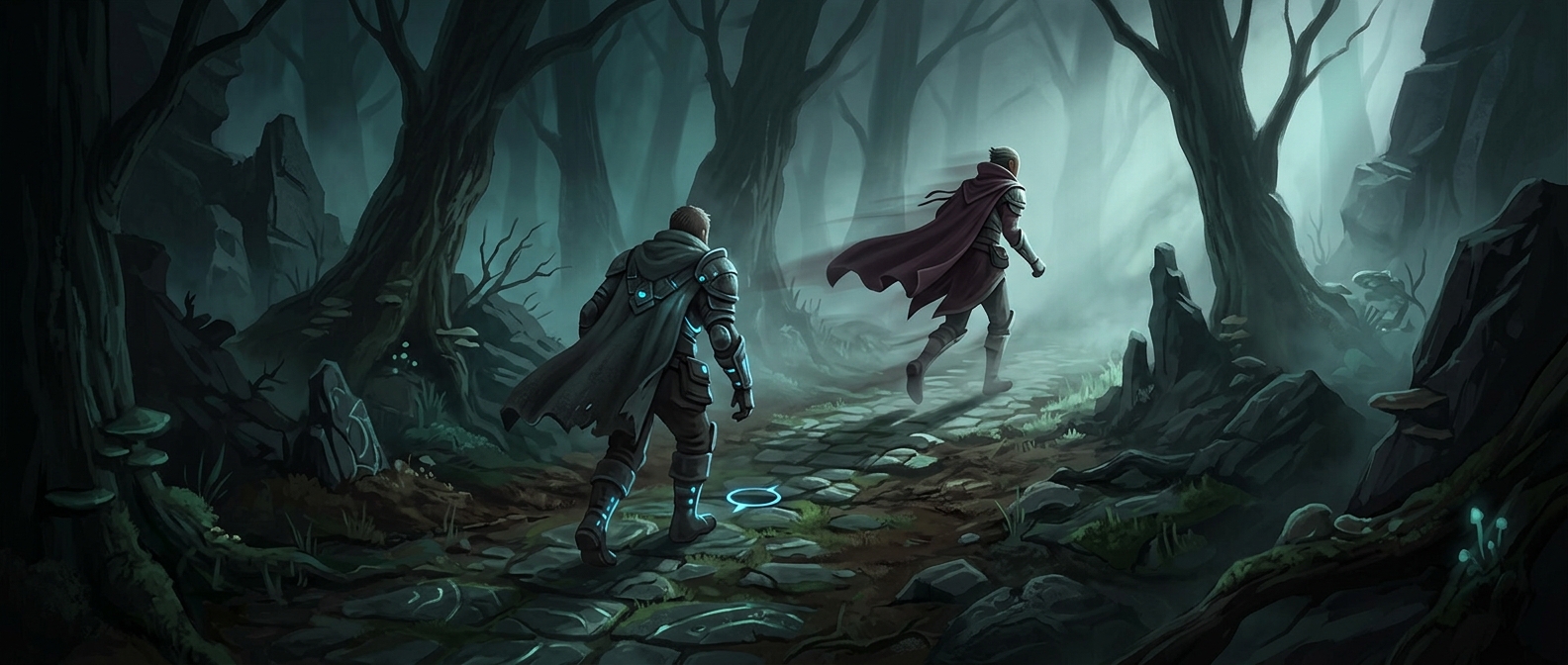
A controller made of competing messages
Pokémon Red was built around one player making one decision at a time: press a direction to move, choose a menu option, or select a move in battle. Twitch Plays Pokémon replaced that controller with a chat room. A program read messages such as “left” or “A” and translated them into button presses for the game.
The mismatch mattered. In a normal playthrough, a player can stop, look at the screen, and adjust. In chat, commands arrived from many people at once. A direction that helped one person navigate could be canceled by another; a menu command could land just as the game shifted to a different screen. The result was not simply bad coordination. It was a control system receiving conflicting instructions faster than any group could reliably agree on them.
Why disorder became part of the game
The challenge turned into a social experiment because the crowd had to invent its own way to play. Some participants issued commands continuously, while others tried to organize a shared plan in chat. Even a simple task—walking through a doorway or choosing a menu option—could become a contest between immediate action and coordination.
That friction also created the spectacle. The game’s interface made mistakes visible: a misplaced input could send the character back across a room, disrupt a battle, or trigger an unintended choice. Progress depended not on any one participant’s skill, but on whether enough people could make their actions line up at the right moment.
From chaos to coordination
Organizers later added a choice between “Anarchy,” where inputs took effect without a collective vote, and “Democracy,” where proposed commands were tallied before one was selected. The change addressed a basic design problem: unrestricted input preserved the unruly premise, but made precise actions difficult. Voting offered more control, at the cost of slowing decisions and asking the crowd to accept a shared result.
That tradeoff is what made the experiment more than a long game session. Its progress depended on changing the rules for how a group could act through a single interface. The virtual character had one set of buttons; the real players had to decide how to share them.