Pac-Man’s ghosts are built around different rules
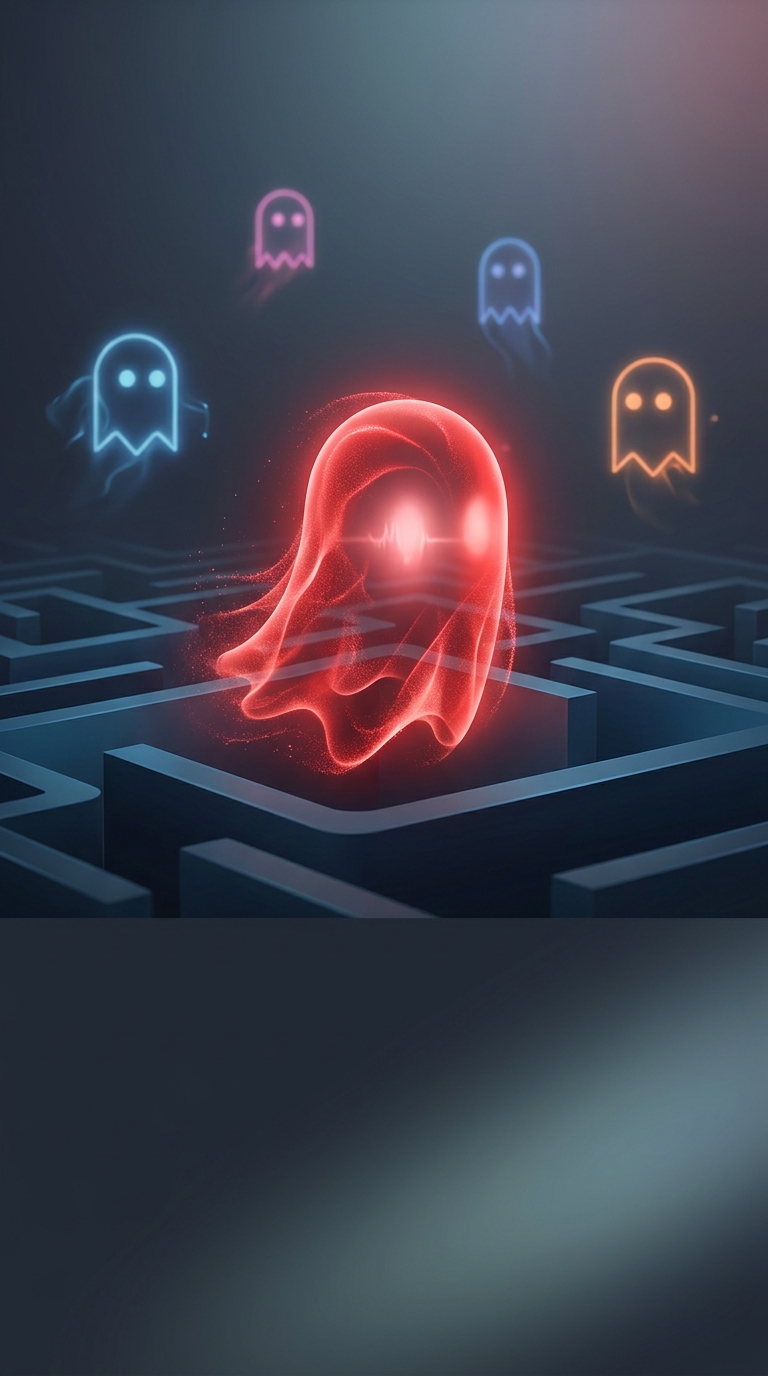
The ghosts do not simply chase Pac-Man in the same way with different colors. Each has a distinct targeting rule, so their movements create different kinds of pressure. Blinky, the red ghost, is the most direct: when Pac-Man is roaming the maze, Blinky aims for the tile Pac-Man currently occupies. That makes him a persistent pursuer, not a rival whose destination depends on an elaborate setup.
The target is a tile, not Pac-Man’s moving body. The maze’s grid and the ghosts’ turn choices mean Blinky can take routes that look indirect, and he can overshoot or arrive just after Pac-Man has turned. But his basic intention is easy to read: he is closing in.
Why red feels relentless
Blinky’s threat also changes over the course of a level. As Pac-Man clears more dots, Blinky speeds up; late in the board, he becomes especially fast. That escalation makes the same pursuit feel more urgent even though the underlying targeting rule has not changed. The player is also busy steering through narrow corridors and collecting dots, so a ghost that keeps bearing down from behind can feel more frightening than one whose movement is less straightforward.
The other ghosts use different target calculations. Pinky aims ahead of Pac-Man, while Inky’s target depends on both Pac-Man’s position and Blinky’s. Clyde alternates between pursuing and retreating toward his corner when he gets close. Their patterns can still corner the player, but their apparent detours give them a less constant, less personal quality.
A simple rule with a strong effect
Blinky’s aggression is therefore partly mechanical and partly perceptual: he is a clear pursuer, and the game makes that pursuit intensify as the maze empties. The red ghost does not need a more complicated strategy to feel terrifying. He only needs to keep coming—and to get faster while Pac-Man has fewer dots left to hide behind.