Two minds make the hunt feel personal
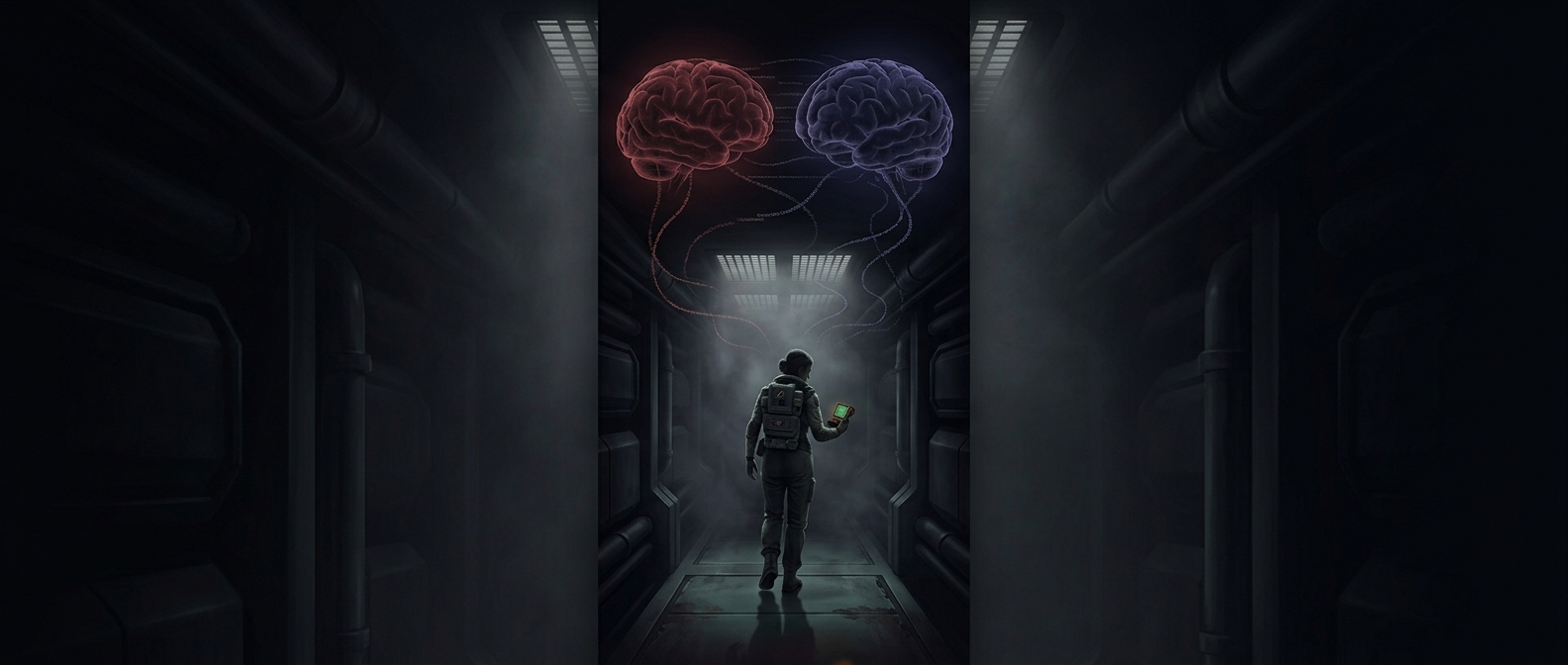
The xenomorph in Alien: Isolation is not driven by a single system that simply knows where the player is and sends it straight there. The hunt is split between two kinds of artificial intelligence, or AI: one monitors the player’s situation, while the other controls the alien’s actions.
That division solves a design problem. If the creature always moved directly toward the player’s exact position, its pursuit could feel less like a search and more like an invisible tracking device. If it wandered without any guidance, it might fail to create sustained tension. The monitoring system bridges those extremes by giving the alien behavioral system hints that keep it searching in the player’s vicinity without dictating every move.
Pressure without a scripted chase
The alien’s AI still has to decide how to act: where to investigate, when to linger, and when to move on. Because it receives guidance rather than a command to converge on a precise location, its choices can produce encounters that feel responsive but not identical. The player is being hunted, yet the alien can still appear to be looking, listening, and making its own way through the environment.
That distinction shapes how the player behaves. Hiding is not a guaranteed pause in the danger; it is a way to manage risk while the search continues. The unseen system helps maintain pressure, while the visible creature supplies the uncertainty: you may hear it nearby without knowing whether it has found you or is still searching. The result is a chase that feels directed enough to stay frightening, but not so perfectly informed that the alien seems to cheat.