Old legal categories meet digital copies
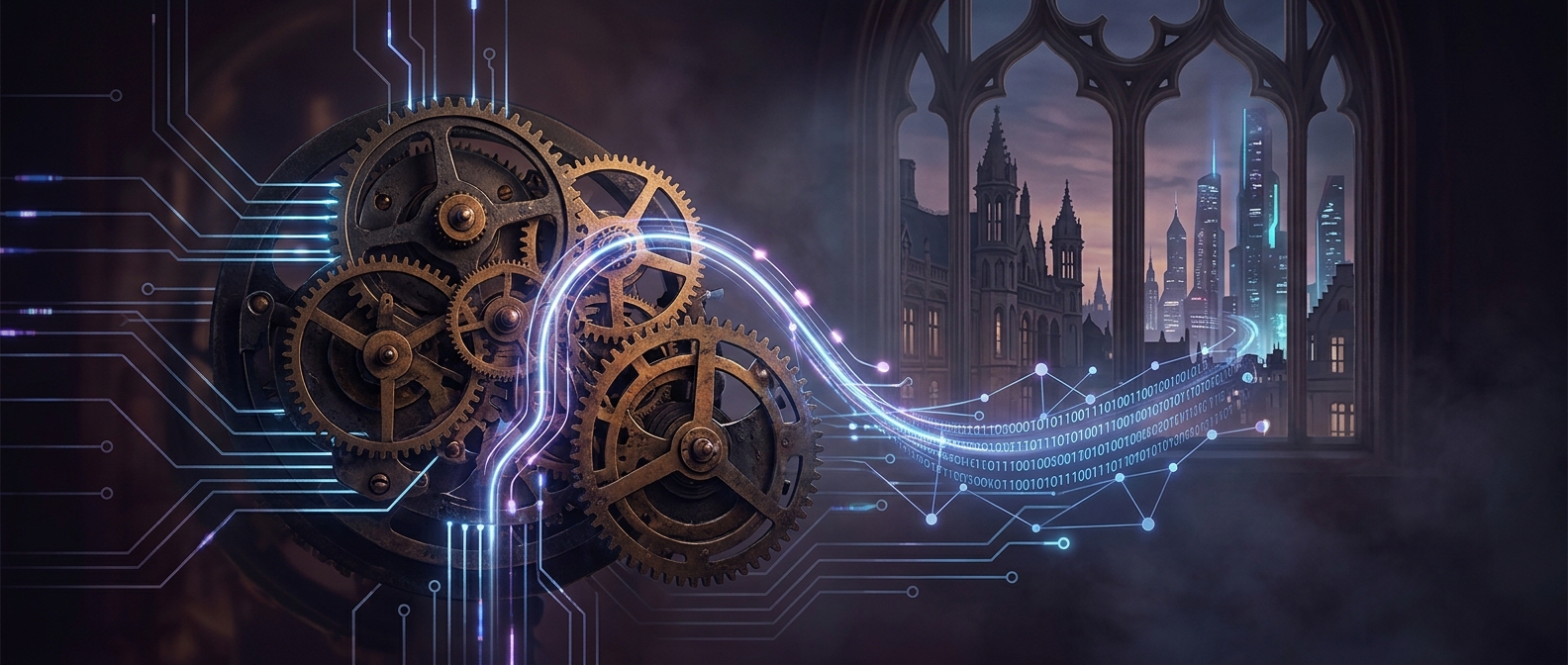
Copyright and patent law did not anticipate a file that can be copied perfectly and sent around the world in seconds. But the legal frameworks built in the industrial age supplied categories later lawmakers could extend: copyright protects particular creative works, while patents grant time-limited control over qualifying inventions. New technology often arrives before those categories can be rewritten, so courts and lawmakers adapt old principles to new kinds of copying, distribution, and machinery.
That translation has practical consequences. A digital song may feel unlike a printed book, but making and sharing copies still raises copyright questions. Software can be treated as a creative work, while some inventions involving software or computers may raise patent questions. The technology changes; the legal question is often whether an activity fits a familiar right or exception.
Why the framework is hard to replace
These rules balance competing interests. Copyright gives creators control over certain uses of their work, but exceptions and limited terms leave room for activities such as criticism, research, and later reuse. Patent law can encourage investment in inventions by offering temporary exclusivity, while requiring inventors to disclose how an invention works. Changing one side of either bargain can affect creators, businesses, researchers, and the public in different ways.
The laws have been amended and interpreted over time; they are not simply Victorian statutes left untouched. Yet changing the underlying framework is difficult because millions of contracts, products, and expectations already depend on it. A platform deciding whether to host a user’s upload, or a developer deciding whether a product risks infringing a patent, still has to navigate rules whose basic concepts were formed for a much less connected economy. The result is a persistent mismatch: digital activity moves at network speed, while legal change tends to proceed through legislation and disputes.