A material that refused to stay put
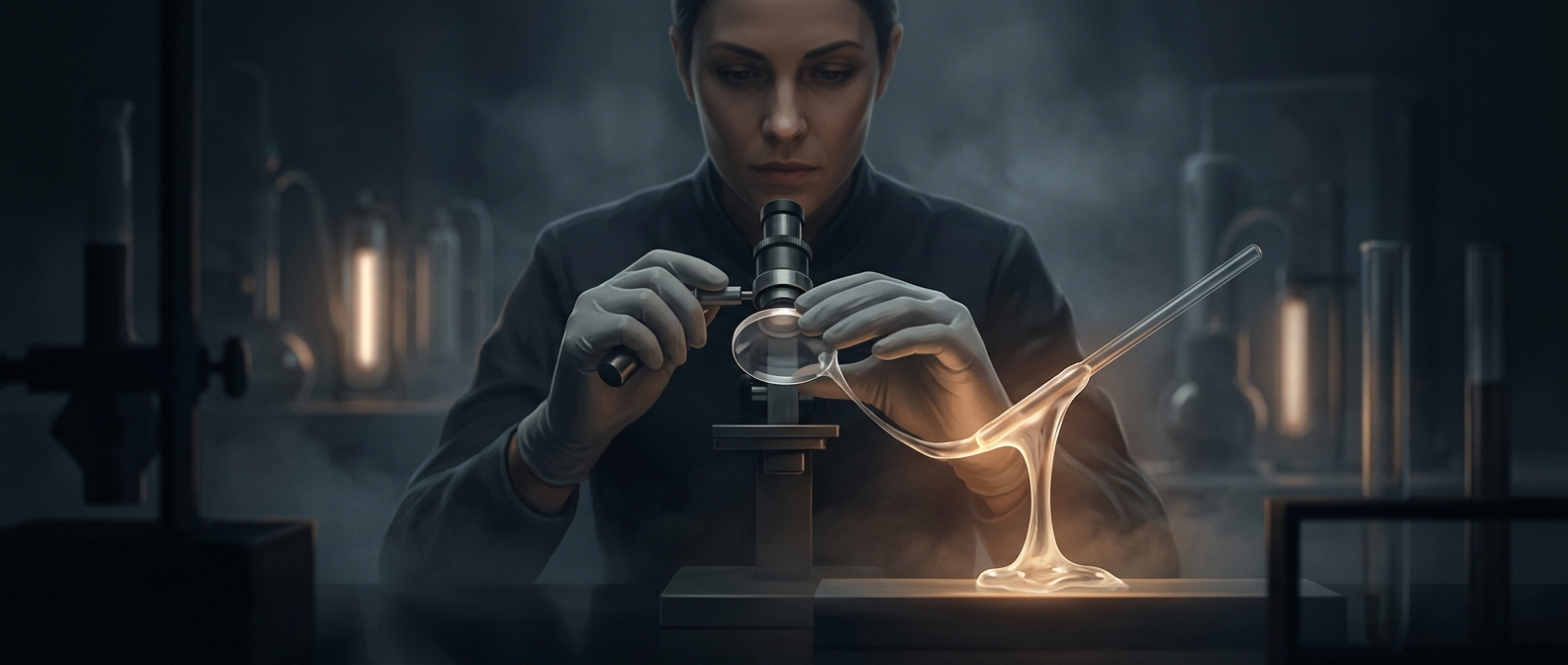
During World War II, chemist Harry Coover was looking for clear plastic suitable for precision optical sights. One candidate, a cyanoacrylate compound, was unusable for that job: it grabbed onto equipment and other surfaces instead of behaving like a workable lens material. The very property that made it a nuisance also made it worth remembering.
Why it bonds so quickly
Cyanoacrylate is the family of chemicals behind modern superglues. Its molecules can link together into long chains in a process called polymerization. Trace moisture on ordinary surfaces helps start that reaction, so a thin layer can harden rapidly without heat or a separate hardener. The bond forms at the surfaces pressed together—which is why a little glue can seize fingers as readily as it joins two objects.
From laboratory nuisance to adhesive
Years later, Coover’s team revisited cyanoacrylates while exploring other uses for the material. A test involving glass prisms showed that the compound could join surfaces with striking speed and strength. What had been a liability in optical work now looked like the product itself: a fast-setting adhesive that needed no elaborate curing process.
The shift was not a discovery of a new chemical so much as a change in the question. Instead of asking how to keep the compound from sticking, the researchers asked what its stickiness could do. That reframing turned a failed lens candidate into a practical glue—and gave its most troublesome behavior a commercial purpose.