How a laboratory glow became a sign
A neon tube works by turning electricity into light inside a sealed glass channel. The tube contains neon gas at low pressure. When an electric current passes through it, the gas’s atoms become energized and release that energy as visible light. With neon, the result is the vivid red-orange glow that made the new lighting so recognizable.
The key design leap was not just making a tube glow, but shaping the tube into something people could read. A glassworker could bend it into letters or outlines, letting a shop display its name as a continuous line of light rather than as separate bulbs. That made the lettering itself the spectacle.
From demonstration to public display
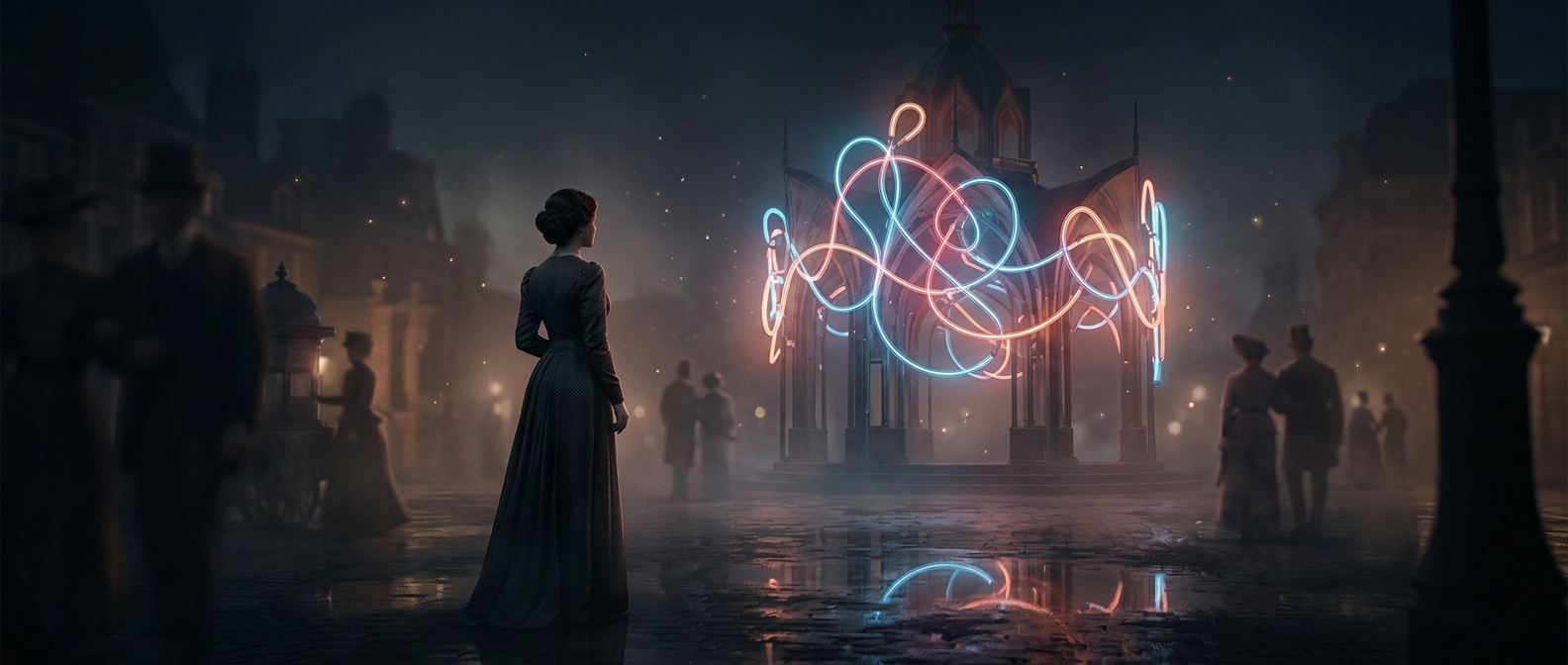
At a Paris exposition, visitors encountered the effect at a scale and in a setting that a laboratory experiment could not match: electric light presented as a public attraction. The display showed that a sealed gas tube could do more than illuminate a room. It could draw the eye, communicate a message, and become part of a building’s appearance.
The vivid color was also a limitation that became part of neon’s identity. Neon gas produces red-orange light; other colors require different gases or treatments of the glass. What began as a strikingly specific glow therefore became a flexible sign-making technique through variations in the materials and construction—not because neon itself could shine in every color.
The lasting change was a shift in what lighting could do. Instead of merely making a sign visible, the sign could make light its design: words and outlines glowing directly against the night.