Fasteners Made Getting Dressed More Private
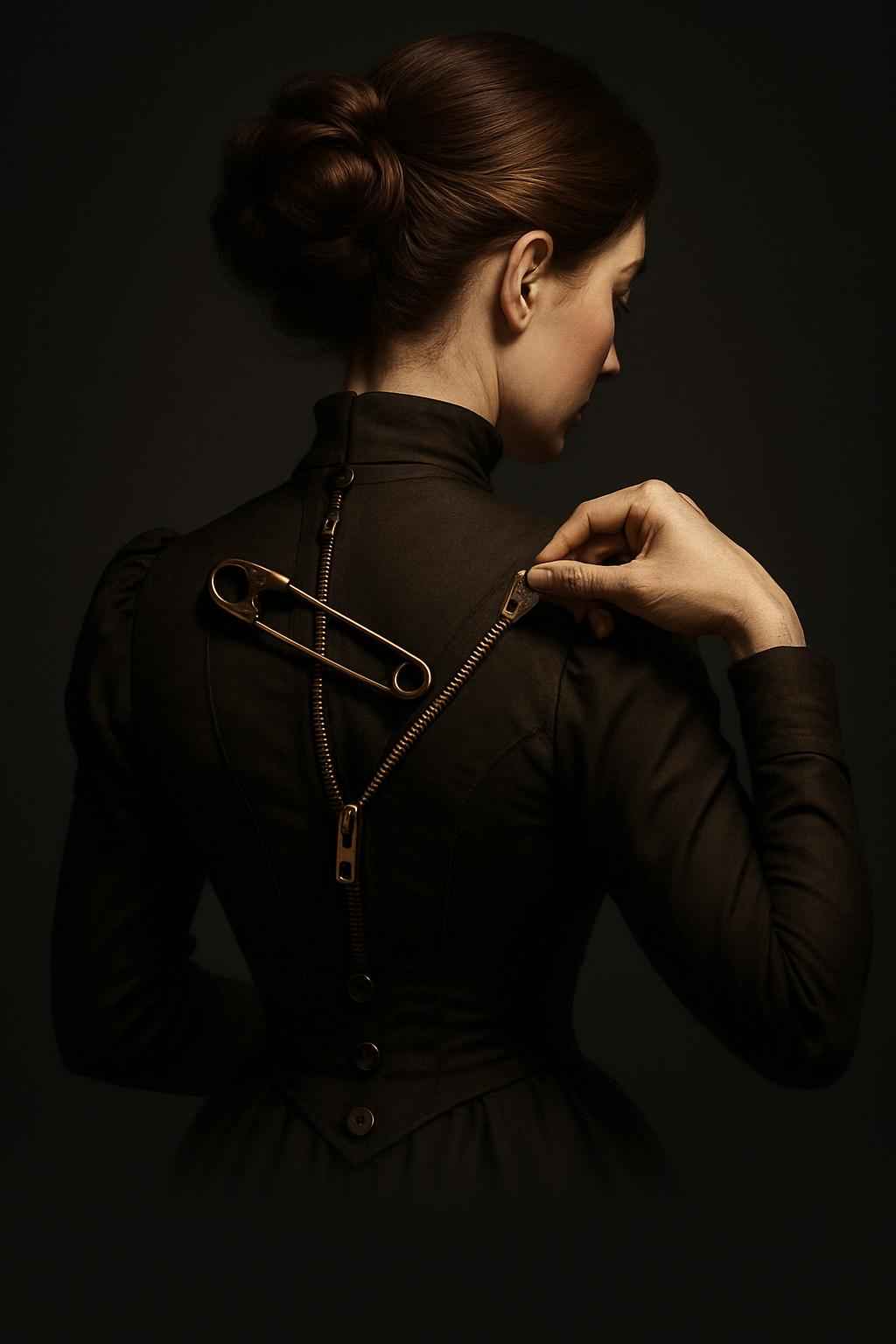
For much of the nineteenth century, a well-fitted outfit could be a small construction project. Stays and corsets were shaped by laces pulled tight at the back; dresses might have rows of buttons, hooks, or other closures that were awkward to reach alone. In households with servants, a maid often helped. For women without that help, dressing could mean asking a relative or friend—or choosing clothes that were easier to manage.
As clothing and its fasteners changed, more garments could be secured by the wearer. Buttons and hooks placed within reach, along with improved systems of hooks and eyes, made it possible to close parts of an outfit without another person pulling the garment into place. The key was not simply a clever clasp: where a closure sat and how the garment was cut determined whether someone could use it alone.
Independence Was Practical, Not Absolute
Self-fastening did not make every Victorian outfit easy to put on. Fashionable dress could still involve layers, tight-fitting garments, and closures at the back. Some corsets were designed to be adjusted with help, and wealthier women might continue to rely on dressers. But a person who could fasten more of her own clothing had more control over when she was ready to leave and less need to arrange another person’s assistance.
That mattered beyond the bedroom. Errands, visits, work, and travel all depended partly on being able to get dressed on one’s own schedule. A modest change in garment hardware could therefore alter an everyday boundary: getting ready became a more private task, and going out could require one less negotiation with someone else.