How a spinning top suggested making many threads at once
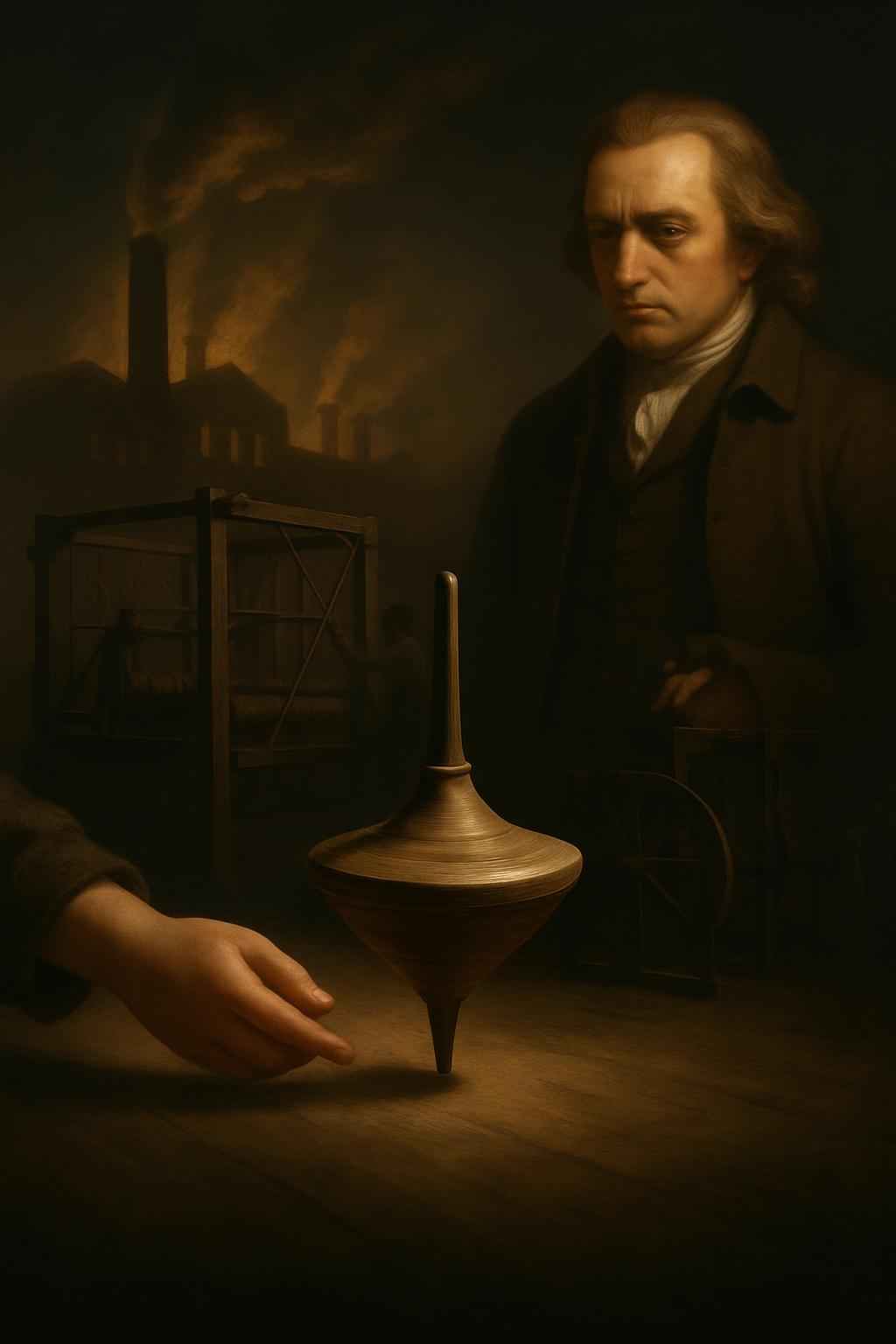
A spinning top does more than turn: it keeps rotating while its motion is stored in the twist of its string. The familiar account of James Hargreaves’s idea begins with that simple sight. In 1764, he imagined applying the principle of repeated spinning to several threads at the same time—not by building several separate machines, but by linking several spindles to one worker’s movements.
One worker, a row of spindles
Before the spinning jenny, a hand spinner typically worked one thread at a time. Hargreaves’s machine arranged multiple spindles side by side. The worker turned a wheel to rotate them and moved a carriage back and forth: drawing the fibers out into thinner strands, then twisting those strands into yarn as the spindles turned.
The important change was coordination. A single set of motions could spin several threads together, so the worker’s time and effort produced more yarn. The jenny was still hand-powered; its advantage came from multiplying what one person could do, not from replacing people with an engine.
More yarn changed the work of spinning
The machine helped meet growing demand for thread in the expanding textile trade. It also shifted production toward fewer workers operating more productive equipment, a change that could threaten the earnings of people who spun by hand. The jenny’s significance was not that it made spinning effortless, but that it made one worker’s motions count across many spindles at once—a modest-looking mechanical idea with consequences for how cloth could be produced.