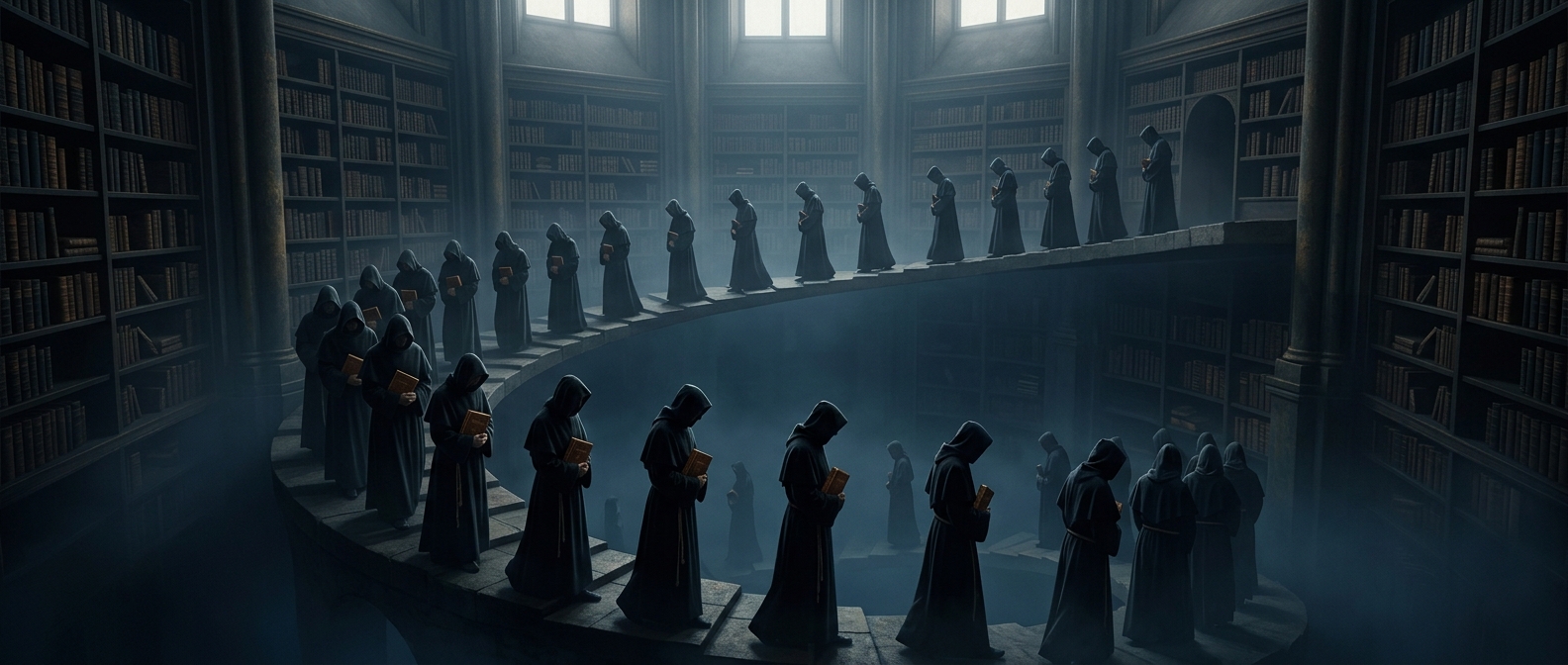
A founder built for a movement
In the early 1600s, anonymous pamphlets in the German-speaking lands described a secret brotherhood devoted to renewing learning, religion, and society. They gave the brotherhood a founder: Christian Rosenkreuz, a German pilgrim who supposedly traveled east, gathered hidden wisdom, and returned to establish a fraternity. The story’s precise itinerary and the discovery of his undisturbed tomb made the account feel like a record of real events—but they supplied no verifiable trail to a historical founder.
The writings are now treated as literary inventions, not reliable biography. Their author or authors remain uncertain, and the surviving evidence does not establish that Rosenkreuz ever lived. The figure worked instead as a founding character: a way to give a new program of reform an ancient lineage and a secret custodian.
Why make the story so elaborate?
The elaborate travel narrative suggested that knowledge could be gathered from many traditions, while the hidden tomb turned secrecy into part of the message. Rosenkreuz’s followers were said to remain concealed until the world was ready for their work. Readers could therefore interpret the fraternity as a real organization waiting to be found—or as an ideal community that should exist.
That ambiguity helped the pamphlets provoke attention. They appeared in an era when European scholars and religious thinkers were arguing over how inherited authorities might be corrected. A concealed brotherhood offered a dramatic image of coordinated reform, without requiring the authors to present a publicly accountable institution.
A fictional person, lasting consequences
The story’s impact did not depend on proving its founder existed. Readers responded to the promise of secret knowledge and a better-ordered society, and later groups adopted Rosicrucian names and ideas in different ways. The invented biography became a kind of open invitation: anyone who believed the hidden fraternity mattered could imagine themselves searching for it.