A prayer book with a second message
Around 1500, German abbot Johannes Trithemius wrote Steganographia, a book that appeared to teach readers how to communicate with angels. Its elaborate invocations and celestial names had another purpose: they disguised instructions for sending secret messages.
The trick was steganography—hiding the fact that a message exists, rather than merely scrambling its words. A page that looked like occult ritual could pass as a strange but harmless text while carrying practical directions for covert communication.
How the disguise worked
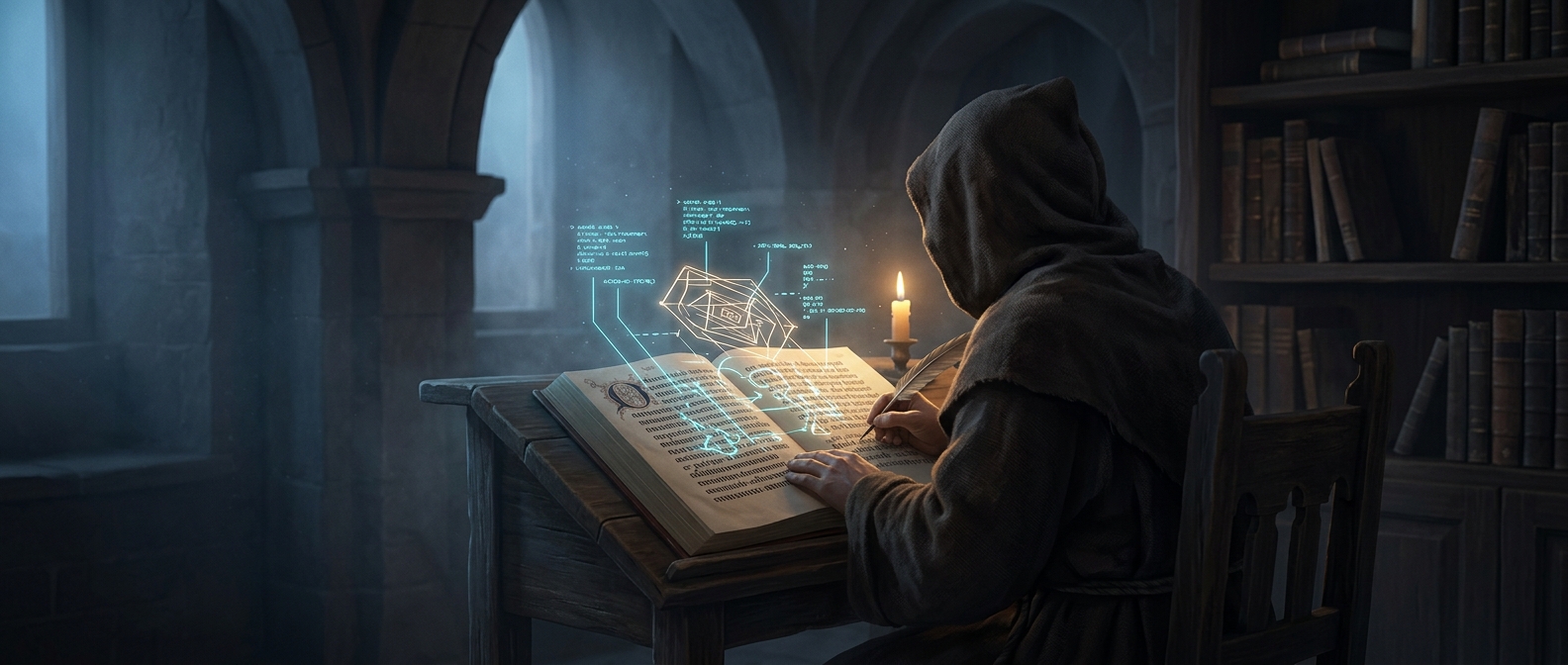
Trithemius embedded ordinary writing within the apparent angelic material. A reader who knew the method could extract the hidden instructions; someone without it would see what looked like a work of magic. The book thus used its subject matter as camouflage: the more arcane the language seemed, the less likely a casual reader was to recognize a technical manual beneath it.
That distinction matters. Encryption makes a message unreadable without a key; steganography tries to keep observers from noticing there is a message to read at all. A hidden message might still need to be enciphered for added protection, but concealment was the first layer.
Occult appearance, practical use
In an era when rulers and officials relied on discreet correspondence, a method for hiding communications had obvious appeal to diplomats and spies. Steganographia became famous for its apparent magic, but its angelic framework also made cryptographic instruction look like something else entirely. The book’s enduring surprise is that its most otherworldly-looking pages point toward a very earthly problem: how to communicate without attracting attention.