Why gnomes belong beneath the earth
Gnomes are not one fixed character from a single, uniform folklore tradition. Across later European storytelling and fantasy, they became closely associated with the earth: a hidden realm of stone, roots, minerals, and things people could not easily reach. That setting makes their imagined knowledge feel different from human knowledge. A gnome can know what lies under a hill or where a seam of ore runs because the underground is its home, not an expedition into the unknown.
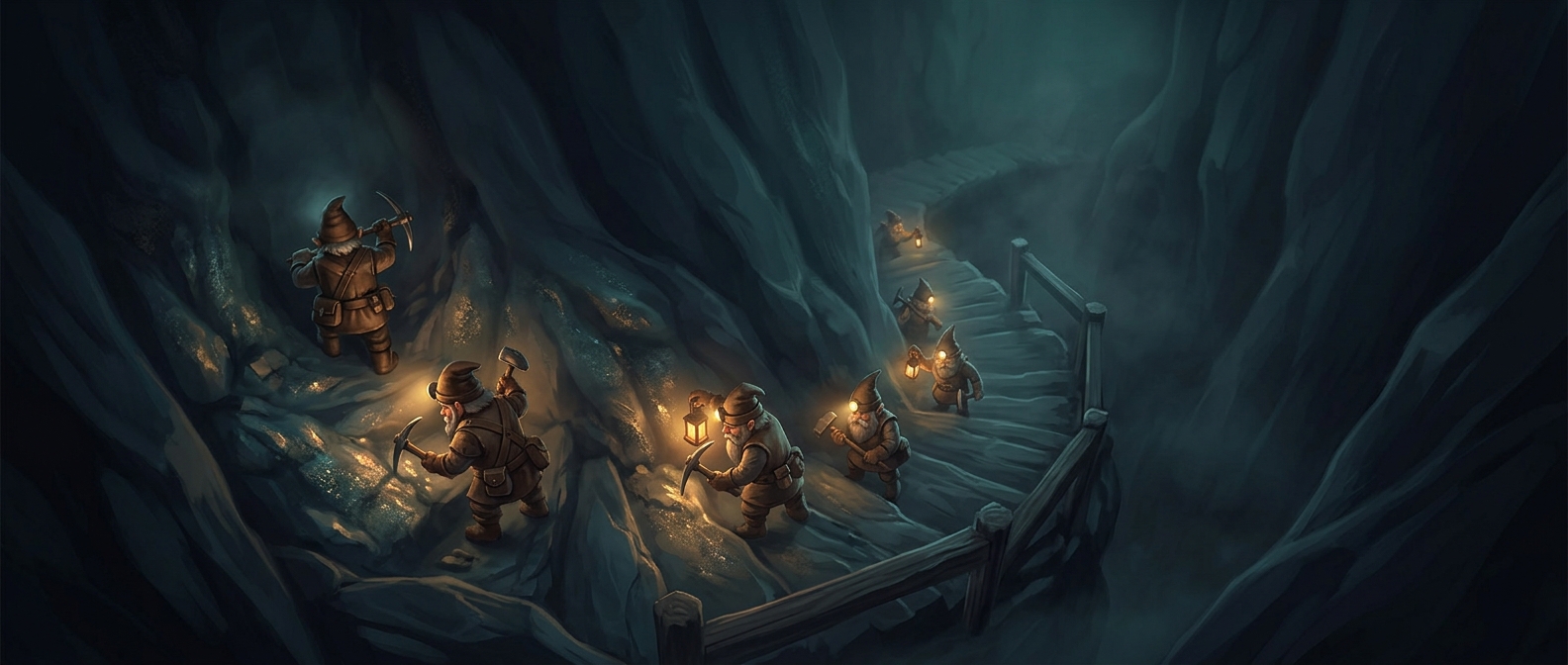
The association also gives treasure stories a natural engine. Gold and gems are buried, concealed, or locked inside rock; a creature that can move through the earth can guard them, find them, or bargain over them. Mining turns that idea into a visible task: pick by pick, the gnome crosses the boundary between ordinary ground and the hidden riches below.
A small figure for a large mystery
Before geology and modern mining made underground deposits easier to explain, a mountain’s hidden contents invited speculation. Folklore could personify that mystery. A gnome’s labor made the earth seem inhabited and purposeful, rather than merely solid: something was happening beneath the surface, beyond human sight.
That image carries into modern fantasy, where gnome miners often appear as skilled workers or keepers of underground knowledge. The useful contrast is between their small stature and the immense material they handle. One tiny figure with a tool can stand for the long, difficult work required to turn buried stone into something valuable.